
Ever wondered which god connects to frogs? The answer takes you back to ancient Egypt. Heqet is the Egyptian goddess most often associated with frogs. People linked her to fertility and childbirth, and artists usually showed her with a frog’s head or as a frog.
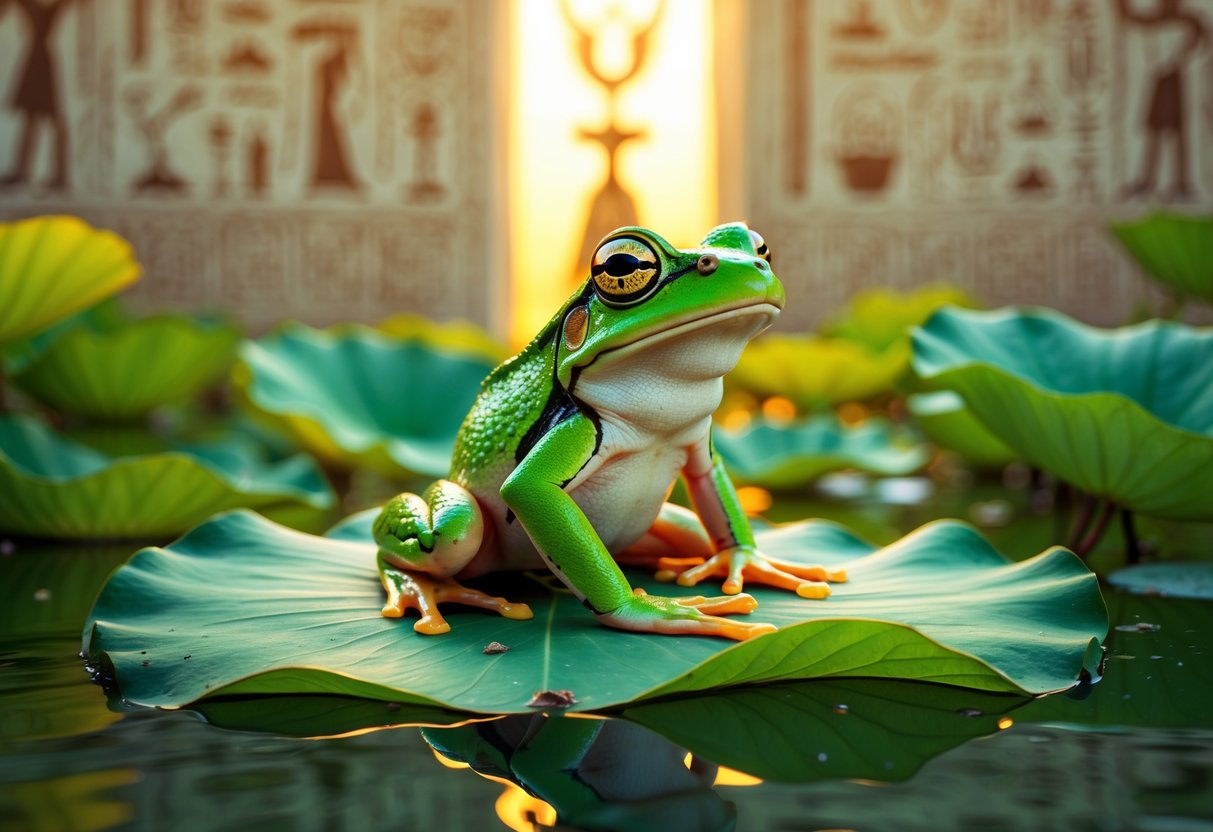
Frogs have always stood for fertility and life, probably because they need water and appear with the changing seasons. In Egyptian stories, Heqet breathed life into newborns and protected mothers during birth.
Thinking about her gives you a peek at how people once saw frogs as more than just animals—they saw them as symbols of power and new beginnings.
If you dig deeper, you’ll spot frogs in other myths too, but Heqet’s connection is one of the most direct. Curiosity about this link opens up some pretty fascinating history. If you want to know more about Heqet and frog symbolism, there’s a whole page dedicated to her story and role.
Heqet: The Ancient Egyptian Frog Goddess

Heqet played a big role in ancient Egyptian beliefs. People saw her as a force for life’s beginnings and growth. Her frog shape makes her link to fertility, childbirth, and renewal pretty clear.
You’ll notice she connects with other gods, carries certain symbols, and had some interesting ways people honored her.
Role as the Goddess of Fertility and Childbirth
People called on Heqet when they wanted a safe, quick birth. She earned the name She Who Hastens the Birth and helped mothers bring babies into the world without pain or danger.
Ancient Egyptians believed she breathed life into newborns, especially in stories about Horus’s birth.
Heqet also tied into the flooding of the Nile. That flood made the land fertile, and it felt like a natural version of birth. Because fertility mattered so much, Egyptians saw Heqet as key to their survival.
Depictions, Symbols, and Amulets of Heqet
You’ll find Heqet shown as a frog or a woman with a frog’s head. Frogs popped up everywhere after the Nile flooded, so people saw them as signs of new life.
Her main symbols are the ankh, meaning life, and the scepter, for power.
Women—especially midwives—wore frog-shaped amulets for protection during childbirth. These little charms were supposed to help keep both mom and baby safe.
Midwives also used ivory wands with Heqet’s image, showing just how closely she tied to helping mothers.
Heqet’s Connection With Creation and Other Deities
People often saw Heqet as the wife or female side of Khnum, the god who shaped humans on his potter’s wheel. Together, they played a big part in creation.
Heqet breathed life into the bodies Khnum made, making her essential at the start of life.
Her influence stretched into fertility and rebirth myths with Osiris, Isis, and Nephthys. In some stories, she helped with resurrection, connecting birth with new beginnings after death.
Her role as a goddess of resurrection grew as Egyptians noticed how birth and resurrection felt like parts of the same cycle.
Worship, Rituals, and Servants of Heqet
People started worshipping Heqet way back in the Early Dynastic Period, and her influence stuck around through the Old Kingdom and even later.
Pharaohs like Hatshepsut honored her to protect royal births. Temples and shrines often had frog statues as a sign of her blessing.
Her priests and priestesses, including midwives, acted as her servants. They used rituals with lotus flowers and sacred words from texts like the Pyramid Texts to ask for her help.
She also connected to the ka, or life force, making sure it flowed strong during childbirth.
Summary Table: Key Aspects of Heqet
| Aspect | Details |
|---|---|
| Form and Symbolism | Frog, frog-headed woman, ankh, scepter |
| Role | Fertility, childbirth, life breath |
| Key Associations | Khnum, Osiris, Isis, resurrection |
| Worship Practices | Frog amulets, midwife rituals, ivory wands |
| Historical Reach | Early Dynastic Period, Old Kingdom, Ptolemaic |
Frog Gods and Symbolism Beyond Egypt

Frogs show up in a lot of cultures as symbols of life, renewal, and fertility. They’re usually tied to water and rain, which everyone knows is vital for growth.
Sometimes, frogs even take on godlike roles. You’ll spot them linked to rebirth and creation in different mythologies, which makes sense if you think about their life cycle.
Frog God G in Maya Mythology
In Maya mythology, Frog God G stands out as a figure tied to rain and water. He usually appears with frog features and represents fertility and agricultural growth.
You can picture Frog God G as a provider of life, closely connected to the cycle of drought and rain.
Frog God G stands for renewal because water brings life back to the earth. He also links up with kingship, showing how rulers depended on rain for their crops.
His frog form really highlights the change from water to life, just like a frog’s own transformation.
Symbolism of Frogs in Religion and Myth
Across many religions, frogs symbolize fertility, rebirth, and renewal. Their ability to live in both water and on land makes them perfect symbols for change and transformation.
In lots of cultures, frogs bring rain, which is essential for crops and survival.
For many people, frogs stand for new beginnings and the cycle of life. In ancient myths, people wore frog amulets for protection during childbirth or to encourage fertility.
Frogs also pop up as signs of spiritual growth, showing how you can adapt and start fresh.
Comparisons: Heqet, Hecate, and Other Deities
Heqet is the Egyptian frog goddess tied to fertility, childbirth, and rebirth. People saw her as a helper during birth—she’d breathe life into newborns.
She’s often linked to Khnum, the god of creation. Frogs just seem to pop up anywhere there’s talk of life beginning.
Hecate, from Greek mythology, stands out as a goddess of magic and witchcraft. Some folks think her name actually came from Heqet’s, which is kind of fascinating if you’re into the idea of shared roots and the frog’s reputation for transformation.
But Hecate focuses more on the mystical and the underworld. That’s a big shift from Heqet’s life-giving vibe.
Other frog gods like Heru-ur and the old god Heh also symbolize renewal and the endless cycle of time. These deities really highlight how frogs connect to creation, kingship, and protection across different cultures.


