
You spot a red line stretching away from a bee sting—yeah, that’s not something you want to ignore. Usually, this means there’s a chance an infection’s spreading through your skin or lymph system, and honestly, it’s best not to brush it off. That red streak? It shows bacteria might be moving away from where the bee got you.
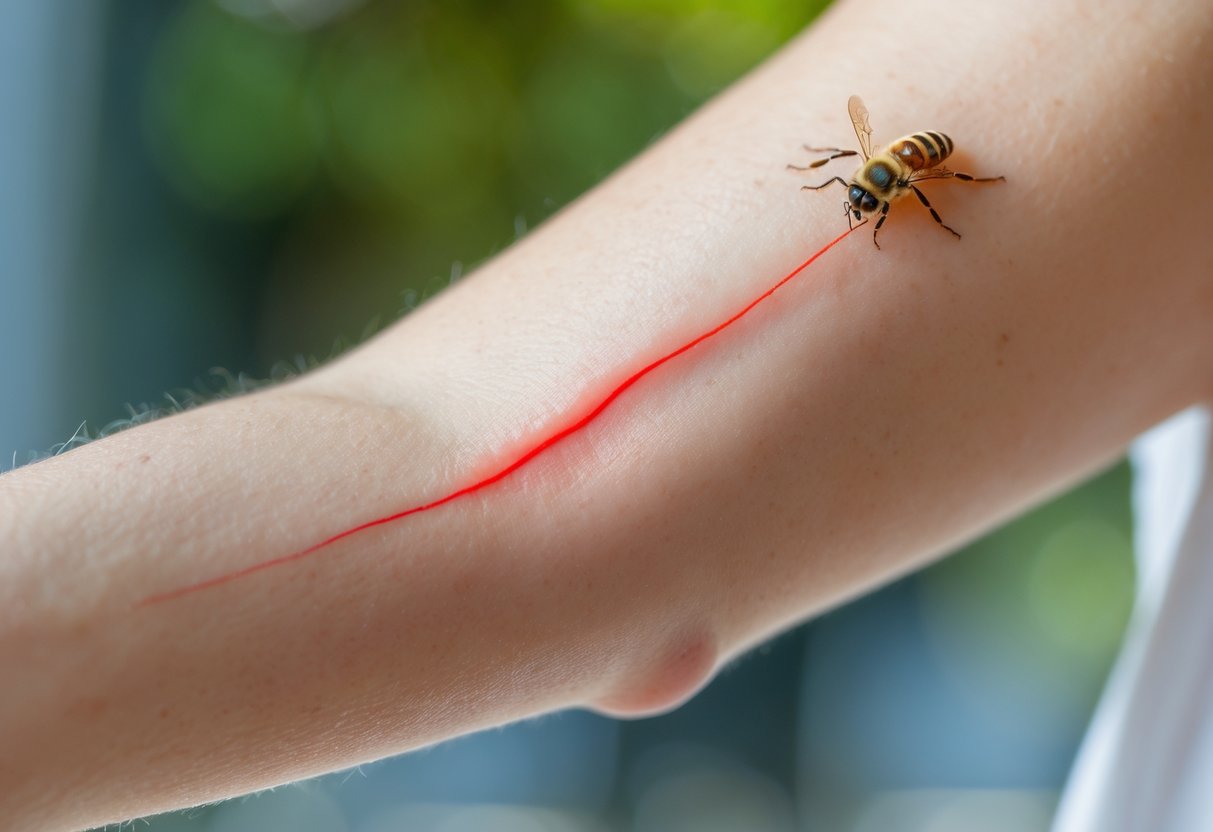
Not every patch of redness after a sting spells trouble. Some swelling and redness are just part of the deal and can hang around for a few days.
But if you see that red line getting longer or the area hurts more, feels warmer, or swells up, you should probably call a doctor before things get out of hand.
Spotting the right signs after a sting helps you stay ahead and get the care you need. Knowing what infection looks like can really make a difference.
For more info on when to seek help, check out details on bee sting infections.
Understanding a Red Line from a Bee Sting
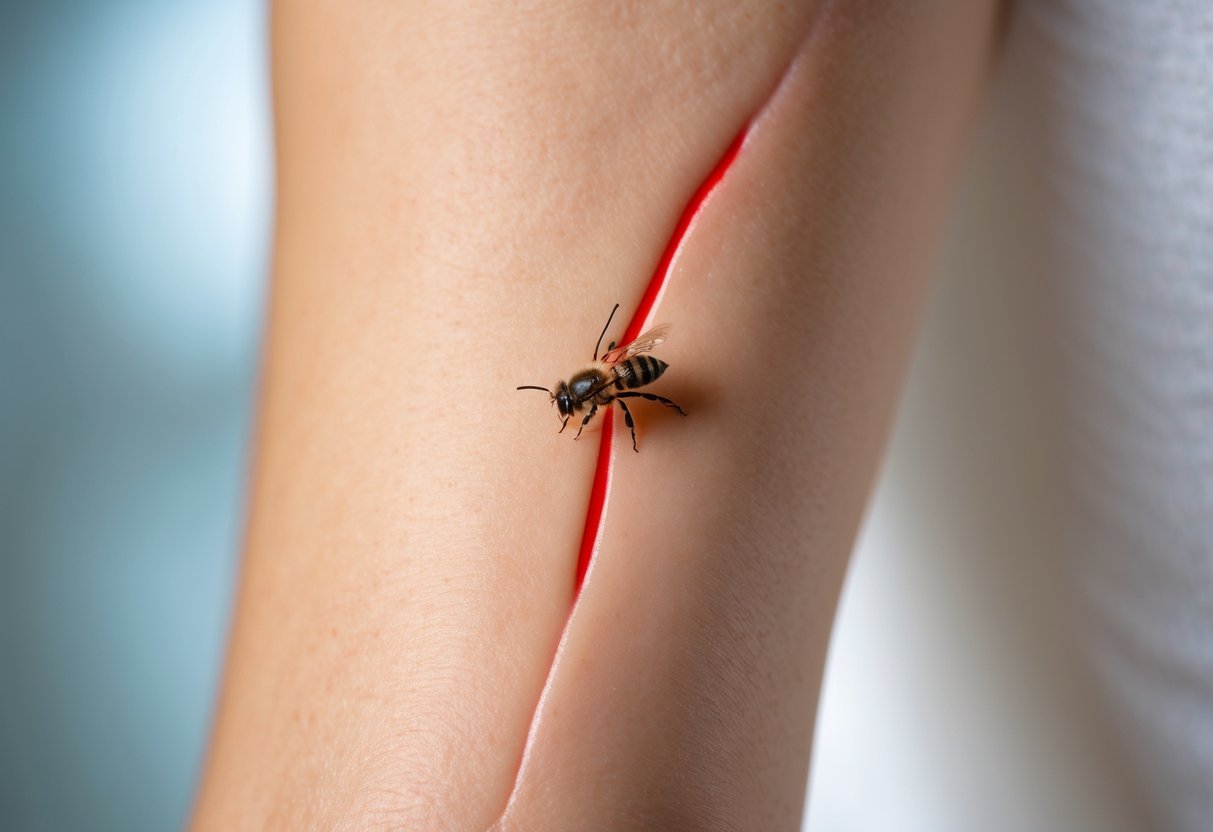
When you notice a red line after a bee sting, you might wonder what’s really going on. That line can show your body’s reacting—sometimes it’s just normal, but it could point to a bigger issue like infection.
It helps to know where these lines usually pop up and what makes them more likely. That way, you can handle things before they get worse.
What Does a Red Line Indicate?
A red line from a bee sting usually means your body’s fighting something off, like inflammation or an infection. The line often runs from the sting site up your arm or leg.
Bacteria can spread in your skin or tissues, and that’s when this streak shows up. It’s not the same as the usual red bump and swelling you get right at the sting.
If the red line grows or feels warm and sore, infection might be setting in. You should also watch for things like fever, more swelling, or pus—those are your signals to get checked out.
A red line acts as a warning, not just regular redness from the sting.
Common Locations for Red Lines after Stings
You’ll usually see these red lines on your arm or leg, close to where you got stung. Since most bee stings happen outdoors and hit your limbs, the line often follows that same path.
The line traces your skin’s lymph vessels, which move fluids and can carry infection if it’s there. Sometimes you’ll spot a thin, reddish streak running away from the sting.
These lines can be faint and easy to miss compared to the swelling at the sting itself. If you notice that streak moving or getting bigger, keep an eye out.
Risk Factors for Developing a Red Line
Some things just make getting a red line more likely after a bee sting. If your immune system’s not at its best, infections can hit you harder.
Swelling that sticks around or gets worse after a few days raises your risk. If the sting area heats up or hurts more, watch for those streaks.
Not cleaning the sting well enough can also lead to infection. Scratching or pulling out the stinger roughly can make things worse.
Knowing these risk factors helps you act fast if something seems off.
For more info, check Be wise about bee and wasp stings – Harvard Health.
Serious Reactions and When to Seek Help
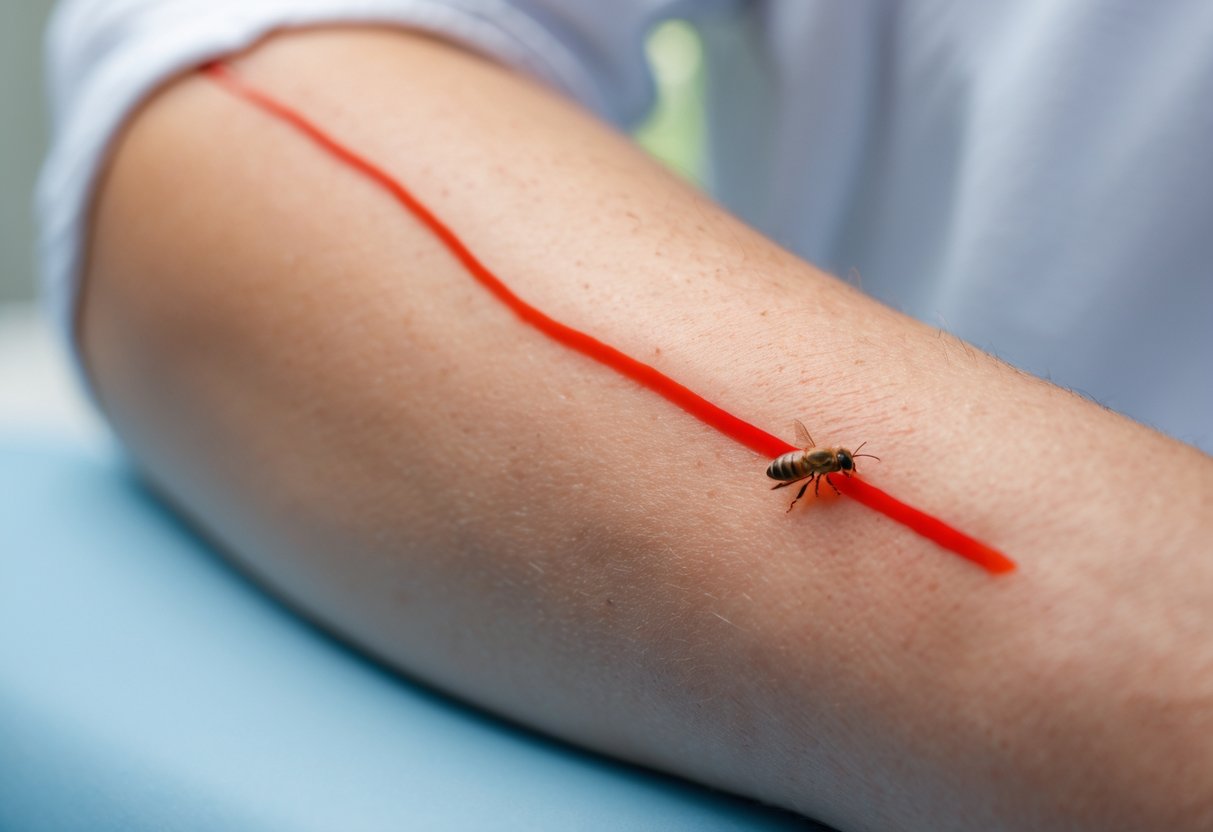
A red line near a bee sting can mean a few things, and not every case is an emergency. Still, certain symptoms along with redness or swelling mean you shouldn’t wait around.
Watch for signs that suggest infection or a bad allergic reaction.
When a Red Line May Signal Infection
If you see a red line spreading from your sting, infection could be the culprit. Usually, it looks like a streak moving up your arm or leg.
Bacteria might have gotten into your skin, inflaming your lymph vessels. You might notice the red line feels warm or sore.
The area could swell more, or you might see pus or fluid leaking from the sting. If that line keeps growing or sticks around for days, see a doctor.
You might need antibiotics to stop the infection from getting worse.
Other Warning Signs: Swelling, Fever, and Pain
If swelling doesn’t go down or pain keeps getting worse, that’s a red flag. Fever or chills mean your body’s fighting something tough, maybe a bad infection from the sting.
Sometimes, people have a severe allergic reaction—anaphylaxis—from bee venom or stings from hornets, wasps, or even those aggressive Africanized bees.
Symptoms can include trouble breathing or swallowing, swelling in your face or throat, or feeling faint. If that happens, use an epipen or epinephrine right away and get to the ER.
Seeking Medical Attention and Treatment Options
If you start to notice more redness, swelling, a fever, or even a red streak, go ahead and reach out to a healthcare provider. They’ll figure out if you need antibiotics or something else.
Severe allergic reactions? Those need emergency care right away. Epinephrine injections, like an EpiPen, can kick in fast and help with symptoms.
After you get emergency care, your doctor might suggest allergy testing or recommend you keep some emergency medicine on hand.
Honestly, most simple bee stings heal up just fine without much fuss. Still, it’s important to know when to take action—it could make a big difference.


