
Three days after a bee sting, most people see less redness and swelling than they did at first.
You’ll probably still notice some redness or a bit of swelling, but the pain and itching usually start to fade by now.
Sometimes, a little scab or patch of dry skin appears as your skin heals.
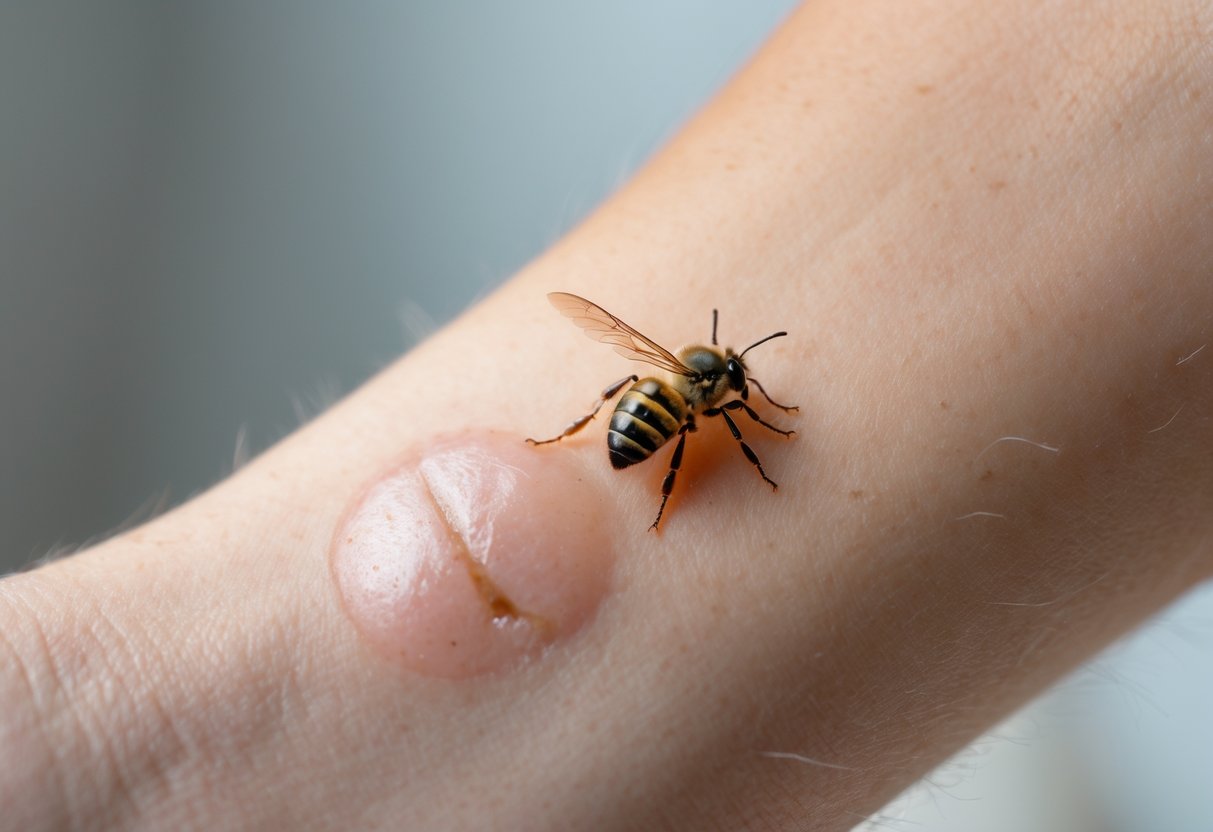
Your body works to clear out the venom and repair the skin, so the spot might feel tender if you touch it.
Watch for any signs of infection or a reaction getting worse, like more redness or swelling—if that happens, it’s time to see a doctor.
If you know what a bee sting looks like after a few days, you can figure out whether to treat it at home or get help.
For more info on symptoms and treatment, check out this guide on what bee sting reactions look like after two days.
Bee Sting Appearance After 3 Days
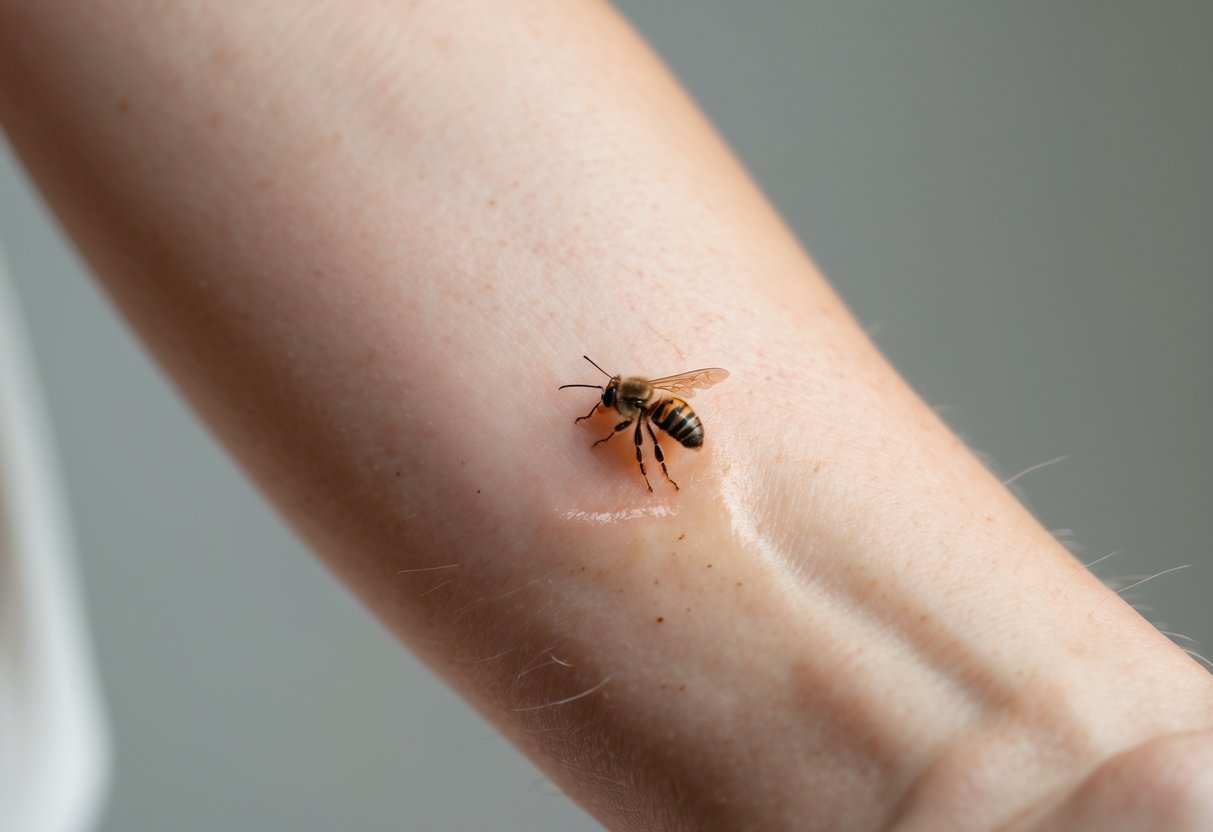
By the third day, you’ll probably notice some changes as the pain and swelling start to settle down.
The area might still look irritated, but how it appears depends on what kind of bee stung you, how your body reacts, and if any complications show up.
Typical Skin Changes at the Sting Site
Usually, you’ll see less redness and swelling than you did right after the sting.
A small, raised bump or a white spot where the stinger was might still be there.
Sometimes the skin itches or feels dry as it heals.
Some redness is normal, but it should be going away.
If your reaction was mild, you might spot a tiny scab.
The pain tends to drop off by now, though a little tenderness can stick around.
How Reactions Evolve Over Several Days
Bee sting reactions tend to change each day.
For a lot of people, swelling peaks within the first day, then slowly shrinks.
Some swelling and redness can last a bit longer, especially if you scratched the area.
Mild symptoms like itching, pain, and a bit of swelling usually get better after three days.
If you had a bigger reaction, you might notice more swelling or even some peeling skin, but that should start to calm down.
Keep an eye out for new symptoms, like redness spreading or pain getting worse.
Differences by Bee Type
Different bees leave different marks.
Honey bee stings usually leave the stinger behind, and that keeps injecting venom until you pull it out.
That can cause more swelling and redness at first.
Bumble bees and carpenter bees don’t leave their stingers, so their venom stops right away.
Their stings may be less swollen but still hurt.
Your body might react differently depending on the bee and your own sensitivity.
Signs of Possible Infection
If the sting site gets more swollen, turns bright red, or feels warm after three days, you could be dealing with an infection.
Pus or fluid coming out of the wound is another warning sign.
You might feel feverish, or the redness could start spreading from the sting.
If you notice these changes, get medical help soon.
Infections can pop up if bacteria sneak in through broken skin, especially if you’ve been scratching.
For more tips on recognizing bee sting reactions and what to watch for, this resource is pretty helpful.
Managing and Identifying Complications
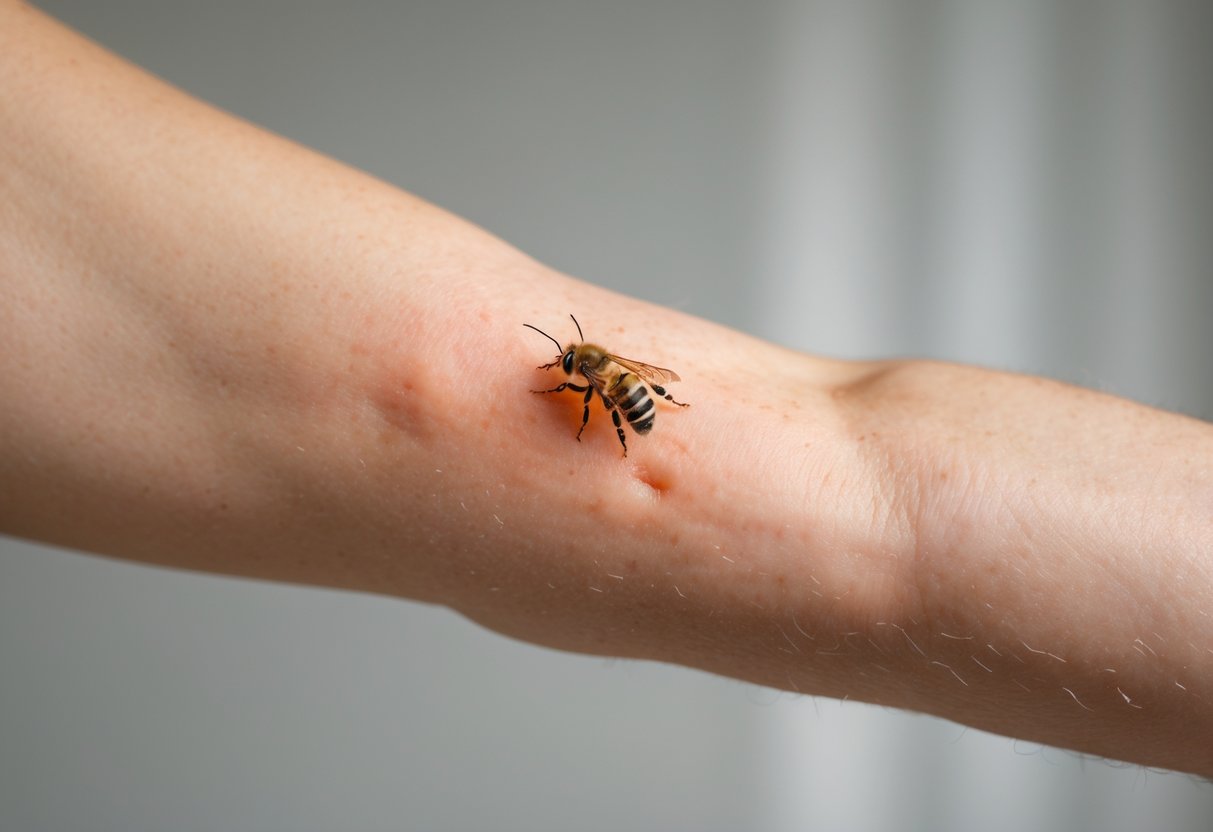
Most bee stings start to heal after three days, but sometimes things can still go wrong.
You need to watch for signs that the area is getting worse or that your body is reacting more than it should.
Knowing how to treat mild symptoms and when to get help matters.
Recognizing Severe or Allergic Reactions
If you notice more than just pain and swelling, it could be serious.
Signs of a severe allergic reaction—anaphylaxis—include trouble breathing, swelling of your face or throat, a racing heartbeat, dizziness, or weakness.
You’ll need emergency care right away if these happen.
Watch for redness spreading, a high fever, or pus at the sting site, since those can mean an infection.
Sometimes, swelling covers a large area and feels hot or hard.
If you’ve had allergies to insect stings before or you see hives or itching away from the sting, be extra careful.
These could be signs of a dangerous allergic reaction to bee venom or even other insects like wasps.
Home Remedies and Over-the-Counter Treatments
For mild or moderate stings after three days, you can try a few simple things.
Hydrocortisone cream or calamine lotion can help with itching and swelling.
These creams usually calm your skin and make you feel a bit better.
Taking an oral antihistamine can also help with itching and any allergic reaction.
Stick to the package directions or whatever your doctor recommends.
Keep the sting clean and try not to scratch it, since that can lead to infection.
A cool compress helps with swelling and pain.
Skip home remedies that could irritate your skin more.
When to Seek Medical Support
If you notice redness and swelling that just won’t quit after three days, or if the sting site gets really painful or starts leaking pus, go see a doctor. Signs like fever or warmth around the sting mean you should get checked out.
You need emergency care if you suddenly can’t breathe, your throat swells up, or you feel extremely weak. Not totally sure about your symptoms? Honestly, it’s smarter to get help right away.
If a bee sting hits you hard or your reaction keeps getting worse even after home remedies, call your healthcare provider. They might give you stronger meds or treat an infection to keep things from going south.


