
Ever catch yourself wondering what color bees like best? You’re definitely not alone. Bees don’t see colors quite like we do, so they’re drawn to shades that might surprise you.
Blue, violet, and yellow are the colors that really catch a bee’s attention—these shades pop out to them and usually mean there’s nectar waiting.
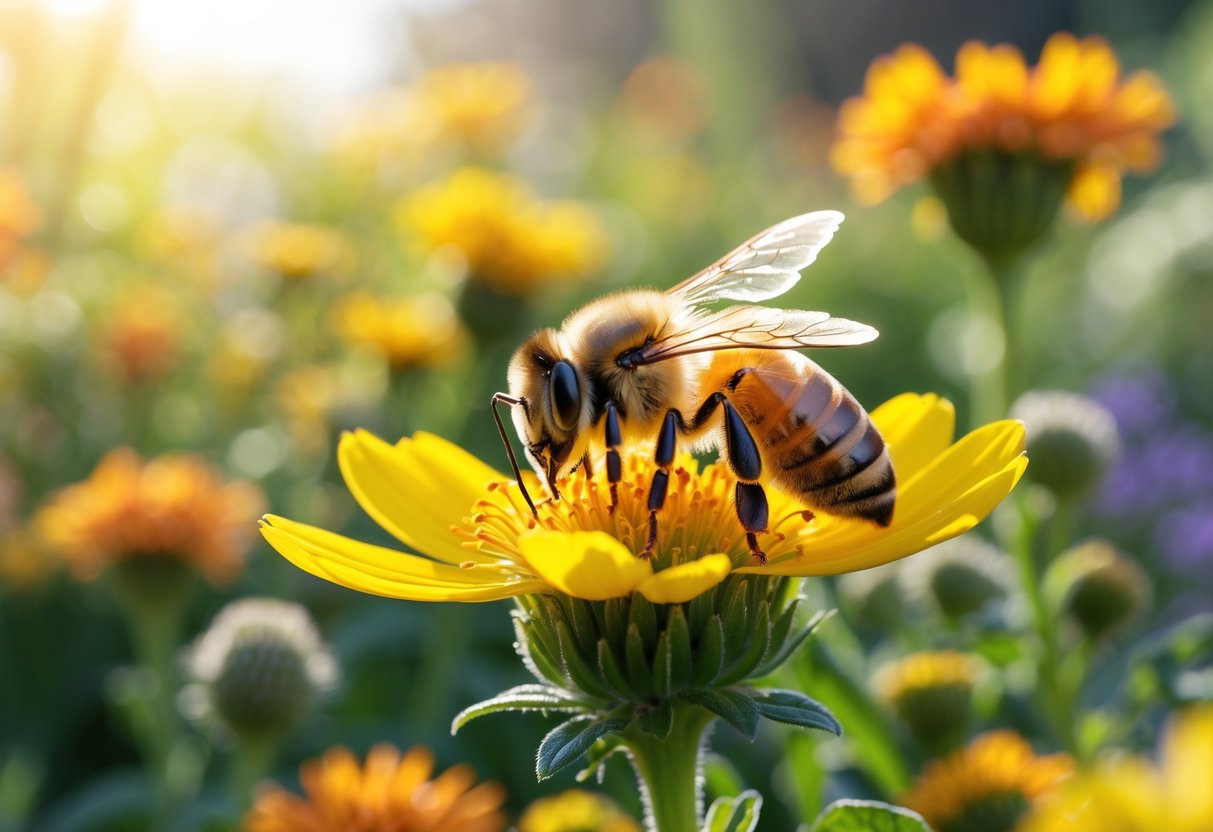
If you know which colors bees prefer, you can actually design a garden that’s full of buzzing activity. Planting flowers in these shades makes it easier for bees to find a meal, which helps them do their important pollination work.
Here’s something cool—bees can see ultraviolet light, which gives them an edge when it comes to spotting flowers. If you get these color preferences, you’ll make better choices for a bee-friendly yard.
Curious for more? Check out this guide on colors that attract bees naturally.
Bee Color Preferences and Their Vision
Bees rely on their unique vision to hunt down flowers packed with nectar and pollen. Their color sense is a bit wild compared to ours—they pick up shades we just don’t notice.
Let’s talk about how bees see color, how their vision stacks up against ours, and how their eyes pick up different wavelengths.
How Bees See Color
Bees have a color range that includes ultraviolet light, which is invisible to us. This superpower lets them spot flowers with UV patterns, basically giving them a treasure map to nectar.
They notice blues, purples, and violets the most, since those colors are common in nectar-rich flowers. Red, though? It just looks dark or kind of invisible to them because their eyes don’t catch those longer wavelengths.
Flowers with UV patterns create sharp contrast that bees pick up easily. This contrast matters because it helps bees recognize flowers against all the green leaves and mixed backgrounds out there.
Bee Vision Versus Human Vision
You see colors in red, green, and blue. Bees, on the other hand, have receptors for ultraviolet, blue, and green light.
That means bees catch colors in the ultraviolet spectrum that we just can’t see. Some flowers look pretty plain to us but practically glow with UV patterns for bees.
These patterns lead them right to the nectar and pollen. Since bees don’t see red well, red flowers don’t usually catch their eye—unless those blooms have strong UV markings.
This difference in vision actually changes how flowers evolve and how bees pick what to pollinate.
Color Receptors in Bee Eyes
Bees have three types of color receptors, but they’re tuned a little differently from ours. Their eyes pick up ultraviolet (around 350 nm), blue (about 440 nm), and green (roughly 540 nm).
This setup makes them experts at spotting colors from ultraviolet to green. Their UV vision helps them zero in on flowers with signals we can’t even imagine.
These same receptors help bees notice movement and patterns on flowers. They use all this info to find food quickly, even with a chaotic background of leaves and petals.
Want to dig deeper? Here’s a detailed article on bee color vision.
Most Attractive Flower Colors for Bees

Bees don’t just land on any flower—they’re drawn to certain colors more than others. Their eyes pick up colors differently from ours, so what pops for you might not even register for them.
If you want your garden buzzing, knowing which colors attract bees really helps.
Blue, Purple, and Violet Flowers
Blue, purple, and violet blooms are easily some of the best for attracting bees. These colors fit right into the range bees see best, and they often mean there’s plenty of nectar and pollen.
Lavender, salvia, pansies, violets—these are all great choices if you want to see more bees in your garden. Bees spot these colors from a distance, so they’re perfect for pulling in pollinators.
Nature’s kind of rigged it: lots of blue and purple flowers evolved to stand out to bees, upping their chances of getting pollinated.
If you’re hoping for more action in your garden, you can’t go wrong focusing on blue and purple flowers.
Yellow and White Flowers
Yellow and white flowers are also bee magnets, mostly because they reflect ultraviolet light so well. Sunflowers and coneflowers are classic examples.
Even though these flowers might seem simple, their brightness makes them easy for bees to find. The UV reflectance almost acts like a spotlight, guiding bees straight to the good stuff.
Yellow and white blooms often have nectar guides—patterns only bees can see—that point right to the food. Mixing these colors with blue and purple keeps a variety of bee species happy all season.
Ultraviolet Patterns and Nectar Guides
Bees can see ultraviolet light, and that changes the game. Many flowers have UV patterns—nectar guides—that act like maps to the nectar.
These guides can look like spots, stripes, or other shapes on petals, showing bees exactly where to go. Flowers with strong UV reflectance basically shout, “Hey, food here!”
You’ll usually find these UV patterns mixed with blue, purple, yellow, or white petals. If you pay attention to these “hidden” signs, you’ll help bees collect pollen faster, which means better pollination for your garden.
Less Attractive and Unattractive Colors
Bees just don’t go for red flowers much. They can’t really see red, so it usually looks dark or almost black to them.
That makes it tough for bees to spot nectar in those blooms. Dark shades like black or deep brown also tend to put bees off.
These darker colors don’t reflect much UV light, so they blend in with leaves. Bees usually scan for bright colors that signal nectar.
If you’re hoping to draw more bees, maybe skip the red or super dark seeds. Go for blue or yellow instead—bees seem to love those.


