
Thinking about starting beekeeping at home? You might be asking yourself: how close can I really put a beehive to my house? The answer matters for your safety and for the bees’ peace of mind.
Keep your beehive at least 10 feet away from your house. That space helps cut down on disturbances and lowers the odds of running into bees when you don’t want to.
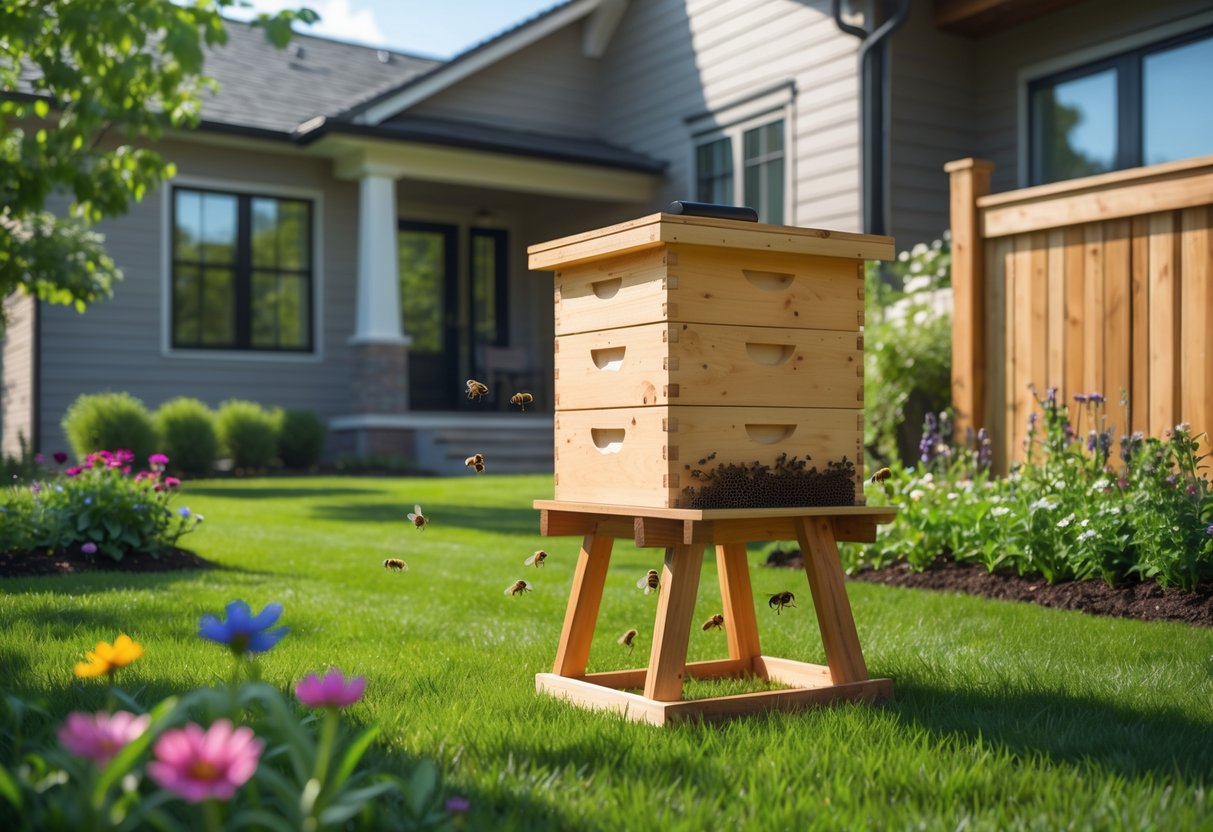
By keeping some distance, you steer bee traffic away from where your family hangs out. The bees get room to come and go without feeling boxed in.
Honestly, finding the right spot can make beekeeping safer and way more enjoyable. It’s not just about you—it’s better for the bees, too.
But picking the right place is just the start. Want to make your backyard a safe, happy space for your bees? Let’s dig a little deeper.
How Close Can You Have a Beehive to Your House?

You need to put the hive far enough away to avoid trouble, but close enough so you can check on your bees without hiking across the yard. Bee behavior, flight paths, and a few rules all shape your decision.
Minimum Recommended Distances
Most folks say you should set your beehive at least 10 feet from your house. That’s usually enough to keep bees from buzzing right by your doors and windows.
If your yard’s on the smaller side, you might get away with a bit less space. Just add a fence or some bushes to steer bee traffic away from the busiest spots.
With a little distance, you’ll hear less buzzing near your living spaces. The bees get to work in peace, and you get a quieter home.
Impact of Bee Temperament on Placement
Different bees act differently. If you’ve got gentle honey bees, you can sometimes keep the hive a bit closer since they’re less likely to sting.
Bees that get defensive or cranky need more room. They guard their space and might get upset if people walk by too closely.
You can calm things down with good beekeeping gear. Smoke tools and protective clothing help keep the bees mellow when you check the hive.
Flight Path and Clearance Requirements
Give your hive a clear flight path—bees need open air to zip in and out. Try not to put the hive right next to busy walkways or doorways.
Bees like straight paths, so block or guide their flights with fences or tall plants if you need to. Turn the hive entrance away from your house or the spots you use most.
These little changes help your bees stay healthy and keep bee-human run-ins to a minimum.
Factors Affecting Beehive Placement Near a House

When you’re deciding where to put your beehive, you’ve got to think about rules, safety, and what the bees like. Each part matters if you want healthy bees and happy neighbors.
Local Regulations and Legal Considerations
Local laws might say how close your hive can be to your house or a neighbor’s fence. Some towns set the minimum at 20 or 25 feet from buildings or property lines.
You might even need a permit to keep bees in your yard. Sometimes you have to add a fence or a barrier to keep people safe.
If you don’t follow the rules, you could end up with a fine or have to move your hive. Keep your gear—like suits and hive tools—handy but out of the way, and make sure your setup matches what the local code wants.
Want more details? Check out beehive distance rules for help.
Safety for Children and Pets
Bees get curious and protective, especially around kids or pets. If you’ve got little ones or animals, keep the hive well away—20 feet from play areas is a good rule.
If you can’t go that far, add a hedge or barrier to help bees fly higher and avoid people. Lock up your beekeeping gear and only bring it out when you’re working at the hive.
You’ll find a better balance between enjoying your bees and keeping everyone safe. For more advice, check out Wise Beekeeping.
Access to Food and Water Sources
Bees really need easy access to flowers, plants, and fresh water if they’re going to stay healthy. Put your hive somewhere the bees can quickly reach these resources—ideally, without forcing them to fly over busy roads or other risky spots.
Keep water sources close, but make sure they’re clean so you don’t end up with contamination issues. Try putting a shallow dish filled with stones near the hive; the bees can land safely and drink without drowning.
Think about sunlight and wind too when you pick your hive’s location. A sunny spot will warm the hive, which keeps the bees active and helps cut down on moisture.
Good airflow matters as well. It keeps the hive dry and strong, which is pretty important.
Keep your beekeeping equipment—like feeders and water stations—close to the hive, but try to shield them from the weather. If you want more details on picking the right spot, check out Beekeeping 101.


