
Ever spot frogs hopping around your yard or porch and wonder what’s up with that? Frogs usually show up because your place offers food, water, and shelter—the essentials for their little frog lives. Maybe your garden is a comfy spot packed with bugs and cool, damp corners.
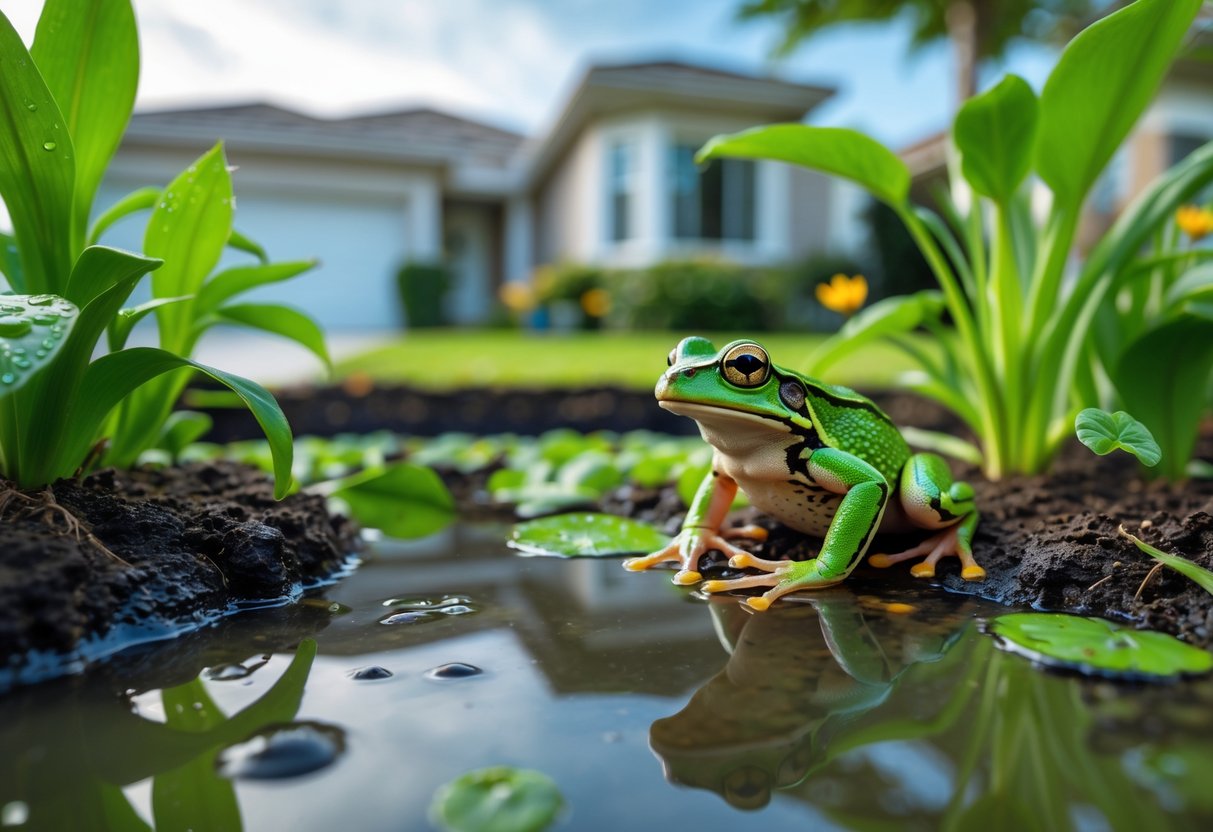
It’s kind of funny, but frogs don’t just wander in by accident. Outdoor lights that lure bugs, puddles or ponds for laying eggs, and overgrown plants all make your home pretty appealing. When you know what attracts frogs, you can start to figure out how to keep their numbers in check.
Key Factors That Attract Frogs to Your House
Frogs look for places with water, food, shelter, and a comfy climate. Your yard can tick all those boxes, which explains why frogs end up hanging around.
Moisture and Water Sources
Frogs can’t really survive without water. If you’ve got a pond, fountain, pool, or even just soggy soil, frogs will flock to it.
Leaking pipes, dripping taps, or a damp basement can also bring frogs in. They’re just looking for a drink or a place to cool off.
Standing water or high humidity is basically a frog’s dream. They lay eggs in these spots and keep their skin moist.
If you have water features, try to keep them clean and fix leaks to make things less inviting for frogs.
Abundant Insects as Food Supply
Frogs eat a lot of bugs—mosquitoes, flies, moths, you name it. Outdoor lights and certain plants attract insects, which in turn attract hungry frogs.
Honestly, frogs help control the bug population. Fewer bugs buzzing around is never a bad thing, right?
If you want fewer frogs, try reducing outdoor lights and trimming back plants that attract insects.
Shelter and Safe Hiding Spots
Frogs need somewhere to hide from predators and harsh weather. Thick bushes, tall grass, and piles of leaves give them perfect cover.
If your yard has lots of dense plants or clutter, frogs will use it for shelter. They especially like cool, moist areas.
Cutting back vegetation and cleaning up piles near your house can help keep frogs at a distance.
Effects of Temperature and Weather
Frogs are cold-blooded, so they love warm, humid weather. When it’s mild and damp, they get more active and come out to breed.
You’ll probably see more frogs during rainy seasons or in the warmer months. They come closer to houses for moisture and food.
When it’s super hot or dry, frogs look for cooler, wetter spots. Sometimes, they’ll even sneak inside to escape the heat.
Knowing how weather changes their habits can help you stay a step ahead if you want to keep them out.
Entry Points and Prevention Strategies
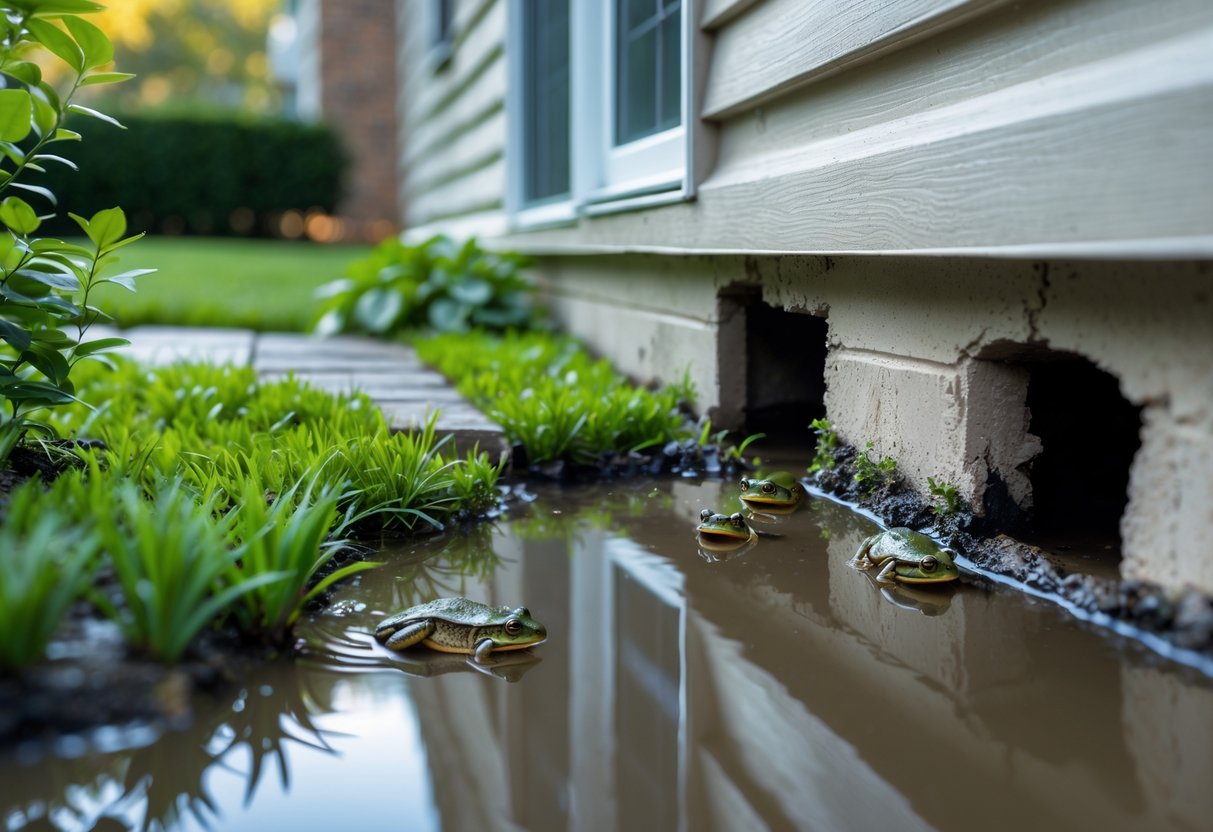
Frogs are sneaky and can squeeze through tiny gaps you might not even notice. Keeping them out usually means spotting these entry points and making some changes outside.
You don’t need anything fancy. Just a few simple fixes and natural tweaks can help keep frogs in the yard, not your living room.
Common Ways Frogs Get Inside
Frogs slip in through open doors, windows without screens, or torn screens. Even small cracks near your foundation or vents can let them in.
They love dark, damp spots, so basements and crawl spaces are common entryways.
Take a good look at your doors, windows, vents, and foundation for gaps or holes. You might be surprised where frogs can fit.
Sealing Gaps and Installing Door Sweeps
You can keep frogs out by blocking their favorite entrances. Use caulk or weatherproof sealant to close up cracks in walls and foundations.
Door sweeps work wonders on exterior doors—they seal the gap at the bottom so frogs can’t sneak in.
Don’t forget about window screens. Patch up holes or replace broken ones so frogs can’t get through.
These barriers keep frogs outside without hurting them.
Reducing Outdoor Attractants
Moisture and bugs are what frogs want most. Fix leaky pipes and avoid letting water puddle up near your house.
Cut back on outdoor lighting near doors and windows. Bright lights attract bugs, and bugs bring frogs.
Clear away thick bushes or piles of debris near your home. Frogs love to hide in those spots.
By managing water and insects, you make your yard a lot less interesting for frogs.
Natural Pest Control for Lasting Results
Natural pest control makes a real difference by cutting down on insects—frogs’ favorite snack.
Try planting herbs like marigolds, garlic, or lemongrass. Frogs and bugs both seem to hate those strong smells.
If you want some extra help, invite birds or bats into your yard. They’ll snack on the insects and keep their numbers down.
Skip the harsh chemicals. Those can harm pets or wildlife, and honestly, they’re just not worth the risk.
Focus on building a garden that’s balanced and not so inviting to frogs. It’s a gentler way to protect your space.


