
If you’re hoping to attract frogs to your garden, there are a few easy things you can try to make it feel like home for them. Frogs love gardens that offer water, shelter, and a steady supply of insects.
A pond or even just a small water feature makes a huge difference, since frogs need water to stay moist and to breed.
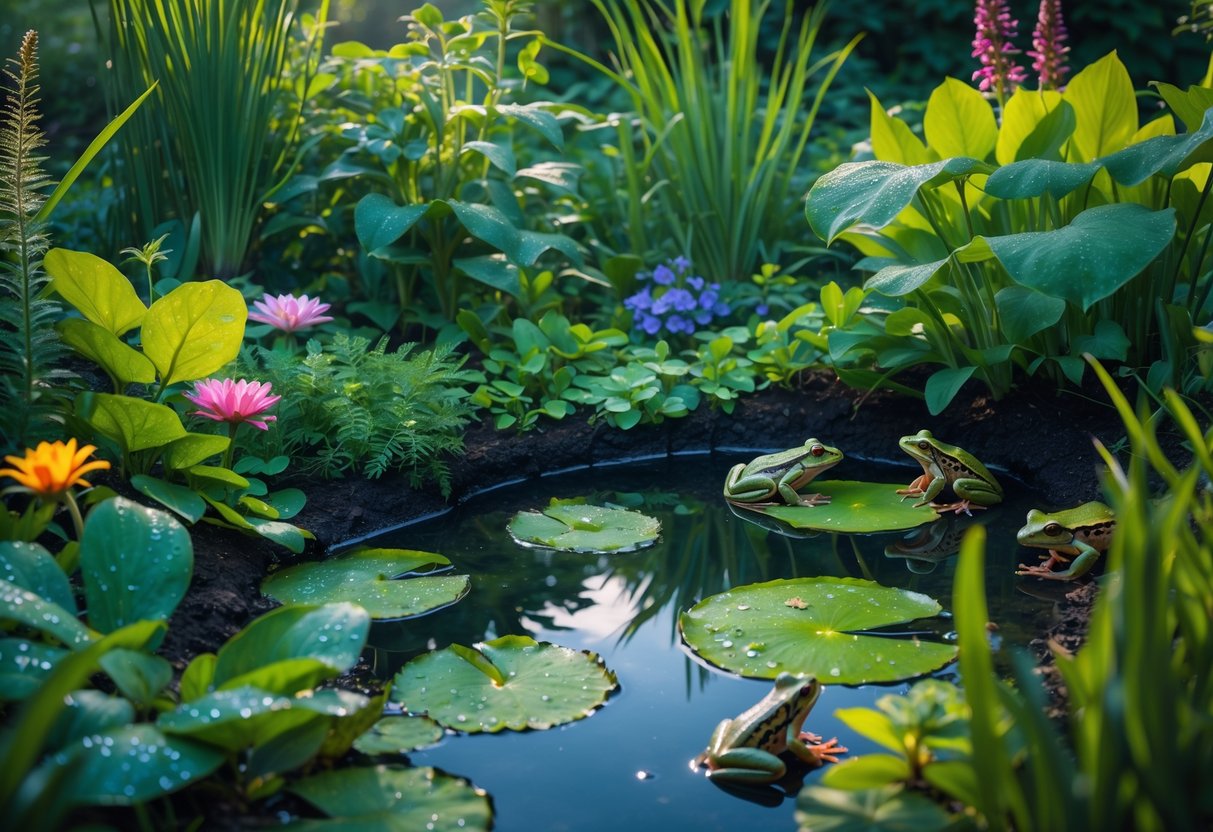
Frogs look for shady, damp places to hide, so toss in some logs, leafy piles, or thick plants to give them cover. Try not to use chemicals or pesticides—frogs soak up toxins through their skin, and they count on bugs for food.
With the right mix of water, shelter, and a frog-friendly setup, your garden can turn into a peaceful hangout for these cool little amphibians.
What Frogs Look For in a Garden

Frogs don’t just settle anywhere. They look for clean water, safe hiding spots, and plenty of insects to munch on.
If your garden checks those boxes, you’re in luck—they might just move in.
Essential Water Sources for Frogs
Water really tops the list for frogs. They need clean, shallow water for laying eggs and for tadpoles to grow.
A pond with gentle slopes or even a small pool works well, so frogs can get in and out easily.
Keep the water free from chemicals. If you let water sit around, try to keep it fresh with the occasional clean-up.
Even birdbaths or damp patches of soil can attract local frogs, as long as the water stays safe.
Different frog species will use these water spots for breeding, which means you’ll probably see more types of amphibians if you offer a few options.
Shelter and Safe Hiding Places
Frogs hide out during the day to avoid predators like cats or birds. Dense plants, piles of leaves, or logs make great hiding places.
Add layers of plants—ferns, low shrubs, whatever you like—to give them cover. Rock and wood piles work too, since frogs love cool, moist spots.
Bright outdoor lights at night might scare frogs away, so it’s worth keeping things a bit dim. If you offer quiet, protected corners, frogs will feel safer and more likely to stick around.
Food Availability and Insect Populations
Frogs eat bugs—mosquitoes, flies, beetles, you name it. If you want frogs, you need a good supply of insects.
Grow native plants to attract more bugs and keep things balanced. Try to skip the chemicals, since fewer bugs means less frog food.
A garden full of insects helps frogs thrive and keeps pests in check. It’s a win-win for you and your amphibian pals.
If you’re curious about which plants work best, there are plenty of tips out there for attracting frogs naturally.
Creating a Frog-Friendly Habitat

To bring frogs in, you’ll need a few key things: water, the right plants, and safe hiding spots. These features help frogs, tadpoles, and toads feel at home and keep your garden lively.
You might also run into other wildlife, so it’s smart to think about how everyone will get along.
Designing a Frog Pond
A frog pond is pretty much essential for most native frogs and tadpoles. Pick a shallow basin—at least 12–18 inches deep—with sloped edges or ramps so frogs can easily get in and out.
Don’t add fish unless they’re the kind that eat mosquito larvae but leave tadpoles alone.
Use clean, chlorine-free water. If you’re using tap water, let it sit uncovered for a day or treat it with a dechlorinator.
Plant native aquatic plants around the pond’s edge and in the water. These give frogs places to hide from predators like dragonflies.
Don’t go overboard cleaning the pond—tadpoles actually eat some of the algae. If you use a pump, make sure it’s gentle and won’t suck up eggs or tadpoles.
You can cover the pond with shade cloth during breeding season to help protect eggs.
Choosing Native Plants to Attract Frogs
Go for native plants—they’re the best bet for a frog-friendly garden. These plants support the local insects frogs eat and match what frogs expect in their natural habitat.
Mix in low-growing plants, shrubs, and maybe a small tree or two for shelter and hunting spots.
Let part of your yard go a bit wild with leaf piles, logs, or rocks. Frogs love moist, shady places to hide and rest.
Skip invasive plants—they can mess with water chemistry and hurt amphibians.
Even just a few native plants will boost insect diversity and make your yard more inviting for frogs. If you add layers of plants, tree frogs will have safe paths to climb through your garden.
Coexisting with Other Wildlife
A frog-friendly garden brings in all sorts of critters. Birds, mammals, and helpful insects might show up along with the frogs.
If you plant a variety of things and keep some water around, you’ll help balance these visitors.
Don’t use pesticides or herbicides—they hurt insects frogs eat and can be toxic to frogs through their skin.
If you’ve got a pool or deep well, add something like a frog ladder so frogs can escape if they fall in.
Adding fish to your pond might help with mosquitoes, but it could scare frogs away or eat their eggs. If you really want fish, pick native kinds that won’t bother your amphibians.
Considerations for Toads and Exotic Species
Toads need slightly different things than frogs do. They like drier, shadier spots and love having places to burrow—think leaf piles or a bit of mulch.
If you leave parts of your yard a little wild, you’ll probably see more toads around, and honestly, that helps keep insects in check.
Watch out for exotic species like cane toads. They can outcompete native frogs or even mess with your local ecosystem.
Try not to bring in non-native amphibians. It’s usually best to let native species wander in on their own.
If you want to help toads and native frogs, patience is key. Keep things safe and skip the chemicals.
Toads can gobble up a huge number of insects—sometimes up to 1,000 a day. That kind of appetite can really help your garden without any need for poisons.


