
If you want to get rid of bed bugs quickly, start by confirming the infestation, containing it, treating every hiding place, and checking until the activity stops.
You get the best results when you combine cleaning, heat, targeted products, and follow-up monitoring, because bed bugs can survive missed spots and quickly rebuild an infestation.
Bed bugs are small, stubborn insects. They can move from a mattress to furniture, baseboards, and outlets before you notice more than a few bites.
Knowing how to get rid of bed bugs starts with identifying the problem correctly. Use the right sequence so you do not just scatter them into new rooms.

Confirm The Problem Before You Treat

Before you treat anything, make sure you are dealing with Cimex lectularius and not another pest. Look for visible insects, black spotting, shed skins, eggs, and signs around sleep areas that point to active bed bug infestations.
Identify Bed Bugs Vs. Other Pests
Adult bed bugs look oval, flat, and reddish brown, while nymphs are lighter and smaller. If you are unsure, compare any sample with descriptions in bed bug identification guides.
Recognize Early Evidence In Sleeping Areas
The earliest signs of infestation often appear where you sleep, including bed bug bites, dark fecal spots, shed skins, and tiny eggs. Small clusters near seams or headboards signal that you need to act quickly.
Check Mattresses, Frames, Furniture, And Outlets
Inspect mattress seams, tags, bed frames, nearby furniture, baseboards, and electrical outlets, since bed bugs hide there most often. Use a flashlight to spot signs of bed bugs and check adjacent rooms to avoid missing another harboring site.
Contain The Infestation And Prepare The Room
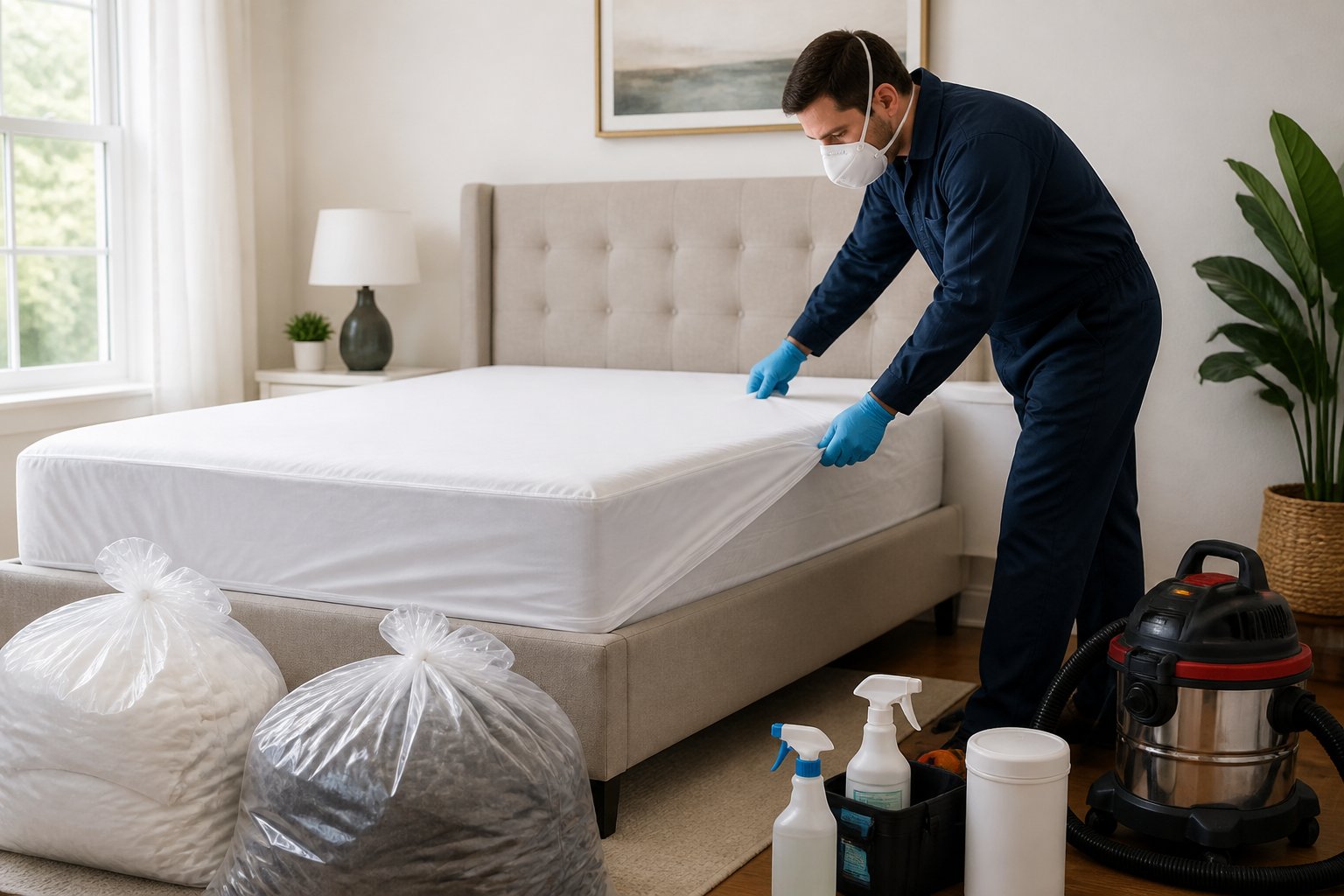
Once you know where the problem is, your next job is to keep it from spreading while you prepare for treatment. Handle fabrics safely, reduce hiding places, and set up barriers that support bed bug prevention.
Bag Laundry And Heat-Treat Washable Items
Seal bedding, clothes, and washable soft goods in bags before moving them. Wash on hot and dry on high heat, since heat reliably kills bed bugs in fabrics.
Reduce Clutter Without Spreading Bugs
Reduce clutter carefully so you do not carry bed bugs into clean rooms. Bag items before moving them and keep piles from touching other furniture.
Isolate The Bed And Seal Hiding Spots
Pull the bed away from walls and tuck bedding so it does not touch the floor. Place leg traps or bug interceptors under each leg.
Seal cracks, crevices, and loose gaps around the room, since interceptor traps work best when you also block easy hiding spots.
Use Proven Treatment Methods In The Right Order
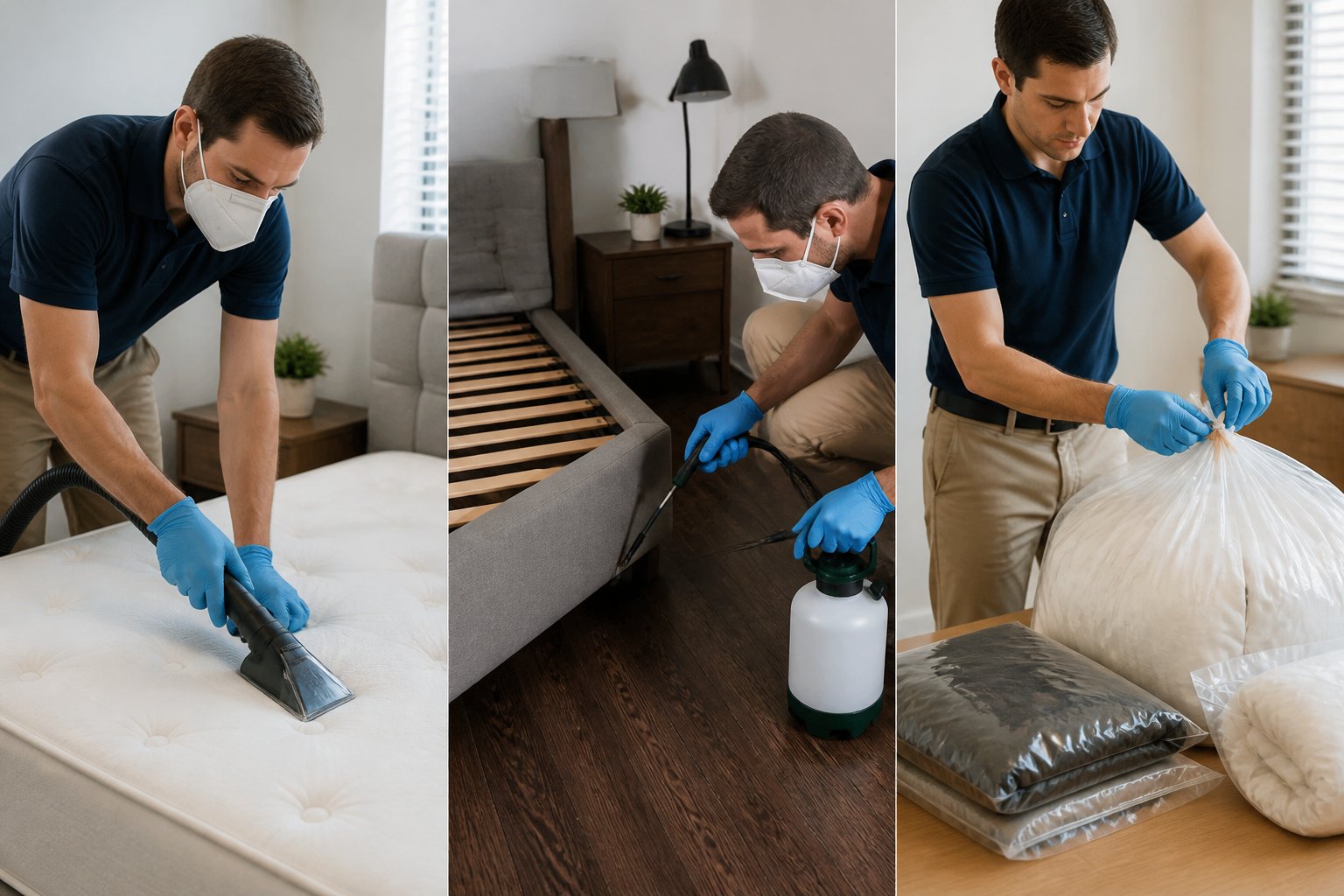
Combine physical removal, heat, and targeted products for best results. The order matters, because some methods remove or expose bugs while others kill what remains.
Vacuuming, Steam, And Encasements
Vacuum seams, bed frames, baseboards, and nearby furniture first. Empty the vacuum into a sealed bag right away.
Use steam to reach hidden spots. Mattress encasements trap survivors so they cannot feed.
Desiccant Dusts Like Diatomaceous Earth And Cimexa
Apply desiccant dusts such as diatomaceous earth and Cimexa lightly in cracks and voids where the label allows. These products dry insects out over time.
Contact Sprays, Residuals, And What Instant Kill Really Means
Use chemical insecticides, including some pyrethrins, pyrethroids, and chlorfenapyr products, according to the label. No single product solves everything, and a quick kill on exposed bugs does not end the infestation unless you treat hidden eggs and adults.
Track Results And Know When To Call A Pro

Follow up after every treatment so you can catch survivors before they recover. Monitoring tells you whether your efforts are working or if you need professional pest control.
Monitor With Interceptors And Repeat Inspections
Keep bed bug interceptors in place and inspect them regularly for new activity. Recheck seams, furniture, and outlet areas on a schedule to make sure treatment is working.
Signs DIY Is Not Enough
If you keep seeing live bugs, fresh bites, new spotting, or eggs after repeated treatment, your current approach is not enough. A growing problem, spread into multiple rooms, or bugs returning after thorough cleaning usually means you need professional pest control.
What To Expect From Professional Help
A professional exterminator uses stronger methods and better inspection tools. They create a treatment plan suited to the size of your problem.
Professional pest control often includes more than one visit. Follow-up checks help ensure lasting bed bug elimination.


