
Bed bugs go through a simple life cycle, moving from egg to nymph to adult.
If you can identify the stage you are seeing, you can judge how active the problem is and what kind of control steps matter most.
Their biology connects closely to feeding, hiding, and molting.
Infestations can spread quickly in homes, hotels, and apartments.
The common bed bug, Cimex lectularius, is a public health pest that feeds on blood and causes itchy bites, according to the U.S. EPA’s bed bug overview.
People often ask how long bed bugs live, since age and stage can change how far an infestation has progressed and how hard it may be to eliminate.

The Three Main Phases At A Glance

The bed bug life cycle timeline is simple, even if the details are easy to miss.
You can think of bed bug biology as a gradual path from tiny eggs to young bed bugs to fully developed adults.
Egg Stage
Bed bugs lay tiny, white or translucent eggs that often remain hidden in tight cracks.
Eggs start the bed bug life cycle and usually appear near protected resting spots.
Nymph Stage
A bed bug nymph is a young bed bug that has hatched but is not yet mature.
Bed bug nymphs must feed and molt several times before becoming adults.
Adult Stage
Adult bed bugs are flatter, darker, and larger than younger stages.
Adults reproduce and keep the infestation going.
How Bed Bugs Grow From Hatchling To Mature Adult

Once eggs hatch, the insect enters a growth cycle shaped by feeding and molting.
The early nymph stage is fragile, while the later nymph instars become more active and darker after blood meals.
Bed Bug Hatching And Early Growth
Bed bug eggs usually hatch in about 6 to 10 days when temperatures are favorable, as noted in this bed bug life cycle guide.
The newly hatched nymph must feed before it can keep growing.
Five Nymphal Stages And Molting
Bed bugs pass through five nymphal stages, also called nymph instars.
After each blood meal, the insect sheds its skin and progresses to the next stage until it reaches adulthood.
Reproduction And Traumatic Insemination
Adult males mate through traumatic insemination, which helps the species remain persistent.
Once females begin laying eggs, even a small population can expand quickly if control is delayed.
What Each Stage Looks Like In Real Life
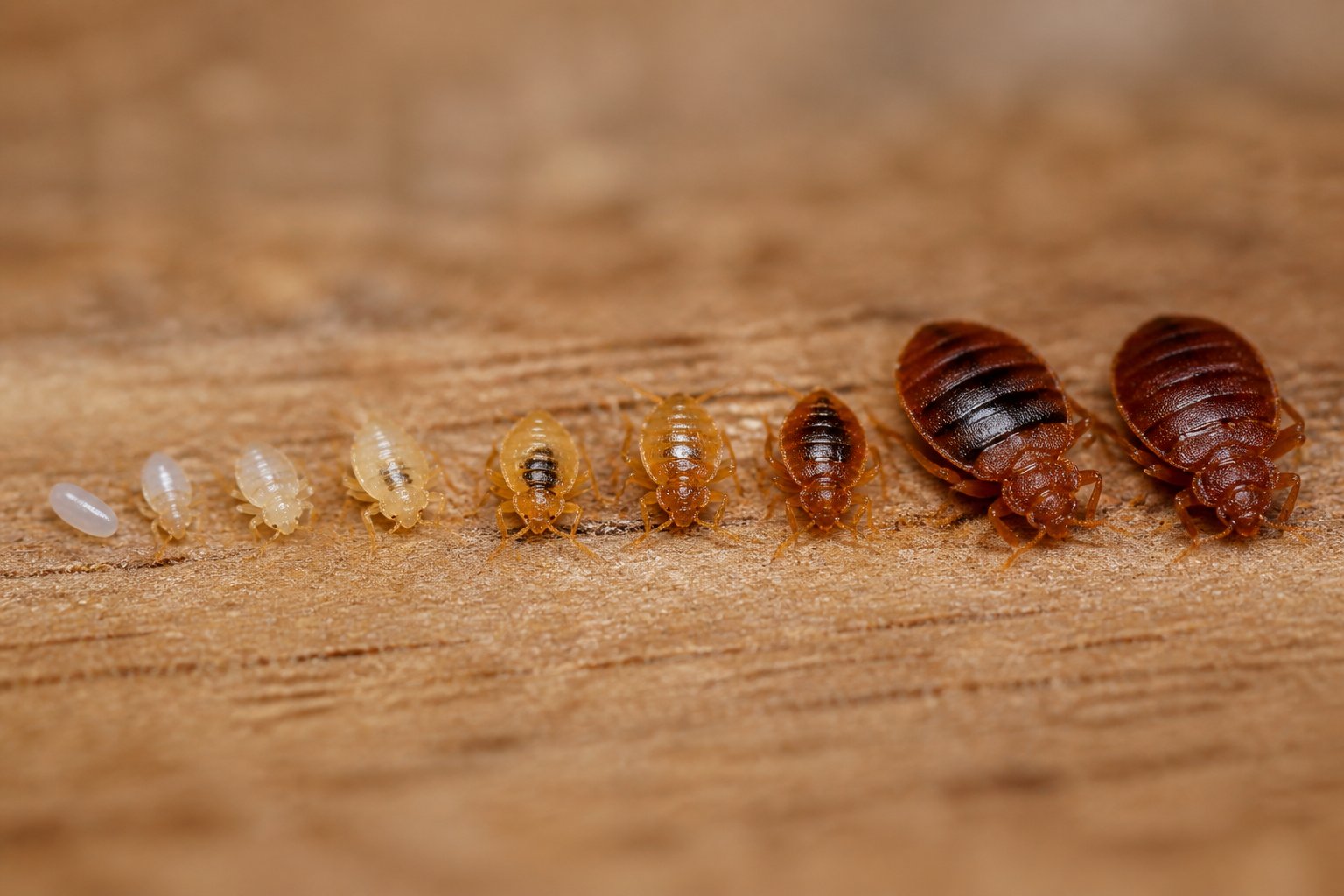
Real-life signs often show up before you notice live bugs.
Size, color, and hiding spots all change as bed bugs mature.
Clues around your sleeping area can point to the infestation early.
Size Color And Shape Changes
Bed bugs start tiny and pale, then become larger and darker with each feeding.
If you look at bed bug life cycle pictures or a diagram, you will usually see the same oval shape growing more visible at each stage.
Where To Check Around Beds And Furniture
Check mattress seams, box springs, bed frames, and nearby furniture cracks.
Bed bugs often hide just out of sight in protected edges and crevices.
Signs That Often Appear Before You See Live Bugs
Watch for fecal spots, bed bug poop, blood spots on sheets, and a musty odor near sleeping areas.
Bed bug bites can also be a clue, especially when they appear alongside dark stains or shed skins.
Why Stage Identification Matters For Control
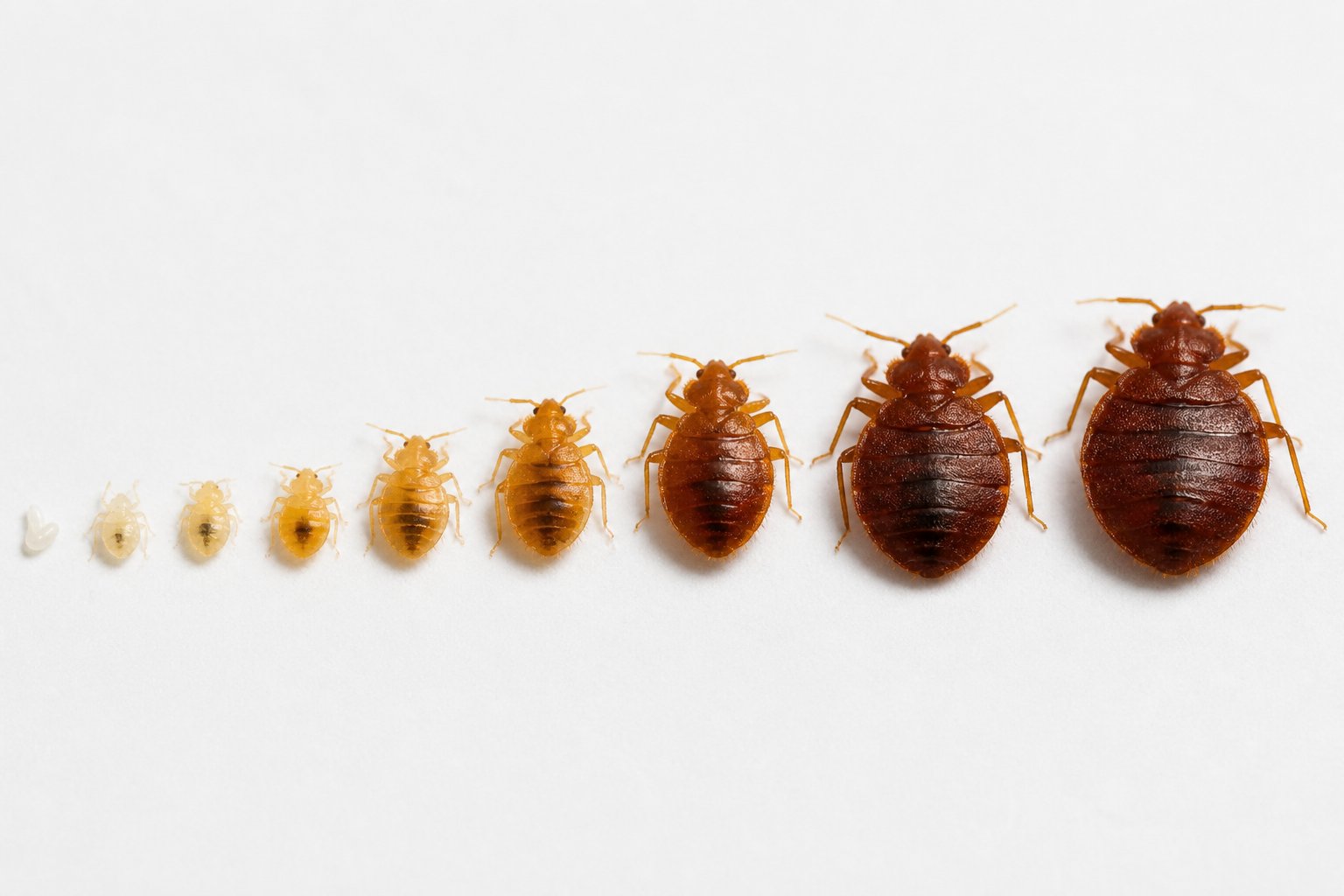
Knowing the stage helps you separate harmless lookalikes from a real infestation.
It also tells you how quickly a bed bug infestation may be growing and how timing affects treatment.
Bugs Commonly Mistaken For Bed Bugs
Some bugs that look like bed bugs include bat bugs, carpet beetles, and small cockroach nymphs.
Bat bugs are the closest match, so a careful inspection matters before you assume every small brown insect is a bed bug.
What Life Stage Means For Infestation Growth
A house with mostly eggs or small nymphs may still be in an early growth phase.
Many adults usually mean the problem has been present longer.
Stage clues can also show whether eggs are still hatching and whether more bugs may appear soon.
When Stage Clues Affect Bed Bug Treatment
You get the best results when you know whether you are dealing with eggs, nymphs, or adults.
Some products do not kill eggs. Adults can hide for longer periods. You need a targeted plan to break the full cycle.


