
You might guess wolves or mountain lions are the top deer killers, but the numbers tell a different story. Most deer die because of other deer, humans, or accidents—starvation, disease, hunting, and car crashes easily outpace deaths from big predators.
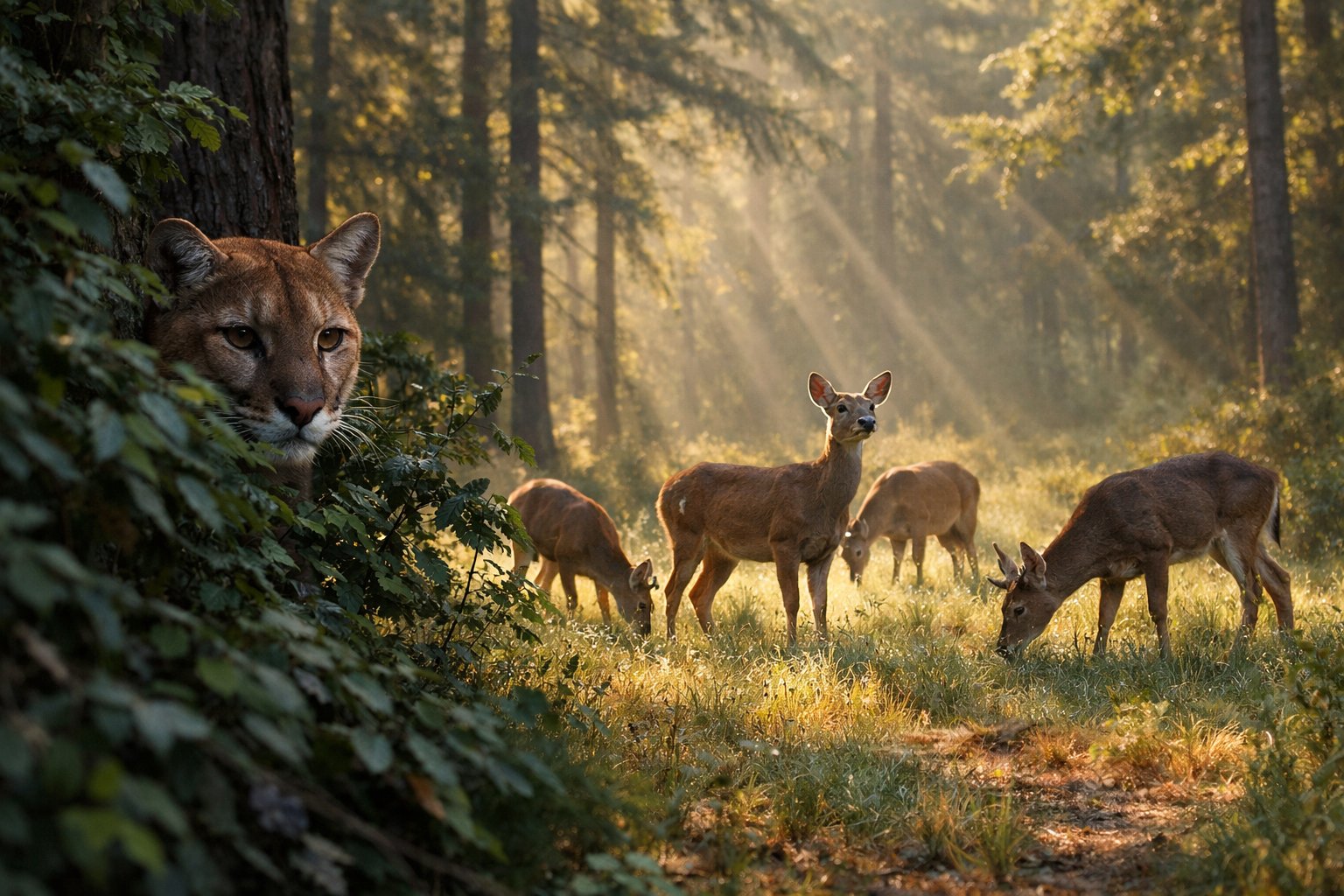
As you dig into this topic, you’ll see how intraspecies competition, diseases like CWD, and what people do all shape deer survival in different places.
The next sections break down which animals actually kill deer, when predators matter most, and how non-predator factors really drive the death toll.
Which Animal Kills the Most Deer?

You’ll find out which predators and human-related causes take the most deer, and why deer themselves and disease often drive high mortality.
Check out each part to see how predators, disease, hunting, and car collisions affect both adult deer and fawns.
Top Predators of Deer
The main predators that regularly kill deer are wolves, cougars (mountain lions), black bears, coyotes, bobcats, and lynx. Wolves and cougars hunt adult deer by ambush or in packs.
Black bears and coyotes mostly go after fawns but will kill adults when they can. Bobcats and lynx stick to fawns or deer that are already weak.
Where wolves are common, they push deer to change their habits and can really drop deer numbers. In places without big carnivores, smaller predators and people step in.
Predator impact really depends on the region, the season, and which deer species live there.
The Role of Coyotes, Wolves, Bears, and Mountain Lions
Coyotes are everywhere and take a ton of fawns every spring. They hunt solo or in pairs and seem to do just fine near farms and suburbs.
Wolves hunt in packs and can bring down adult deer, changing herd structure across big areas. Black bears grab fawns, especially in spring and early summer, and sometimes scavenge adult carcasses.
Mountain lions (cougars) like to ambush adults in thick cover or along deer trails. Each of these big carnivores hits deer populations in a different way—wolves affect numbers on a big scale, cougars pick off adults locally, and coyotes limit fawn survival.
Intraspecific Competition and Disease
Deer often end up killing each other off, in a way, through starvation, stress, and disease spread when herds get too dense. Crowded herds chew through food supplies, leading to malnutrition and lower winter survival.
Chronic wasting disease (CWD) and epizootic hemorrhagic disease (EHD) can wipe out lots of deer. CWD is a prion disease that slowly wastes away deer, and it sticks around in the environment.
EHD kills fast, especially in warm years. If you keep an eye on herd density and disease reports, you’ll see that disease and competition sometimes kill more deer than predators do.
Impact of Hunting and Vehicle Collisions
Humans kill more deer each year than any natural predator, mostly through regulated hunting and, less intentionally, through car crashes. Hunting targets both adults and fawns and helps manage population size and health.
Rules about seasons and harvest limits control local deer numbers. Vehicle collisions kill millions of deer every year in the U.S., with the worst spikes during the fall rut and spring fawning.
These crashes mostly hit adult white-tailed deer near roads and in broken-up habitats. If you want to help, drive carefully at dawn and dusk, and support efforts to connect habitats so deer don’t have to cross busy roads as much.
Other Animals and Factors Affecting Deer Mortality

Here’s a look at specific risks that kill or weaken deer beyond just the big predators. The next items explain how each factor works, where it matters most, and what you might want to keep an eye on in your area.
Dog Attacks and Domestic Risks
Domestic dogs sometimes kill fawns and, less often, adult deer. Free-roaming or stray dogs chase fawns during spring, causing injury, blood loss, or death.
Even if a dog doesn’t deliver a fatal bite, a chased fawn might get abandoned by its mother or die from shock. Rural edges and suburban neighborhoods see the most risk when dogs run off-leash.
Your backyard or local park can become a danger zone if owners let dogs roam. If you notice repeated problems, report them to animal control and keep your own dogs leashed near deer habitat.
Impact of Snakes, Alligators, and Crocodiles
Big reptiles kill deer in the southern U.S. and some other regions. Adult alligators in wetlands ambush deer that come to drink and drag them underwater.
Crocodiles do the same in places outside North America where they overlap with deer. In most of the U.S., venomous snakes rarely kill adult deer but can harm fawns.
A snakebite can weaken a young deer, making it easy prey for something else or leading to infection. If you live near wetlands or rivers, reptile predation can be a real, local cause of deer deaths.
Mosquitoes, Scorpions, and Disease Transmission
Tiny creatures can cause big die-offs through disease. Mosquitoes spread viruses like Epizootic Hemorrhagic Disease (EHD) and bluetongue, which can kill lots of white-tailed deer during warm, wet seasons.
Outbreaks usually show up as clusters of dead deer near standing water where midges and mosquitoes breed. Scorpions don’t really kill deer; they’re not much of a risk compared to insects.
The main worry is disease vectors that carry pathogens, not stings. Wildlife managers keep tabs on disease outbreaks and test carcasses when something seems off.
Habitat Loss and Wildlife Management
When forests disappear, deer end up crowded into smaller patches. That crowding raises the risk of disease, starvation during harsh winters, and more car accidents on roads near those fragmented habitats.
Wildlife managers make choices that really affect deer populations. If hunters take too many deer, the numbers drop too low. But if hunting isn’t regulated enough, deer can overpopulate, which brings more disease and starvation.
Local fish and wildlife agencies decide on hunting seasons, set population targets, and make habitat improvements. They try to balance harvest, safety, and the long-term health of deer herds. If you want to dig deeper, check out this study on deer mortality factors for regional data and management practices.


