
You can usually tell squirrel poop vs rat poop by checking three things first: size, shape, and location. Squirrel droppings tend to be a little smaller, more rounded, and found in small piles, while rat droppings are usually larger, more tapered, and scattered along travel routes.

The fastest pest identification clue is where you find the droppings, because squirrel vs rat patterns are often different even when the pellets look similar at first glance. If you are checking an attic, crawlspace, or garage, paying attention to the layout around the droppings can save you a lot of guesswork.
Quick Visual Differences
The quickest way to separate squirrel poop from rat poop is to compare the pellets side by side. Fresh droppings often look dark and similar at a distance, so you need to check the ends, the texture, and how the droppings dry out.
Size And Shape Clues
Squirrel feces are usually smaller, around 3/8 inch long, with rounded ends and a more barrel-like look. Rat feces are typically larger, often 1/2 to 3/4 inch long, and they usually taper at the ends like a raisin.
If you compare squirrel droppings and rat droppings on a flat surface, the rat scat often looks more uniform and elongated. Squirrel scat can look slightly more oval and less pointy, which is one reason people mix the two up.
Color And Texture Changes
Fresh squirrel poop and rat poop can both appear dark, which makes color less useful at first. As they dry, squirrel droppings often lighten to brown or even whitish tones, while rat droppings tend to stay darker.
Texture helps too. Squirrel feces are usually smoother, while rat feces often look a little rougher and more uneven.
Fresh Pellets Vs Older Droppings
Fresh pellets may be soft enough to look shiny. Older droppings are dull, dry, and easier to crumble or break apart.
In practice, I check the newest droppings first because older ones can lose the details you need for identification. If you are seeing a mix of fresh and old pellets, that often points to repeated activity in the same area.
Where Droppings Are Found And How They Are Left
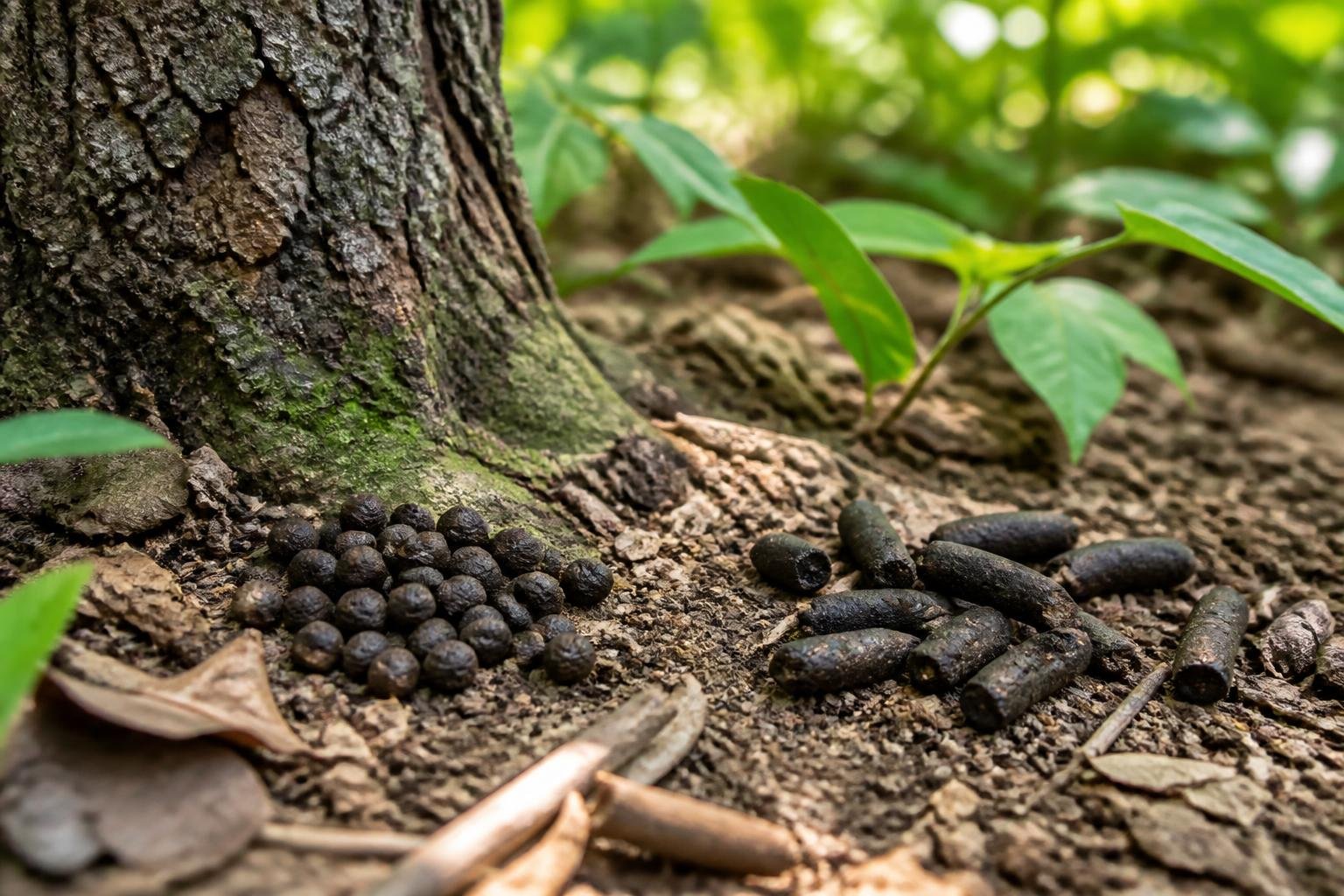
Where you find rodent droppings tells you a lot about the animal behind them. Squirrels and rats leave waste differently, and that pattern is often easier to spot than the droppings themselves.
Clustered Piles Vs Scattered Trails
Squirrels usually leave droppings in small clustered piles, often in one or a few repeat spots. Rats usually leave rodent droppings in scattered trails because they defecate while moving.
That means a neat little pile in a corner points more toward squirrels, while a string of individual pellets along a path points more toward rats. This pattern is one of the most reliable clues in the field.
Attics Trees Baseboards And Appliances
Squirrels are more likely to leave droppings in attics, near chimneys, around tree trunks, and in other elevated spaces. Rats often turn up near baseboards, behind appliances, in basements, and along walls.
If you are checking an attic, also look near insulation, vents, and nesting spots. If you are checking a kitchen or basement, inspect hidden runs near food, wiring, and appliance edges.
Roof Rats And Norway Rats In The Comparison
Roof rats often stay higher up than Norway rats, so they can appear in attics, rafters, and upper wall spaces. Norway rats are more likely to stay low, near ground level, foundations, and basement areas.
That matters because roof rats can make droppings patterns seem more like squirrel activity at first glance. A careful location check keeps you from confusing a high-roaming rat with a squirrel problem.
Other Signs That Help Confirm The Animal
Droppings rarely tell the whole story by themselves. When you combine them with nests, chew marks, and movement patterns, you get a much clearer picture of whether you are dealing with a squirrel or rat.
Nests Gnaw Marks And Food Remains
Squirrels often leave nests made from insulation, leaves, and other natural materials, especially in attics. Rats usually build looser nests from shredded paper, insulation, or cardboard.
Chew marks help too. Squirrel damage is often cleaner and more obvious, while rat gnawing may appear smaller and more numerous. Food crumbs, shell pieces, and chewed packaging near the droppings make a rat problem more likely.
Movement Patterns And Activity Areas
Squirrels are usually active in daylight, especially early morning and late afternoon. Rats are usually active at night, so fresh sounds after dark can point you in the rat direction.
Tracks and runways also help. Squirrels tend to bound, while rats move close to walls and leave greasy rub marks along travel routes.
When Droppings Alone Are Not Enough
A few pellets can be misleading, especially in an attic or garage where multiple animals may pass through. If the droppings are old, broken, or mixed with debris, it becomes harder to identify the animal with confidence.
That is the point where wildlife control or pest control support becomes useful, especially if you notice repeated activity or structural damage. A full inspection can confirm the animal before you start sealing entry points or setting traps.
Health Risks And Safe Cleanup
Rodent waste can carry disease risks, so cleanup should be handled carefully. As noted in a PESTKILL comparison guide, both squirrel and rat droppings can carry harmful bacteria, and rat waste may also be linked with more serious illness concerns.
Diseases Linked To Rodent Waste
Rodent droppings can expose you to bacteria and pathogens, including leptospirosis and rat-bite fever. Even when the droppings are old, disturbing them can create dust and increase exposure risk.
How To Clean Droppings Safely
Do not sweep or vacuum dry droppings first. Instead, ventilate the area, wear gloves and a mask, spray the waste with disinfectant, let it soak, and then pick it up with paper towels.
Seal the droppings in a plastic bag and disinfect the area again. Wash your hands well after removing gloves, and keep children and pets out of the area during cleanup.
When To Call A Professional
Call a professional if you see a large amount of droppings, repeated contamination, or signs of nesting in hard-to-reach spaces. Professional pest control or wildlife control is also a smart choice if you suspect an active infestation in insulation, ductwork, or wall voids.
If you are unsure whether you are dealing with squirrels or rats, a trained inspector can save you time and reduce health risks. That is especially useful when droppings appear in multiple rooms or keep coming back after cleanup.


