
Thinking about having a chimpanzee as a pet? It might sound exciting at first glance. They seem smart and honestly, pretty adorable.
But bringing one into your home is way more complicated than it looks. Keeping a chimpanzee as a pet isn’t safe for you or the animal. Their strength, unpredictable behavior, and unique care needs make it risky.
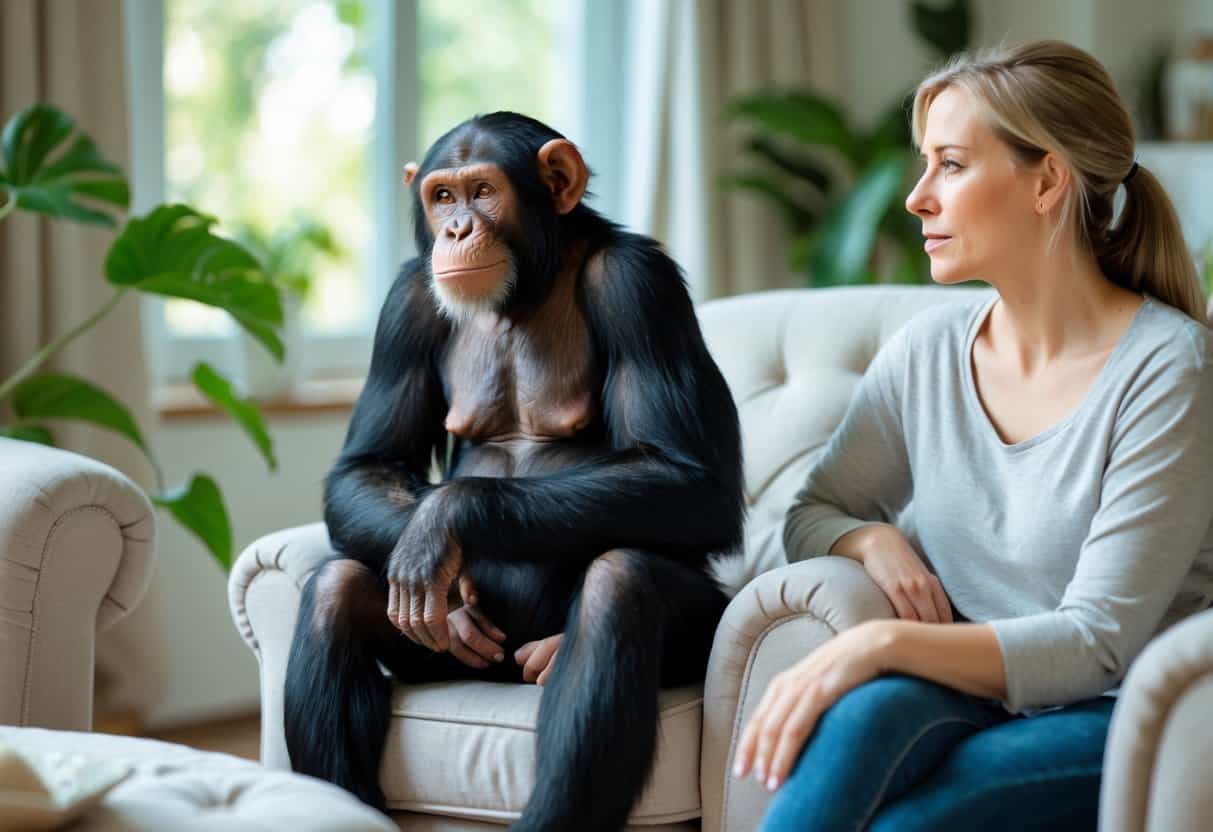
Chimpanzees get strong fast. As they grow, they can become aggressive.
They need to live with other chimps to develop normal behavior. A regular home just doesn’t cut it.
On top of that, there are real health risks and strict legal rules. Owning a chimp is much harder and riskier than most people realize.
Curious why chimps make lousy pets? Let’s dig into the facts and challenges that might change your mind.
Key Risks and Challenges of Keeping Chimpanzees as Pets
Trying to keep a chimpanzee as a pet brings a load of tough problems. Their strength, complex needs, and health risks make daily care a real challenge.
And they live a long time. Most homes just can’t meet their needs, no matter how hard you try.
Physical Strength and Aggression
Chimpanzees are crazy strong—about four times stronger than a person. Even their playful shoves can cause real injuries.
As they get older, especially the males, they often get more aggressive. If a chimp feels scared or frustrated, it might lash out.
These attacks can seriously hurt people or other pets. Regular houses just aren’t built to handle something that powerful.
Because they’re so strong and unpredictable, it’s risky to have a chimp around kids or other animals. They need secure, purpose-built spaces, which most people don’t have.
Behavioral and Psychological Issues
Chimps are super social in the wild and live in groups. When people keep them as pets, chimps miss out on that, and it stresses them out.
They often end up lonely and start acting strangely—things like rocking or pulling out their own hair. Without enough mental stimulation, captive chimps get bored, depressed, or even aggressive.
You can’t really train them like a dog or cat. Their wild instincts don’t just go away.
If someone takes a young chimp from its mother too soon, it misses out on learning important behaviors. That can make them even harder to handle as they grow up.
Threats to Human Health
Chimps and humans share a lot of biology, so they can spread diseases to us. Some illnesses, like Ebola, are especially dangerous and can jump from chimps to people.
Handling a pet chimp puts you at risk for some nasty infections. Finding a vet who truly understands chimps isn’t easy, either.
You have to be super careful about hygiene and health checks if you live with a chimpanzee. If you can’t meet their medical needs, both you and the chimp could face serious health problems.
Lifespan and Long-Term Commitment
Chimps can live 40 to 60 years, sometimes even longer in captivity. That’s a huge commitment—way more than most pets.
As they age, their needs change. They get bigger, stronger, and need more space and care.
A lot of people underestimate this when they first bring a chimp home. And if you can’t keep your chimp anymore, it’s tough to find a good place for them.
Sanctuaries exist, but space is limited. So you really need a lifelong plan before even thinking about adopting a chimp.
For a deeper look at the risks, check out this article on the risks and welfare of chimpanzees as pets.
Legality, Ethics, and Welfare Concerns
Owning a chimpanzee isn’t just about daily care. You have to think about the laws, ethics, and what it really does to the animal’s well-being.
These issues affect you, the chimp, and even wild chimp populations.
Legal Restrictions and Endangered Species Act
Most places have strict rules about owning chimps. Many states ban them as pets or require tough permits.
You need to check your local and state laws before even considering it. At the federal level, the Endangered Species Act protects chimps since they’re endangered.
This law limits trade and ownership to help wild populations. But there’s no single federal law banning private ownership, which just makes things confusing.
If you don’t have the right permits and facilities, you could face fines or legal trouble. These laws exist to protect both you and the chimp.
Ethical Implications and Animal Welfare
Chimps need complicated social lives and mental challenges to stay healthy. If you keep one alone at home, it’ll probably suffer from stress and loneliness.
This can lead to harmful behaviors, like hair plucking or rocking. Raising a chimp from infancy is especially tough.
Baby chimps need their mothers and other chimps to learn how to act. You just can’t replace that in a home.
Because they’re so strong and still have wild instincts, adult chimps can become aggressive. Most homes just can’t meet their physical or psychological needs, so their welfare suffers.
Impact of the Pet Trade and Roadside Zoos
The pet trade grabs infant chimpanzees from their mothers way too early. That trauma doesn’t just hurt the chimps—it really puts extra pressure on wild populations, too.
A lot of folks who buy chimps don’t realize how tough it is to care for them. They might abandon the animals or send them off to roadside zoos, where conditions usually aren’t great.
Honestly, those zoos rarely give the chimps enough space or decent living conditions. It’s a sad situation.
Sanctuaries like Chimp Haven step in to offer rescued chimpanzees a shot at a better life. If you want to help, supporting these sanctuaries does a lot more good than trying to keep a chimp at home.
The illegal pet trade also destroys habitats and pushes wild populations even closer to decline. It’s a messy cycle, isn’t it?


