
When chimpanzee sperm meets a human egg, the odds of creating a viable embryo drop to almost zero.
Even if the sperm manages to get inside the human egg, the fertilized cell usually can’t divide right and dies off pretty fast.
This happens mostly because humans and chimpanzees have different numbers of chromosomes, so their genetic material just doesn’t mix well.

It might seem odd, since humans and chimps share so much DNA.
But the real problem is the way chromosomes get arranged and packaged inside the cells.
This difference messes up normal cell division, so the fertilized egg can’t really develop.
People have tried to explore this idea in the past, but no one has ever confirmed a hybrid was born.
Scientists found that these species barriers are pretty strong.
Your body and a chimpanzee’s reproductive cells just aren’t compatible enough to make a living offspring.
If you’re curious, you can read more about the humanzee.
Reproductive Mechanisms and Species Barriers

When chimpanzee sperm meets a human egg, several biological hurdles get in the way.
These barriers come from genetic differences and the way reproduction works in each species.
Getting into the details helps explain why cross-species fertilization just doesn’t happen.
Differences in Chimpanzee and Human Chromosomes
Humans have 23 pairs of chromosomes.
Chimpanzees have 24 pairs.
Two chimp chromosomes fused at some point to make one in humans.
This fusion changed the chromosome structure just enough to make matching up during fertilization tough.
Chromosome pairing has to happen for a fertilized egg to develop.
Chromosomes carry genes, so if they don’t match up, you get genetic problems.
These mismatches stop the embryo from developing.
Some chromosomes—like 6, 13, 19, 21, 22, and the X—are pretty similar in both species.
But even tiny differences can block fertilization or cause the embryo to stall.
Why Fertilization Cannot Occur Between Chimps and Humans
Fertilization kicks off when sperm attaches and gets through the egg’s outer layer.
Human sperm can sometimes bind to eggs from species like gorillas.
But chimpanzee eggs aren’t as receptive.
Chimpanzee sperm might not recognize or stick to human eggs because their surface proteins don’t match.
These proteins work like locks and keys for each species.
Even if sperm reaches the egg, genetic incompatibility stops things from going further.
Early cell division often fails, or the embryo just quits growing.
Natural selection has tuned reproductive systems to favor fertilization within the same species.
That keeps species boundaries clear.
Role of Genetics in Species Isolation
Genetics plays a huge role in keeping humans and chimps reproductively separate.
Each species has its own DNA sequences that control reproduction and development.
Genes that affect sperm and egg interactions create more barriers to cross-species fertilization.
Changes in sperm proteins, for example, lower the chances of crossbreeding.
Over millions of years, mutations and natural selection made these differences stronger.
This helps prevent weak or sterile hybrids.
Even though humans and chimps are close relatives, their genetic differences make hybrid offspring nearly impossible.
Genetics keeps your species distinct during reproduction.
Scientific, Medical, and Ethical Perspectives
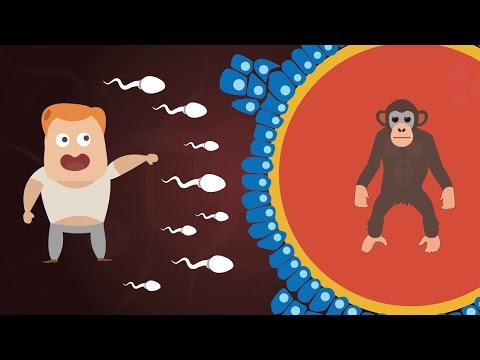
When chimpanzee sperm meets a human egg, you run into a wall of biological and ethical issues.
Natural cell mechanisms usually shut things down, even with all the new reproductive tech out there.
Ethical questions about crossing species lines keep making things even trickier for scientists.
Failed Attempts and Theoretical Outcomes
Scientists have tried to fertilize human eggs with chimpanzee sperm, but nothing has worked.
The sperm can’t seem to attach to or get through the egg’s outer layer.
Even if fertilization somehow happened, the embryo would probably trigger apoptosis—that’s where cells self-destruct to stop abnormal growth.
No one has found scientific evidence of viable embryos from human-chimpanzee fertilization.
The genetic differences and reproductive barriers lead to natural infertility, so hybrid offspring just don’t happen.
Past experiments that claimed success haven’t held up and really don’t have solid proof.
Assisted Reproductive Technologies and Limitations
Techniques like in vitro fertilization (IVF) and gamete intrafallopian transfer (GIFT) have helped with human infertility.
But they can’t get around species barriers.
IVF involves fertilizing eggs outside the body, but chimp sperm still can’t fuse with human eggs, even in a lab.
These technologies help human couples, but they don’t work for cross-species attempts because the cells just aren’t compatible.
You won’t get fertilization without the right cell signals and receptors.
Modern reproductive tools can’t fix the deep biological mismatches between human and chimpanzee gametes.
Cellular Processes and Natural Safeguards
The interaction between sperm and egg is very specific.
Human sperm bind to particular proteins on a human egg’s surface.
Chimpanzee sperm can’t attach because their surface molecules are different.
Even if a sperm somehow reached the human egg, apoptosis would probably stop the embryo early.
This defense mechanism keeps cells from developing when something goes wrong.
The egg also releases enzymes to block out foreign sperm after fertilization.
These natural safeguards protect against cross-species fertilization that could cause problems.
Ethical Implications of Cross-Species Experiments
When researchers use human and chimpanzee cells together, it stirs up some tough ethical questions. A lot of folks get uneasy about what kind of moral status those embryos or animals might have.
Mixing species like this really pushes us to rethink what identity and rights even mean. Some ethicists keep pointing out how crucial it is to have strict rules in bioethics so we can avoid causing harm.
People put human cloning and cross-species embryo work under a microscope. Most scientists actually agree—let’s limit these experiments, partly because of the ethics, but also because, honestly, the odds of success aren’t great.
This whole debate is where science keeps bumping up against what society values about life and dignity. Sometimes it feels like we’re not even sure where to draw the line.
For more on these topics, check out the discussion on ethical debates in human-monkey embryo research.


