
Maybe you’ve seen wild headlines or heard rumors about people having children with chimpanzees. It’s one of those ideas that gets people talking, even if it sounds a bit out there.
Here’s the quick answer—nobody’s ever proven that a human-chimpanzee child has existed.

Scientists have actually looked into this idea. Some even tried experiments in the past, but nothing ever worked.
Humans and chimpanzees are related in a lot of ways, but their chromosomes have key differences. That makes reproduction between the two pretty much impossible.
Still, the idea keeps popping up. Chimpanzees act a lot like us sometimes—they use tools, they’re clever, and they show all sorts of social behaviors.
If you want to know why these hybrids don’t happen and what science really says, let’s dig in.
Can a Human Have a Child With a Chimpanzee?
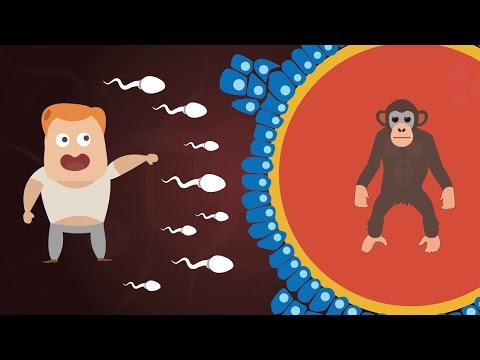
The whole idea of humans having kids with chimpanzees brings up a ton of questions about genetics, science, and some strange history.
You’ll see why there aren’t any verified cases, how genetics play a huge part, and what scientists actually tried in the past.
Verified Cases and Scientific Consensus
No one has ever found a real case of a human-chimpanzee child. Even with all the rumors, scientists haven’t found any proof of a hybrid being born.
Experts agree that the differences in chromosomes block any chance of a healthy, fertile child. Humans have 23 pairs of chromosomes, while chimps have 24.
This gap creates a big barrier for reproduction.
Scientists always ask for evidence before believing in hybrids. They’ve made it clear that proof matters. If you want a deep dive, there’s a whole discussion about why we don’t see human-chimpanzee hybrids.
Genetic Similarities and Differences
Humans and chimps share about 98-99% of their DNA. Sounds close, right? But chromosome numbers matter a lot more than you might think.
People have 46 chromosomes (23 pairs), chimps have 48 (24 pairs). That mismatch is a huge deal.
For hybrids to happen, chromosomes need to pair up just right during reproduction. Human chromosome 2 actually formed from the fusion of two ape chromosomes, so the numbers just don’t line up.
Gene sequences also differ, not just the counts. Even if you somehow created an embryo, it probably wouldn’t develop normally or survive.
Past Experiments and Hybridization Attempts
Back in the 1920s, Soviet scientist Ilya Ivanov tried to make a human-chimp hybrid—people sometimes call it a “humanzee.” He used artificial insemination, putting human sperm into female chimps.
None of these experiments led to a pregnancy or a live hybrid. Ethical issues and scientific roadblocks stopped more attempts.
Later on, some people claimed similar experiments happened, but nobody ever proved it.
Researchers like Gordon Gallup have argued about whether it’s possible. But the mix of genetic, biological, and ethical problems has kept anyone from succeeding. If you’re curious about the details, you can read more about the history of the “humanzee” experiments.
Why Human-Chimpanzee Offspring Are Not Possible

So, could humans and chimps really have babies together? Honestly, there are a bunch of biological reasons why it can’t happen.
These include chromosome differences, what we see in other animals that can hybridize, and some serious health issues that would come up.
Chromosomal Barriers
One of the main reasons you can’t get a human-chimpanzee offspring is the difference in chromosome numbers. Humans have 23 pairs. Chimps have 24.
Their DNA just doesn’t match up well enough to make a viable baby.
Some of our chromosomes actually formed when two chimpanzee chromosomes fused together. That fusion makes it even harder for the chromosomes to pair up during reproduction.
Chromosomes need to line up just right for a fetus to develop. When they don’t, the process stops before it really starts.
Even if fertilization somehow happened, the embryo probably wouldn’t develop or would be miscarried naturally.
Hybridization in Other Species
You’ve probably heard of mules—they’re the offspring of a horse and a donkey. Hybrids like that can happen when animals have similar chromosome numbers and genetics.
But even then, hybrids often have problems like infertility or health issues. The closer the species, the better the odds, but it’s still tricky.
Humans and chimps, despite having similar DNA, are just different enough that hybridization doesn’t work.
Scientists have tried to make human-chimp hybrids before, but they never succeeded. Those early 20th-century experiments didn’t result in any pregnancies.
It just shows how rare and difficult it is for even closely related species to cross in this way.
Health and Developmental Challenges
If an embryo somehow formed, the big biological differences between humans and chimpanzees would cause serious trouble.
Human pregnancies rely on very specific conditions. Chimps just don’t match up—gestation time, immune system reactions, and how genes work all differ quite a bit.
A chimpanzee womb can’t really support the growth of a human embryo. The mismatch would throw things off from the start.
Even small genetic differences can trigger huge health risks. Organs might not develop right. Brain growth could go wrong. The immune system might react badly. Most likely, survival just wouldn’t happen.
Honestly, our bodies just aren’t built to mix with chimpanzees and make healthy offspring. That’s why you won’t find any such hybrids in nature or in labs.
If you’re curious, there’s more detail in this article about human-chimpanzee hybridization.


