Do you feel sharpest in the early morning or does your brain really get going at night? It’s a question worth asking—does being an early bird or a night owl actually make a difference for your health, happiness, or even your shot at success?
Honestly, it depends a lot on your natural body clock. But, let’s be real, early birds usually get the edge when it comes to sleep quality, mental health, and keeping up with most daily schedules.
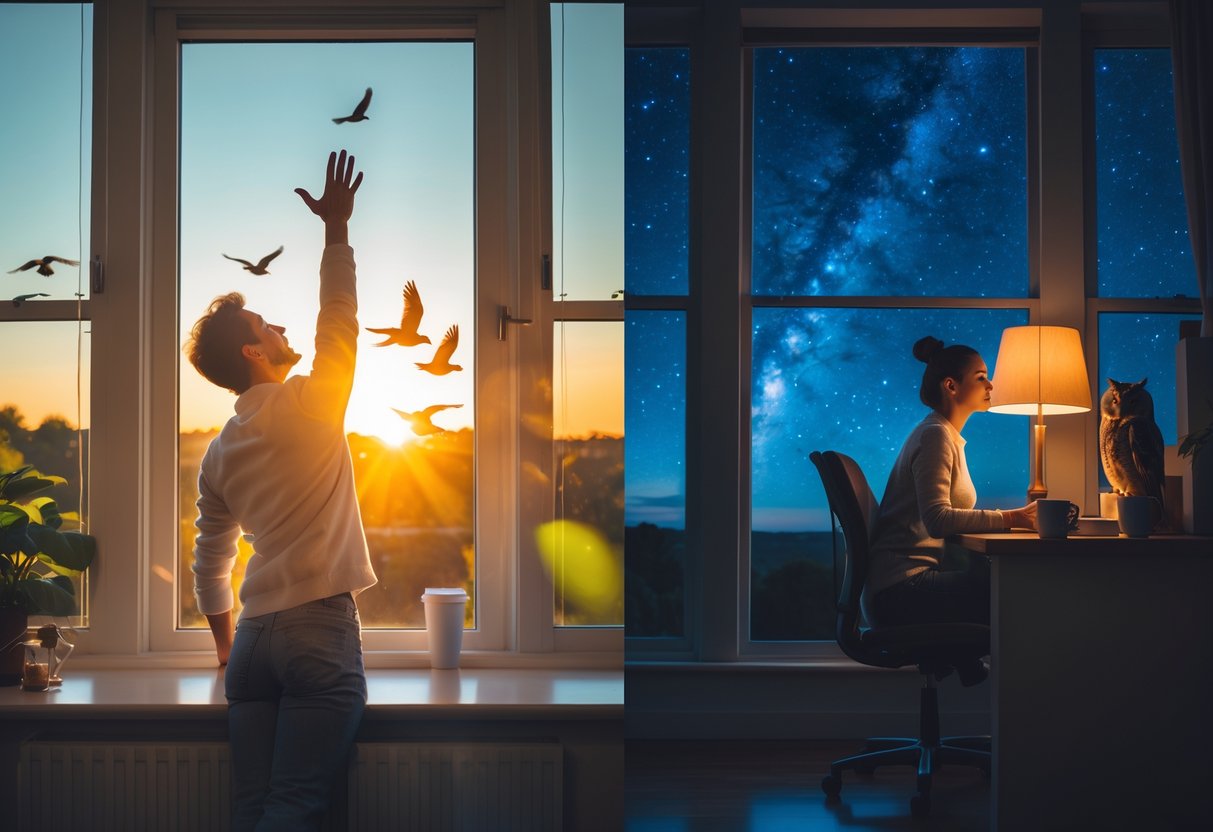
That said, night owls aren’t without their own perks. Creativity often comes alive at night, and working late or on flexible hours can suit them pretty well.
If you get to know your own habits, you can really lean into your best energy times. Maybe you love the sunrise, or maybe you’re the type who’s wide awake when the world’s quiet.
Figuring out which type you are helps you plan your day and, honestly, it can lift your mood and productivity. Curious how each chronotype measures up? Let’s dig in and see how you might work with your own rhythm to feel a bit better every day.
Early Bird 🐦 vs Night Owl 🦉: Key Differences and Science

Your body’s internal timing shapes your sleep habits. You’ll notice it affects when you feel energetic, how tough it is to get up, and your rhythm throughout the day.
If you get how your chronotype works, you can use your time and energy more wisely.
Chronotypes and Internal Clock
Chronotype basically means your natural preference for when to sleep and wake. Early birds jump out of bed and feel ready to go in the morning.
Night owls, on the other hand, hit their stride later and prefer staying up.
This pattern starts with your internal clock—your biological clock, really. It runs your sleep-wake cycle and other body rhythms.
Both genetics and circadian rhythms play a role here.
Your body releases hormones like melatonin based on this clock. Early risers see melatonin drop earlier in the evening, so they get sleepy sooner.
Night owls produce melatonin later, which keeps them up.
Productivity Patterns and Energy Peaks
Your chronotype shifts your energy levels during the day. Early birds usually hit their peak focus and productivity in the morning.
You might breeze through your to-do list before lunch.
Night owls get their energy boost later—sometimes way later. You might feel most creative and alert when others are winding down.
That’s actually pretty handy for deep thinking or creative projects after dark.
But society’s schedules? Yeah, they usually cater to early birds. Night owls might struggle to match school or work hours, which can throw off their sleep.
Sleep-Wake Cycle and Biological Rhythms
Your sleep-wake cycle runs on your circadian rhythm, a roughly 24-hour process. It decides when you feel awake or tired.
Early birds’ rhythms push them to sleep and wake up early. Night owls’ rhythms delay these times, often by hours.
These biological rhythms also impact your body temperature, hormone levels, and even your mood as the day goes on.
When your routine matches your rhythm, you tend to sleep better.
If you force yourself to wake up too early or stay up too late, you might end up with sleep problems. Over time, this can mess with your health.
Try noticing when you get sleepy and when you wake up naturally—no alarm needed. That can help you work with your body, not against it.
If you want to dig deeper into chronotypes, check out this Night Owl vs. Early Bird article.
Health, Lifestyle, and Daily Routines: Benefits & Challenges

Your sleep habits shape a lot—energy, stress, and how well you get through the day. Tweaking your schedule can change your health, mood, and even how much you get done.
Sleep Quality and Sleep Hygiene
If you’re an early bird, your sleep usually lines up with the daylight cycle. That helps your body make melatonin at the right times.
Good sleep hygiene means sticking to the same bedtime and wake-up time daily. Early risers often find this easier.
Night owls, though, run into trouble because the usual 9-to-5 world doesn’t really fit their late-night style. If you have to wake up before your body wants, you can end up sleep deprived and dragging through the day.
Irregular sleep times can mess with melatonin, making it even harder to feel rested.
Physical and Mental Health Impacts
Studies have linked being an early bird to better physical health. You might get more sunlight, which can boost vitamin D and lift your mood.
Early risers often report lower risks of depression and obesity. They also tend to be more active during the day.
Night owls sometimes have higher risks for things like type 2 diabetes, obesity, and depression. Usually, that’s tied to sleep deprivation.
If your body clock and schedule clash, your mental health can take a hit. But on the bright side, night owls can get bursts of creativity and shine in brainstorming or late-night projects.
Optimizing Your Daily Routine
Want to get more out of your day? Try lining up your activities with your natural energy highs and lows. If you’re an early bird, tackle tough tasks in the morning when you’re sharpest.
Start your day with a calm routine—maybe some sunlight, maybe a cup of coffee. That little bit of brightness can really lift your mood and help you focus.
Night owls, on the other hand, might want to leave creative or tricky projects for the late afternoon or evening. Give yourself some flexibility to work when you feel most alive.
At night, dim the lights and put away your screens. That helps your brain wind down for sleep.
Whatever your style, stick to a steady routine and aim for at least seven hours of sleep. Those small tweaks can make a big difference in how you feel.
Curious about how your sleep chronotype shapes your life? Check out Night Owl vs. Early Bird: Benefits, Downsides, and How to Tell.


