
If chipmunks keep digging up your garden or munching on your plants, you’re definitely not alone. These little guys love gardens because there’s always food and plenty of hiding spots.
To chipmunk-proof your garden, mix up barriers, natural deterrents, and smart gardening habits. This way, your space just won’t seem as cozy or easy for chipmunks to invade.
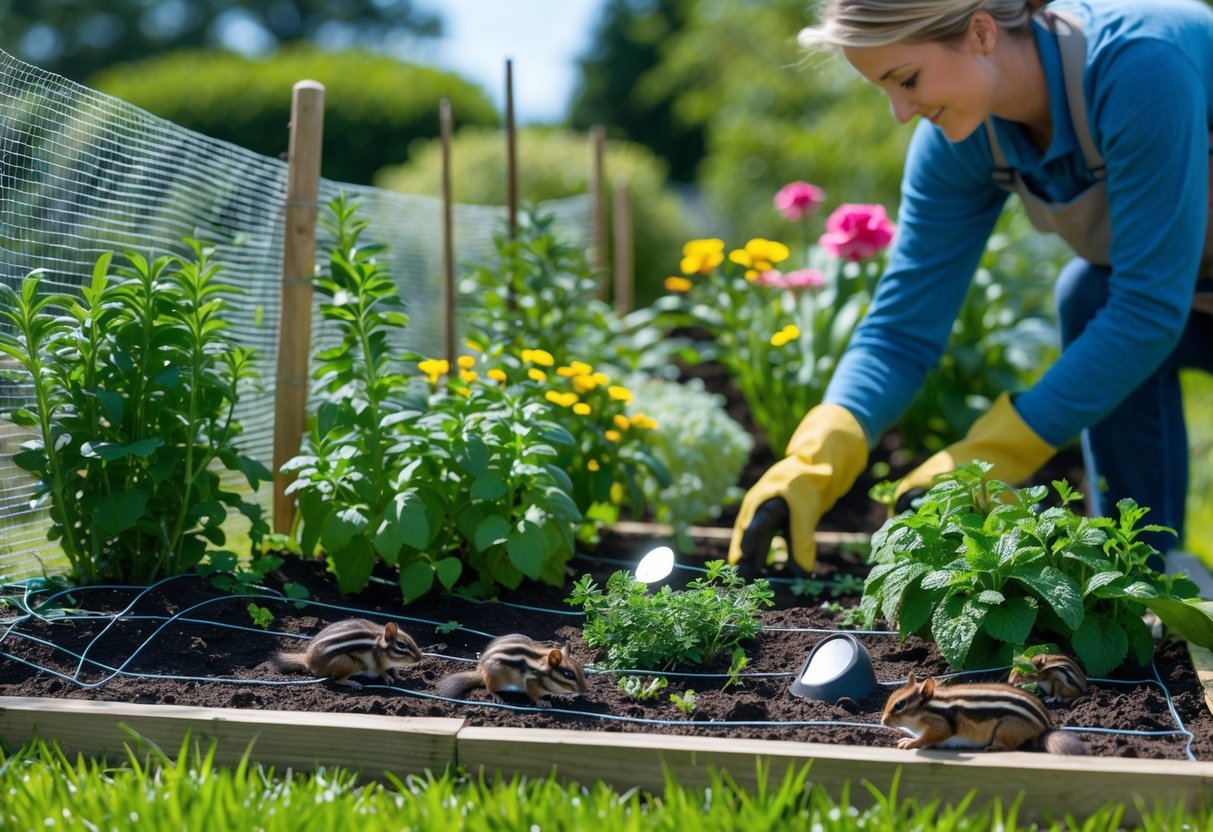
Try burying wire fences, planting herbs like lavender or rosemary that chipmunks can’t stand, and cleaning up fallen fruits and seeds. These tricks make a big difference.
Safe repellents can help too. If you feed birds, switch things up so chipmunks don’t stick around for leftovers.
With a handful of changes, you’ll protect your plants and keep chipmunks safe too. Curious how? Let’s dive into some simple, friendly tips to keep your garden peaceful and chipmunk-free.
Proven Techniques to Chipmunk Proof Your Garden

Keeping chipmunks out of your garden isn’t rocket science, but it does take a few smart moves. You’ll want to use barriers, manage food, and block tunnels.
Combining these methods usually works best. That’s how you keep chipmunks away for good.
Installing Hardware Cloth Barriers
Hardware cloth, which is basically strong metal mesh, blocks chipmunks from digging and snacking on your plants. You can line the bottoms of raised beds with it.
Bury it about 3 to 4 inches deep. That way, chipmunks can’t tunnel underneath.
Wrap bulbs or new seeds in a small cage made from hardware cloth. Water and sunlight still get through, but chipmunks can’t reach your plants.
Use mesh with holes around 1/4 inch. That’s small enough to keep chipmunks out.
Hardware cloth lasts a long time and you can reuse it. Chipmunks hate chewing through metal, so it’s a solid barrier.
Using Bird Netting and Physical Covers
Bird netting works well for fruits and veggies. It keeps chipmunks off without hurting your plants.
Just drape it over your crops and secure the edges. That way, chipmunks can’t sneak under.
Row covers or plant cages add extra protection, especially for young plants. These covers stop chipmunks from digging or nibbling before your plants get established.
Check netting often. If it sags, chipmunks might wriggle in.
Poles or hoops help keep netting raised, giving your plants more space and better airflow.
Managing Food Sources to Deter Chipmunks
Chipmunks show up for food, plain and simple. If you limit what they can find, you’ll see fewer of them.
Clean up fallen fruit, spilled birdseed, and pet food as soon as you spot it.
Store feed in metal or heavy plastic containers with tight lids. This keeps chipmunks from sniffing it out.
Switch bird feeders to thistle or safflower seeds. Chipmunks usually aren’t interested in those.
Skip planting bulbs and fruits chipmunks love, like tulips and strawberries, near your garden’s edge. Go for daffodils, marigolds, or lavender instead—these make your garden less inviting.
Sealing Entry Points and Filling Burrows
Chipmunks can squeeze through tiny holes. Seal gaps in fences, walls, or foundations with hardware cloth or metal mesh.
Look for small burrows or tunnels—those entrances are usually about 1-2 inches wide. Fill them with soil mixed with coarse sand or gravel so chipmunks don’t come back.
Clear out overgrown brush, rocks, and wood piles near these spots. Open, tidy spaces just don’t appeal to chipmunks looking for shelter.
If you want a step-by-step breakdown, check out this guide on how to chipmunk proof a garden.
Additional Strategies for Long-Term Chipmunk Control

You’ve got a few more options for keeping chipmunks away long term. Natural repellents, planting things chipmunks avoid, and thinking about how other critters use your garden can all help.
Natural Repellents and Predator Scents
Try natural repellents like cayenne pepper or peppermint oil. Mix cayenne pepper with water and spray it on your plants.
Soak cloths in peppermint oil and place them around the garden. Chipmunks really dislike those strong smells.
Predator scents, like fox or coyote urine, can scare chipmunks off. They’ll think a predator is nearby.
You can buy these scents at garden stores. Sprinkle them around your garden’s border and reapply after it rains.
Tips for natural repellents:
- Be careful when applying cayenne spray; avoid touching your skin.
- Replace peppermint cloths often so the smell stays strong.
- Use predator scents mainly at the garden edges for the best effect.
Planting Chipmunk-Resistant Plants
Some plants just don’t appeal to chipmunks. Add these to your garden and you’ll see fewer chipmunk visits.
Daffodils, alliums, and lavender are solid choices. Their strong smells or tastes keep chipmunks away.
Skip planting bulbs or veggies chipmunks love, like tulips and beans, or protect them with wire cages.
Mixing chipmunk-resistant plants with your favorites can confuse and discourage these rodents.
Plants chipmunks tend to avoid:
| Plant | Reason |
|---|---|
| Daffodils | Toxic or bitter taste |
| Alliums | Strong smell and taste |
| Lavender | Strong fragrance |
Understanding the Role of Squirrels and Other Wildlife
Squirrels and chipmunks go after the same foods and fight for space in your garden. Sometimes, squirrels chase chipmunks away, but honestly, they can cause their own problems too.
You really need to manage both, since feeding or attracting one usually brings the other along for the ride. If you’ve got birdfeeders, try adding baffles or just set them up where chipmunks and squirrels can’t get to them.
Leaving pet food outside? That’s a sure way to draw in all sorts of wildlife, like raccoons and opossums. You might want to bring that food in.
Think about how these animals interact with each other and with your garden. That’s how you can keep out the troublemakers and still protect your plants.
For more ideas on natural repellents or handling chipmunks, check out this helpful gardening discussion.


