
You might think chipmunks are just tiny, cute creatures scurrying around your backyard. But honestly, these little rodents are a lot smarter than most people realize.
Chipmunks use their sharp problem-solving skills and strong memory to track down food they hid months ago.
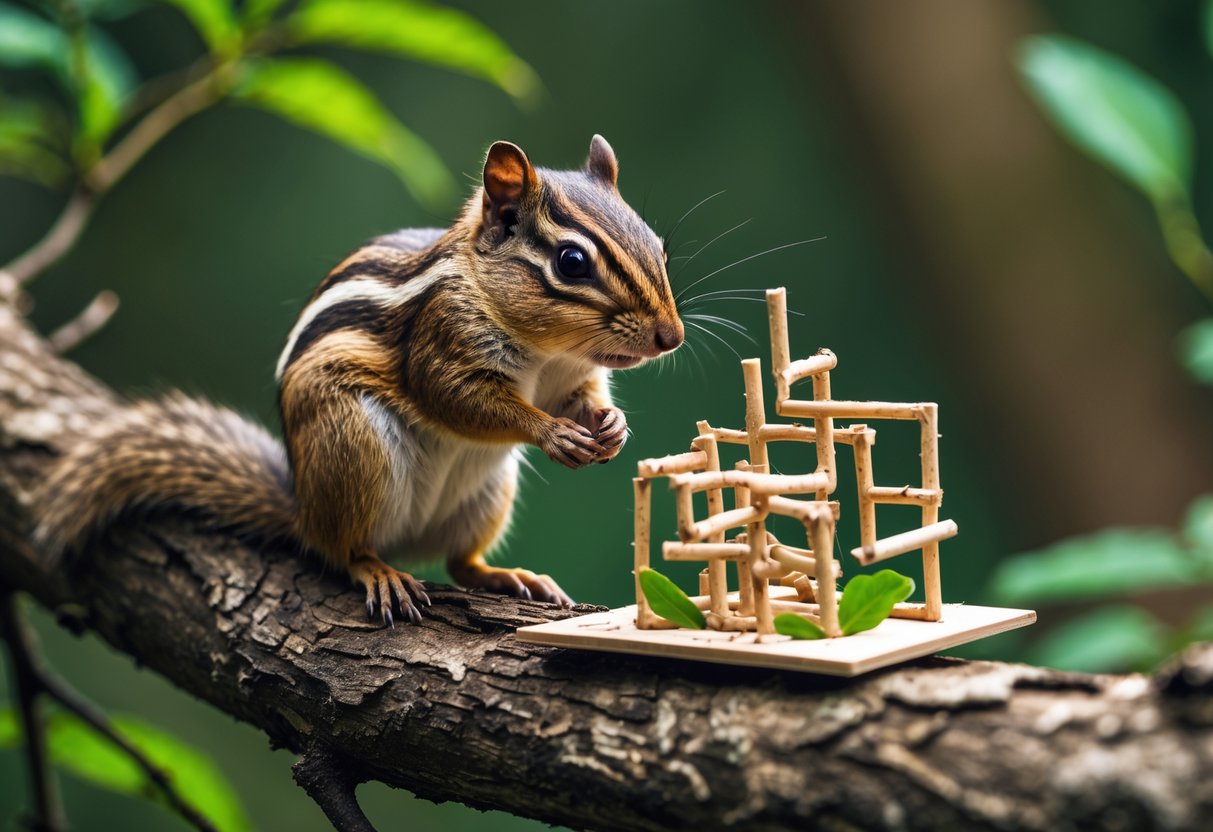
If you’ve ever watched a chipmunk dart through a maze or stash food in secret spots, you’re seeing more than just quick movements. They remember tricky routes and pick up new behaviors faster than you might guess.
Once you start noticing how clever chipmunks are, it’s hard not to see them in a new light.
Get ready to find out what makes chipmunks clever and how they stack up against other animals you know, like squirrels.
You might pick up some neat facts that’ll make you appreciate them a bit more.
Understanding Chipmunk Intelligence

Chipmunks show off smart behaviors that help them get by in the wild. They solve problems, remember where they’ve hidden food, and even use sounds to talk with each other.
These skills all work together to keep them fed and out of trouble.
Cognitive Abilities and Problem-Solving
Chipmunks, especially eastern chipmunks, pick things up quickly. They figure out how to grab food from tricky spots.
You’ll see them use their paws and a bit of creativity to open containers or avoid traps.
When a path to food gets blocked, they change their approach instead of just repeating the same thing. That’s not just instinct—it’s cause and effect.
Problem-solving matters because chipmunks need to find food in all sorts of places and situations.
Memory and Food Storage Strategies
Chipmunks have great memories. Before winter, they hide food in lots of different places.
It’s almost like they keep a mental map, remembering dozens of hiding spots.
Eastern chipmunks use their cheek pouches to carry food back to their burrows. They don’t sleep through the whole winter, but wake up to snack on what they’ve stored.
Most chipmunks remember which hiding places still have food, so they don’t waste time searching empty spots.
Complex Communication Methods
Chipmunks make all kinds of sounds—quick chatters, loud chirps, you name it. They warn each other about predators or signal their territory.
If you hear a fast “chitter,” danger might be close by.
They also mark their territory with scent, which helps them avoid fights with neighbors.
When you hear their calls or spot them marking, you’re seeing a system that helps chipmunks stay safe and get along with others nearby.
If you’re curious, you can read more about chipmunks’ habits and communication in this chipmunk facts guide.
Chipmunks vs. Squirrels: Which is Smarter?

When you look at chipmunks and squirrels side by side, their habits and social lives show some interesting differences.
Both rodents have unique ways of building homes and dealing with daily problems, which really highlights their intelligence in different ways.
Differences in Burrowing and Habitat Design
Chipmunks are true experts at burrowing. You’ll find their homes underground, with tunnels that twist and turn, plus special rooms for food and nesting.
They plan these burrows for safety and efficiency, which says a lot about their ability to organize and remember spaces.
Squirrels mostly live in trees. Their nests, called dreys, are made from leaves and twigs way up high.
That takes skill in climbing and getting around branches—a different kind of smarts compared to chipmunks.
If you pay attention, you’ll see chipmunks focus on building complex tunnels underground, while squirrels get really good at life above ground.
Both animals use their homes to protect themselves and stash food, but they go about it in their own way.
Comparing Social and Survival Behaviors
Chipmunks mostly live alone. They keep a tight grip on their territory and food caches.
You can really see their sharp memory and planning skills in how they stash food. They have to remember every hiding spot just to make it through the seasons.
Squirrels, on the other hand, act more social. You’ll often spot them sharing space, but they’re still quick to compete over food.
They solve problems by trial and error, which honestly fits their fast-paced routines. Squirrels bounce back quickly and adapt on the fly.
Chipmunks rely on memory and careful planning to survive. Squirrels count on adaptability and quick learning.
If you’re curious about more differences, check out this chipmunks vs squirrels comparison.


