
You might be surprised to learn just how long a giraffe stays pregnant—it’s about 13 to 15 months. That’s a long wait, but it gives the calf time to grow big and strong enough to stand and walk almost immediately after birth.

Let’s get into the details. We’ll look at what actually happens during those months, how often giraffes have babies, and why moms always deliver standing up.
You’ll also find out what newborn calves go through in their first hours and months.
Giraffe Gestation Timeline and Pregnancy Details

Giraffe pregnancy takes a long time and usually ends with one sturdy calf. Here’s what you should know about how long it lasts, what might change the timing, and how often females have calves.
Average Gestation Period
A giraffe carries her calf for about 400 to 460 days, so that’s somewhere between 13 and 15 months. Most of the time, there’s just one calf—twins hardly ever happen.
Calves are already pretty big when they’re born. They can stand and walk within an hour, which is crucial for escaping predators.
When a calf is born, it drops about 6 to 8 feet to the ground because the mother gives birth standing up. Newborns usually weigh between 100 and 150 pounds and stand about 6 feet tall.
Females might give birth every one to two years, depending on how well the last calf does and how healthy the mother feels.
Factors Affecting Gestation Length
Nutrition really matters. If a female gets better food, her pregnancy might run a bit shorter, or at least she’ll have a healthier calf at the end.
Age plays a role too—very young or older females might have calves that are smaller or arrive at slightly different times.
Environmental stress, like drought or lots of predators, can affect the mother’s health and the pregnancy’s success. Health issues and genetics also make a difference.
Illness or parasites can cause problems or even make the pregnancy end early. Different giraffe populations and subspecies show small differences in timing, but most still fall in that 400–460 day range.
Giraffes living in zoos or under human care sometimes show different patterns because of their diet and the care they get. Managed care can affect when females have their first calf and how often they reproduce.
Giraffe Reproductive Cycle
Female giraffes usually reach sexual maturity when they’re about 4 to 5 years old in the wild. Males mature a bit earlier, around 3 to 4 years.
Females can get pregnant even if they’re still nursing a calf, so a baby at her side doesn’t always mean she isn’t expecting another. Dominant males compete for a chance to mate with receptive females.
Most giraffe populations don’t have a set breeding season, so births can happen at any time of year. After conception, the female carries the calf for those long months and gives birth standing up.
Male giraffes don’t help raise the calves. Mothers often form nursery groups, where several calves hang out and move together for safety.
Long pregnancies and usually just one calf at a time slow down giraffe population growth compared to smaller mammals. If you want to dive deeper into giraffe reproduction, check out the Giraffe Conservation Foundation’s FAQ on baby giraffes.
Birth and Early Life of Giraffe Calves
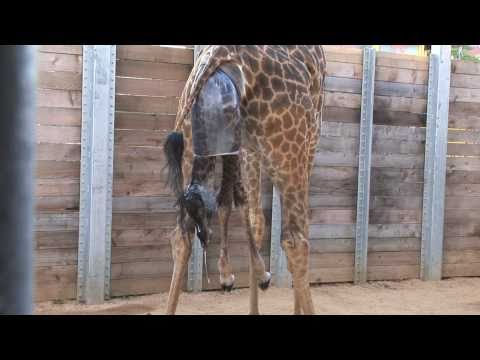
Giraffe calves arrive after a long pregnancy and need to get moving quickly. Mothers always give birth standing up. The calf falls several feet at birth, then starts nursing and hiding while it gets stronger.
The Birthing Process
A female giraffe gives birth while standing. Labor can last a few hours, and the calf usually drops feet-first about 5 to 6 feet (1.5–2 meters).
That fall actually helps break the umbilical cord and gets the calf to take its first breath. Calves usually come out with their front legs stretched forward.
This position helps them hit the ground in a way that lowers the risk of injury. Usually, there’s only one calf; twins are a real rarity.
If you ever watch from a distance, you might see mothers wander off to a quieter spot or a known calving area to give birth. Sometimes, they’ll stay away from the group with the newborn for days to keep it safe from predators.
Newborn Development and Growth
A newborn calf stands about 1.7 to 1.9 meters (5.5–6.2 feet) tall and weighs somewhere between 60 and 150 pounds (27–68 kg). Most calves stand and nurse within an hour.
That first milk, called colostrum, gives the calf important antibodies. By four months, the calf starts nibbling leaves but still needs milk for up to 9 to 12 months.
Growth happens fast in the first year. You’ll notice the legs getting longer and the calf gaining height quickly.
Some calves can run well enough to keep up with the herd within just 10 hours. The early months are tough, though. Predators like lions, hyenas, and crocodiles are a real threat, and not all calves make it through those risky first months.
Maternal Care and Nursery Herds
You’ll notice mothers fiercely protect their calves. If something threatens the calf, the mother might kick at it and keep her baby hidden in tall grass for the first few days.
She usually forages nearby but comes back often to nurse and check on her calf. It’s a bit touching to watch, honestly.
After a few weeks, calves start joining mixed-age groups—these nursery herds, as people call them. In these groups, several females take turns watching over the young.
With more adults around, spotting danger gets easier. Males leave their mothers at around 15 months, but females might stick with the herd for much longer.
Some mothers even return to the same calving area for later births. If you’re patient, you might find these spots and get a chance to observe new calves in some populations.


