
Badgers are fascinating animals known for their digging skills and complex underground homes. Have you ever wondered how long these creatures can stay hidden in their burrows? Badgers can remain underground for up to 70 days at a time, especially during cold weather or when food is scarce. This ability to stay underground helps them survive in their natural habitat, allowing them to avoid predators and conserve energy.
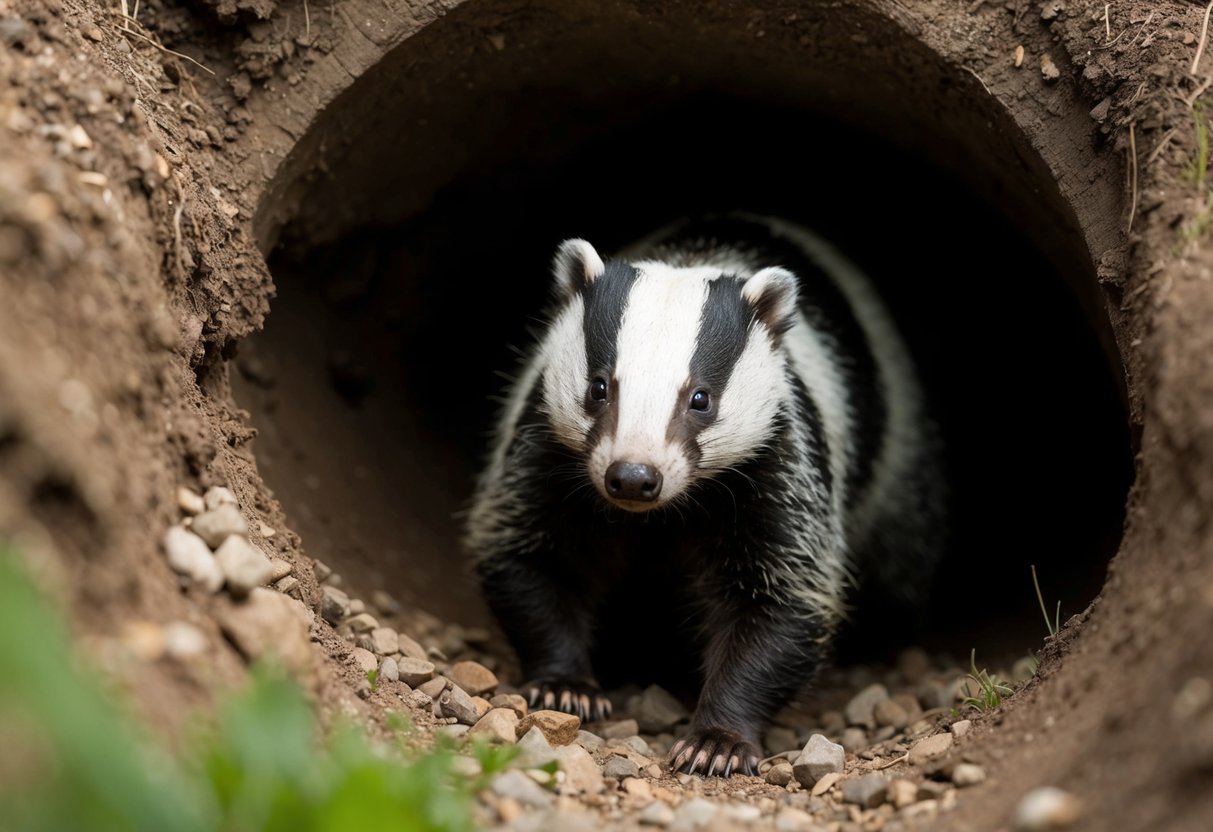
These clever animals create extensive tunnel systems in the ground, which serve as their living quarters. The burrows, called setts, provide a safe space for sleeping, nesting, and storing food. You might be surprised to learn that badgers are not hibernators. Instead, they enter a state known as torpor, where they sleep deeply for extended periods. This behavior is key to their survival during tough conditions.
As you read on, you’ll discover more about badger burrows, their underground lifestyle, and how this unique behavior shapes their daily lives. Understanding how long badgers can stay underground gives you a glimpse into their remarkable adaptability.
Badger Biology and Lifestyle
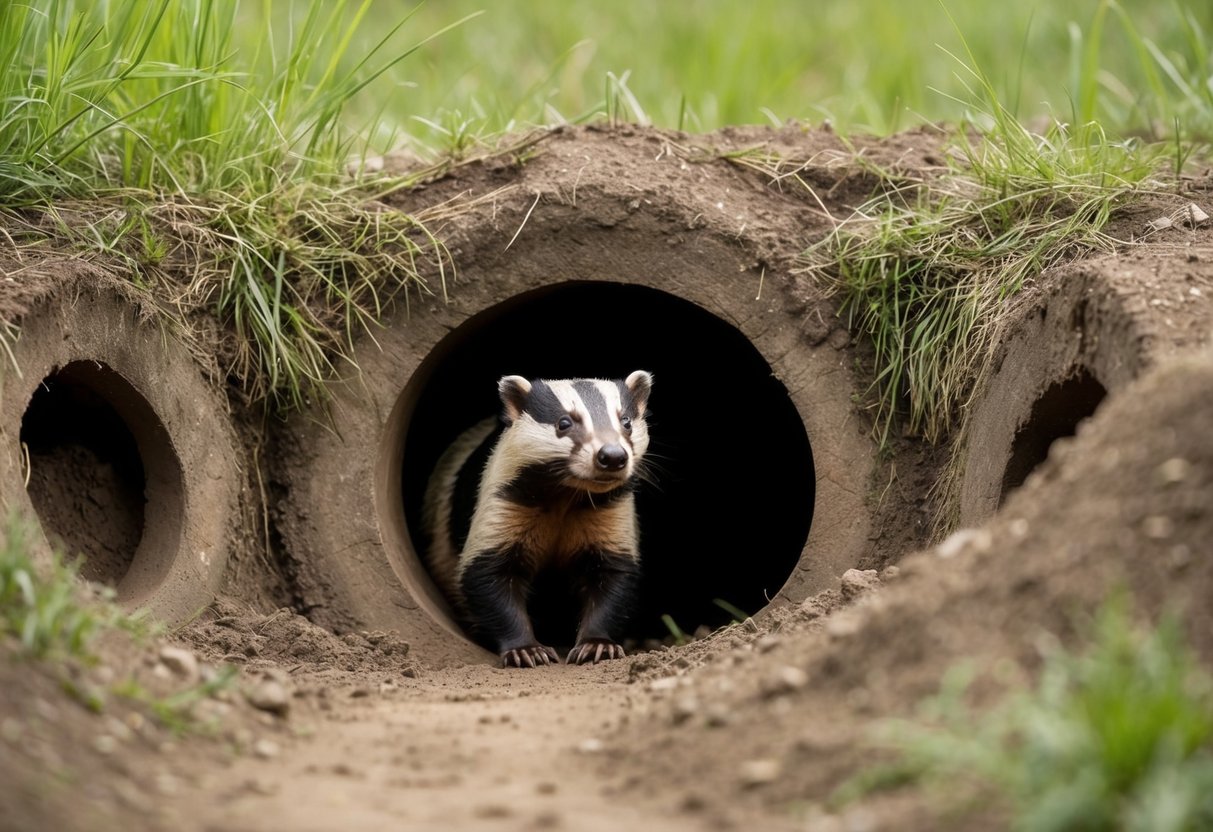
Badgers are fascinating mammals with unique characteristics and lifestyles. By exploring their physical traits, diets, and reproductive behaviors, you can gain a better understanding of these solitary animals.
Physical Characteristics and Species
Badgers belong to the Mustelidae family and come in several species, including the American badger (Taxidea taxus), European badger, and honey badger.
They typically have a stout body, short legs, and a distinctive wedge-shaped head. Their fur is coarse and often features striking patterns.
American badgers are known for their white facial markings and robust build.
In contrast, honey badgers are smaller but possess a fierce reputation. Badgers generally weigh between 15 to 30 pounds, depending on the species.
Their long, sharp claws are designed for digging, making it easy for them to create extensive burrow systems underground.
Diet and Hunting Methods
Badgers are opportunistic feeders and primarily eat small mammals, insects, and even fruits.
Their diet varies by season and region. For instance, American badgers hunt rodents, while European badgers enjoy earthworms and berries.
They are nocturnal, which helps them hunt during the cooler hours.
With their keen sense of smell, badgers can locate prey underground. They often dig up to 2 feet to reach burrowing animals.
Sometimes, they work alongside coyotes to catch food. This cooperative behavior improves their hunting success.
Reproductive Behavior
Badgers exhibit interesting reproductive habits. Mating occurs during late winter to early spring.
After mating, females experience a phenomenon called delayed implantation, where the fertilized egg does not immediately attach to the uterine wall.
This delay ensures that cubs are born when conditions are favorable. The gestation period lasts about 6 to 8 weeks.
A female typically gives birth to 2 to 5 cubs in a burrow.
These young badgers stay with their mother for several months, learning to hunt and dig.
As solitary animals, badgers focus on raising their young without the help of a mate after the breeding season.
Badger Habitats and Dens
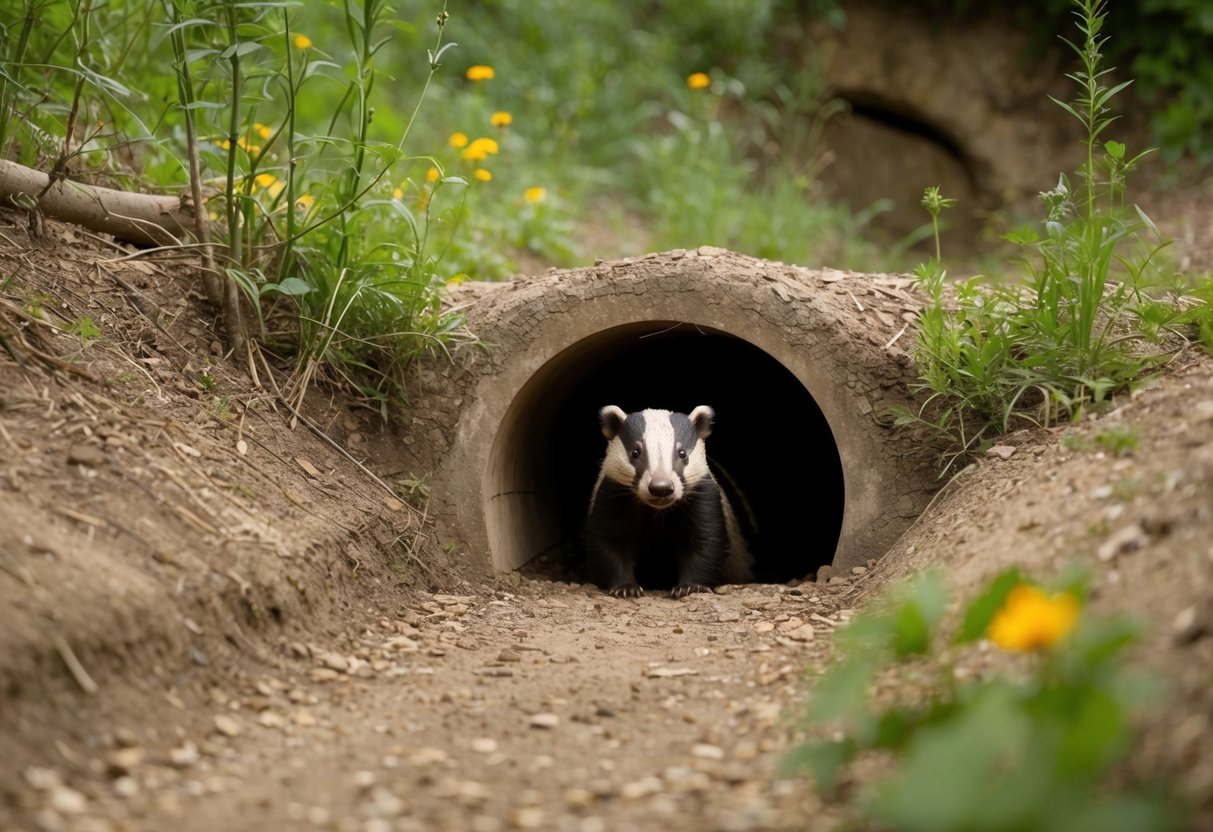
American badgers thrive in specific environments that support their digging and burrowing behaviors. Understanding where they live and how they build their homes is essential.
Preferred Terrains and Regions
You will often find American badgers in dry grasslands, prairie regions, and areas with sandy loam soils. These terrains allow badgers to dig easily.
Badgers are classified as fossorial specialists, meaning they are well-adapted for an underground lifestyle. Their strong digging abilities help them create homes called setts. These are elaborate burrows that serve as shelter from predators and harsh weather. The combination of their morphology and the right soil type makes it easier for them to thrive.
The territory of a badger can be quite large, sometimes spanning several acres. This allows them to roam and find food over various habitats.
Burrowing Behaviors and Den Structures
Your knowledge of badger burrows, or setts, is vital to understanding these creatures. Badger setts can be complex, featuring interconnected tunnels and chambers. They may be several meters deep and often expand over time.
When preparing for birth, female badgers line their dens with grass. The entrance of a sett is usually marked by a mound of dirt. You might notice these entryways range from 6 to 10.5 inches wide.
In addition to serving as homes, setts are also used for sleeping and raising young. Badgers spend significant time underground, making their dens a crucial part of their lives.
Badger Diets and Prey
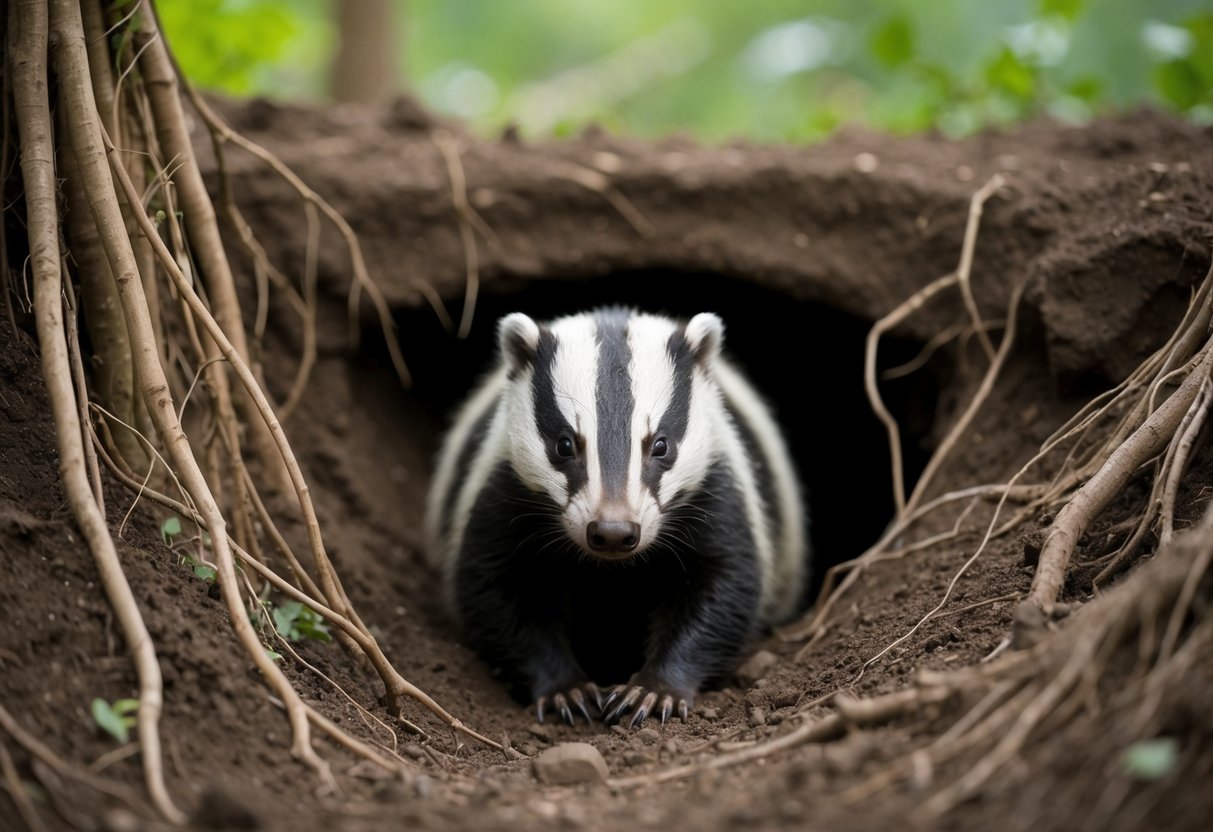
Badgers have interesting and varied diets. They are omnivorous, which means they eat both plants and animals. By understanding their foraging strategies and the impact they have on the local ecosystem, you can appreciate how important these creatures are in their habitats.
Foraging Strategies and Food Sources
Badgers are nocturnal hunters, meaning they look for food at night. They primarily feed on small animals like gophers, mice, ground squirrels, and other rodents. Their keen sense of smell helps them locate these burrowing prey.
Additionally, badgers eat insects, earthworms, and even some plants. They may dig up roots or consume fruits and honey when available. Their strong front claws make it easy for them to dig through the ground to find food. A badger can quickly chase and capture a variety of prey, adapting its diet based on what is most available.
Impact on Local Ecosystem
Badgers play a key role in maintaining a balanced ecosystem by controlling rodent populations. Their hunting helps keep the numbers of small mammals in check, which can prevent overpopulation and damage to vegetation.
When badgers dig for food, they aerate the soil. This helps plants grow better and supports various other animals. While badgers can sometimes compete with predators like dogs and coyotes for food, they have adapted well to their environments, ensuring a healthy balance in the ecosystem.


