
Seahorse pregnancy usually lasts about two to four weeks, but it depends on the species and water temperature. Warmer water shortens gestation, while cooler water stretches it out, so you can often guess when the male might give birth.
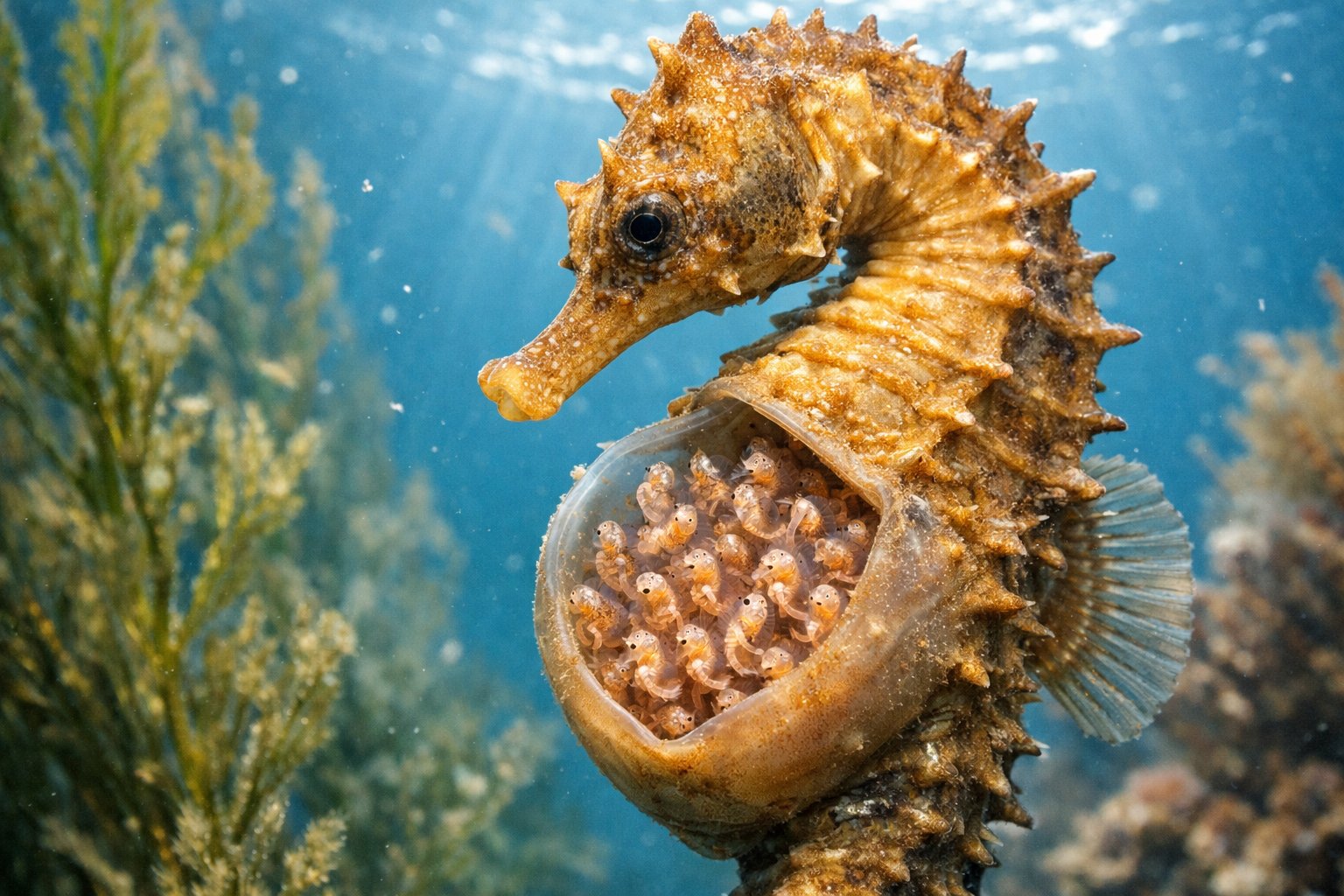
It still amazes people that the male carries the eggs in a pouch and actually gives birth to live young. In this post, I’ll break down what affects how long seahorses stay pregnant and how their unusual reproduction changes everything from egg transfer to the moment those tiny fry pop out.
Let’s take a look at how species, pouch care, and the environment all play a part in timing—so you can spot when a seahorse brood is almost ready.
Seahorse Pregnancy Duration and Key Influences

Male seahorses carry eggs in a brood pouch and then give birth to live young. Pregnancy length changes with the species, the water temperature, and the male’s health, so it can last from about a week to even over a month.
Typical Gestation Period for Male Seahorses
Most male seahorses keep embryos for around 10 to 25 days.
Smaller species, like the dwarf seahorse (Hippocampus zosterae), usually finish in about 10 to 14 days.
Larger species, such as the big-bellied seahorse (Hippocampus abdominalis), sometimes hold embryos for 20 to 35 days.
You’ll notice embryos develop faster in warm water and slower in cool water.
If you’re keeping seahorses, many species will have several broods in a breeding season.
Brood size changes with species too—dwarfs might release a few dozen, while bigger Hippocampus species can let loose hundreds or even over a thousand fry.
Variation Among Seahorse Species
Different Hippocampus species have their own gestation times.
- Hippocampus zosterae (dwarf seahorse): about 10–14 days.
- Hippocampus erectus (lined seahorse): usually 20–25 days.
- Hippocampus abdominalis (big-bellied): often 25–35 days.
Other Syngnathidae family members, like pipefish and seadragons, also have males brood the eggs, but their timing isn’t quite the same.
Some pipefish carry eggs outside or in simpler pouches, which can make their brooding shorter or sometimes longer than true seahorses.
Seadragons keep eggs on a tail or brood patch, so their incubation and timing look pretty different from Hippocampus species.
Factors Impacting Pregnancy Length
Water temperature really stands out as the main factor you can control.
Warm water speeds up embryo growth; just a few degrees can shave days off gestation.
The male’s nutrition and the quality of the eggs the female provides also make a difference.
If the male is healthy and not stressed, he’ll oxygenate and feed the embryos better.
Disease or bad water quality can drag out pregnancy or even cause it to fail.
Species size, brood size, and local conditions like salinity or oxygen all tweak the timing too.
The Role of the Brood Pouch in Gestation
The brood pouch isn’t just a pocket—it’s more like a nursery with climate control.
The male manages oxygen, salt, and fluid levels for the embryos inside.
Blood vessels in the pouch bring oxygen and remove waste.
The pouch also gives immune protection and keeps things stable for the babies.
As embryos grow, you’ll see the pouch swell—probably the clearest sign of pregnancy.
If the pouch isn’t healthy, embryo survival drops, so good pouch care is crucial for a successful birth.
Understanding Seahorse Reproduction and Birth
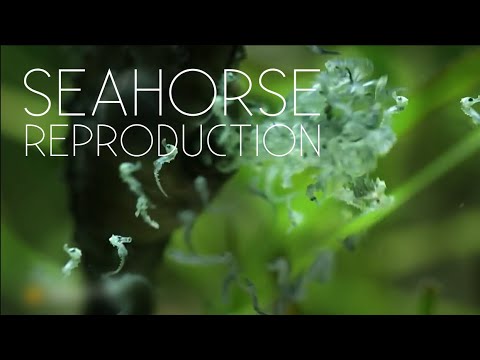
Seahorse fathers take on the eggs in a special pouch, protect the embryos as they grow, and then release fully formed fry that have to fend for themselves. Mating involves a detailed courtship dance, careful egg transfer, weeks of development in the pouch, and then a pretty dramatic birth.
Seahorse Mating and Courtship
You’ll often spot seahorse pairs greeting each other every day, which keeps their bond strong.
Pairs perform a kind of synchronized dance—turning, rising, and wrapping tails.
These dances help you pick out monogamous partners, which you’ll see a lot among species living in coral reefs and seagrass.
Courtship can last a few minutes or even days.
Both seahorses change color, line up their bodies, and pump water with their snouts.
All these signals help them time things right, so the female’s ready to pass her eggs when the male opens his pouch.
Daily rituals, usually in the morning or evening, keep pairs in sync for mating.
If you watch seahorses in a tank, you’ll probably see the same dances and fin flicks before egg transfer.
Egg Transfer to the Brood Pouch
When it’s time, the female uses an ovipositor—a thin tube—to place eggs right inside the male’s pouch.
They face each other and wrap tails for balance while this happens.
As soon as the eggs are in, the male fertilizes them inside the pouch.
The pouch closes up and creates a protected space, adjusting salt and supplying oxygen, kind of like a mammal’s placenta.
Some species deposit just a few dozen eggs, while others can manage over a thousand at once.
Usually, bigger seahorses in reefs carry more eggs than the smaller ones in seagrass.
Embryo Development and Birth Process
Embryos grow inside the pouch for about 10 days to six weeks, depending on species and water temperature.
Warm water speeds things up, while cool water slows them down.
The male’s pouch slowly adjusts salt levels so the fry can handle the outside world when they’re released.
As birth gets close, the male’s belly swells and he starts to contract his muscles.
He pumps again and again to push the fry out through the pouch opening.
Birth can take just a few minutes or stretch into several hours, especially for species with big broods.
The fry come out fully formed and independent.
The male doesn’t stick around to care for them after release.
In thick seagrass or near coral, a lot of fry find shelter fast; others drift off as plankton before settling down.
Post-Birth: Life of Seahorse Fry
Right after birth, seahorse fry are tiny—just a few millimeters long. They swim around and start eating plankton right away.
In the wild, predators make survival tough for these little ones. Reefs and seagrass habitats are full of hungry mouths.
Young seahorses grab onto seagrass blades or just drift along with the plankton. Some species, like the dwarf seahorse, hatch almost as miniatures and settle on the bottom pretty fast.
Others float in the planktonic zone for a few days before they settle down. It’s kind of wild to think about how different their early days can be, depending on the species.
If you want to help seahorses, focus on protecting seagrass beds and coral reefs. When pollution or habitat loss destroys these areas, fry have fewer safe places to grow.


