
Ever watched a bee zip around and catch yourself wondering how high it can actually go? Bees can reach some wild heights—up to about 30,000 feet, which is higher than the tallest mountain on Earth. That’s way above their usual range, but it really shows how adaptable these little guys are.
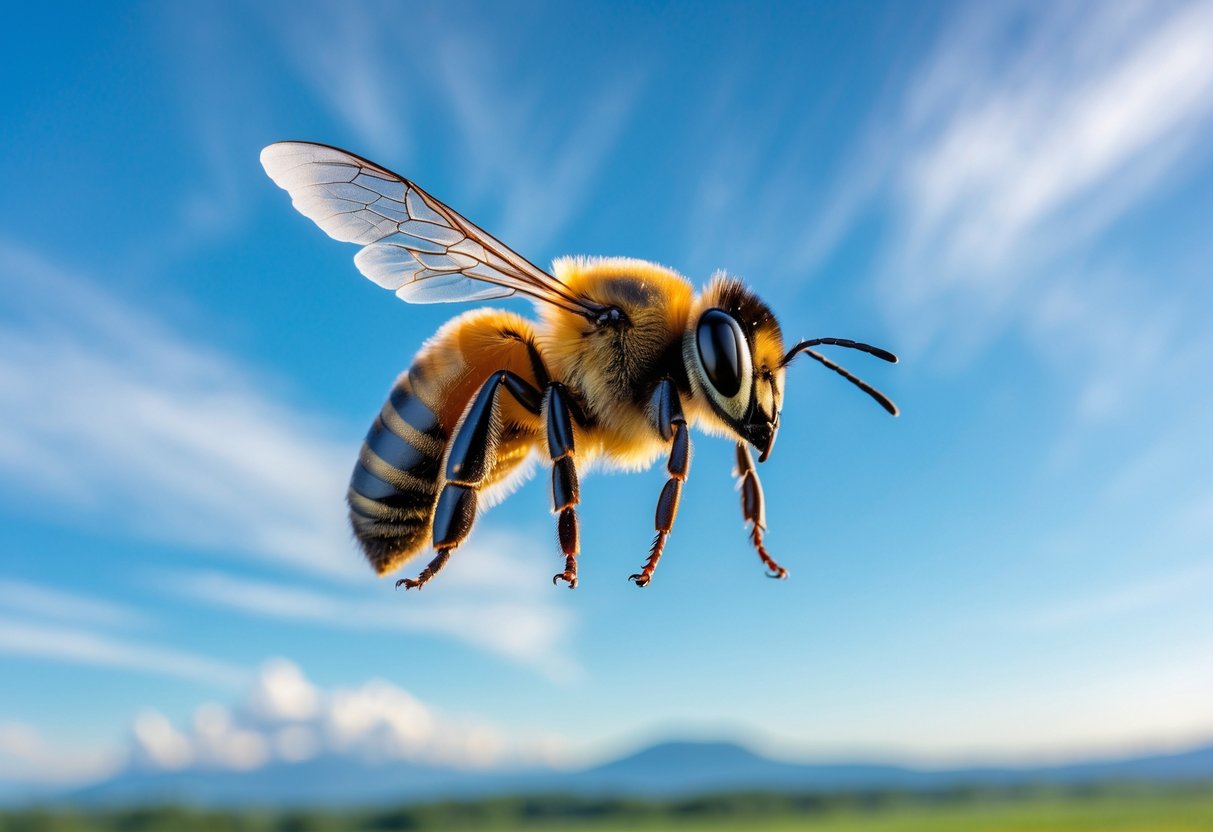
Most of the time, bees stick close to the ground since that’s where the flowers and food are. You’ll usually spot them just a few feet up, but things like wind and temperature can nudge them higher or lower.
Learning about their flight limits? It just adds another layer to how cool bees really are.
How High Can Bees Fly?

Bees don’t usually head for the clouds because their food hangs out closer to earth. Still, different bee species can surprise you with how high they’ll go when they need to.
Their flight heights depend on what they’re after and what’s going on around them.
Typical and Maximum Flight Altitudes
Most bees stick within a few hundred feet of the ground when they’re foraging. That’s enough to reach all the flowers and plants they need for nectar and pollen.
But if they have to, bees can climb much higher.
Some bees have made it up to 9,000 meters—about 30,000 feet. That’s higher than Mount Everest! Usually, this only happens if strong winds or updrafts carry them up there.
In normal weather and feeding situations, you’ll see bees flying much lower.
Species Differences in Flight Height
Not all bees fly at the same heights. Bumblebees can soar higher than most, and they’ve adapted well to colder, mountainous places.
Honeybees, on the other hand, hang out closer to the ground since their food and homes tend to be lower.
If you’re in a mountain region, you might see bees flying higher as they follow blooms up the slopes.
Influence of Environmental Conditions
Weather plays a big role in how high bees decide to fly. Strong winds can push them down to save energy, or sometimes sweep them up if they get caught in a gust.
Temperature matters too. Bees like to fly when it’s warm enough, and if the air gets too cold or thin, they’ll stay nearer to the ground.
Air gets thinner the higher you go, so it’s just harder for bees to keep flying up there.
Flight Patterns and Purposes
Bees change their flight heights depending on what they’re doing. Most of the time, they’re just skimming the ground, searching for nectar and pollen.
Short trips near the ground help them collect food quickly.
Sometimes, though, they’ll fly higher to cross hills, buildings, or when they’re migrating. They might catch a ride on wind currents to save energy over long distances.
Every flight pattern matches what the bee needs right then and there.
Adaptations and Behaviors for High-Altitude Flight

Flying high isn’t easy for bees. They have to deal with colder temps and thinner air.
To handle all that, bees rely on special body features and clever behaviors that help them fly, breathe, and even find flowers when they’re way up.
Flight Mechanics and Wing Structure
Bee wings work overtime in thin air. They beat their wings super fast, creating enough lift even when there’s not much air to push against.
Strong, flexible veins in the wings keep them steady. This lets bees hover and make quick turns.
Their wing muscles use energy efficiently, so they don’t tire out too fast—even when oxygen is scarce.
Without these features, flying high would be almost impossible for them.
Metabolic and Physiological Adaptations
So, how do bees handle less oxygen up high? They get better at breathing and sending oxygen to their muscles.
Some high-altitude bees even have more mitochondria—the little powerhouses in their cells. That gives their muscles extra strength and stamina.
Bees also warm themselves up with tiny muscles, so their wings keep moving even in chilly, thin air.
Navigation at High Altitudes
Finding the way isn’t simple with thin air and strong winds. Bees use the sun and patterns of polarized light to guide them.
Their eyes pick up subtle changes in light, which helps them navigate when the sky looks different up high.
They also remember landmarks and use an internal clock to figure out distance and direction. That way, they can find flowers and still make it back to the hive.
Foraging and Access to Floral Resources
At high altitudes, flowers are pretty scarce and often scattered. Bees have to fly longer distances to track down food, picking out flowers that can actually survive up there.
Some bee species seem to focus on alpine flowers found only on mountain slopes. These bees end up working extra hard, pollinating plants that really depend on them to make it.
Bees keep a close eye on their energy while foraging, trying not to overdo it. They usually fly when it’s warmer and the wind isn’t too wild—makes sense, right?
If you’re curious about how bees manage flight at altitude, check out this guide on bee flight adaptations.


