
Dealing with a bees’ nest in the ground can feel tricky, but don’t panic. The best way to get rid of a ground bee nest is to keep the soil damp, cover the nest entrances, and use natural deterrents like garlic or cayenne pepper to encourage the bees to move on.
This approach helps you avoid harming yourself or the bees, who are honestly pretty important for pollination.
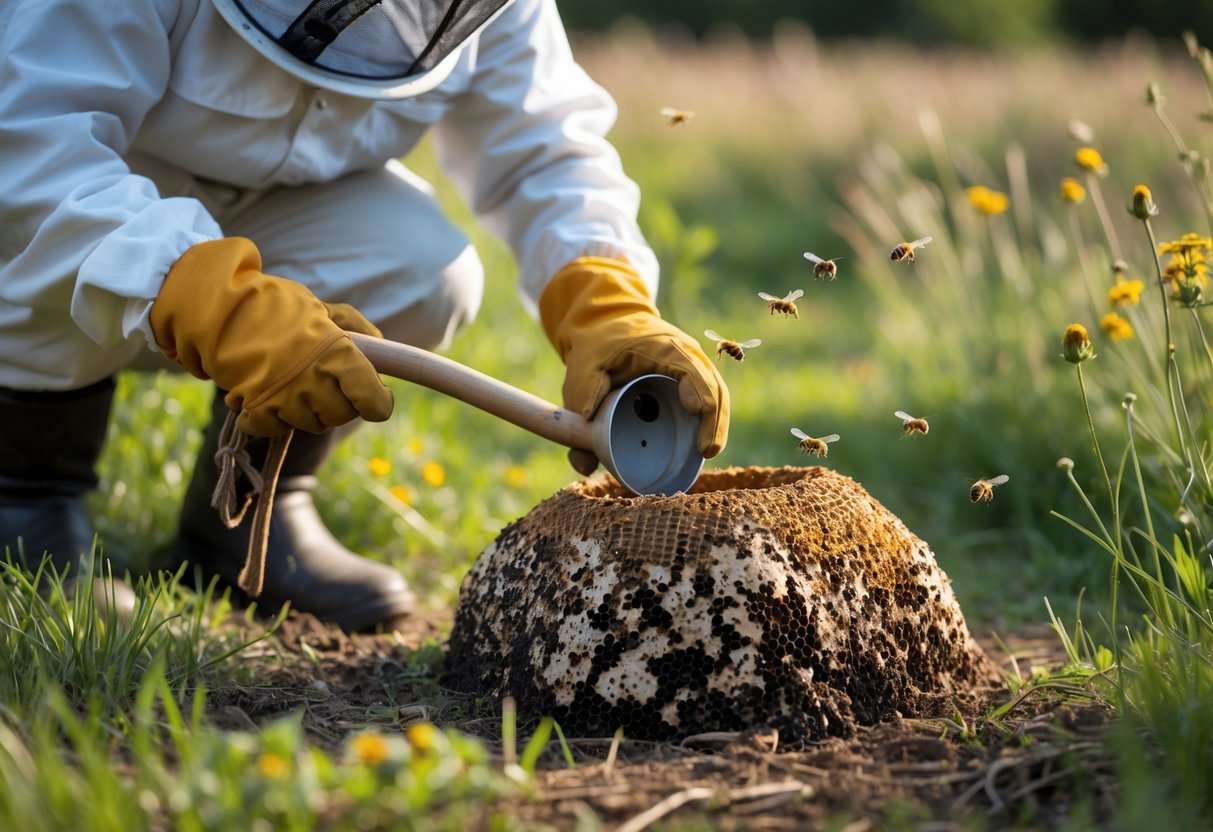
You might spot small holes or little mounds in your yard where bees have settled in. Ground bees usually don’t sting, but they can still be annoying if the nest is near your house or where kids hang out.
Taking a few simple, safe steps can help you keep the yard comfortable and bee-free, and you won’t have to mess with harsh chemicals or risk getting hurt.
If you want your yard back and a peaceful space for your family, knowing how to handle the problem safely really matters.
Let’s look at some easy, practical ways to get rid of a ground bees’ nest and keep them from coming back.
Identifying Bees Nests in the Ground

Finding a nest in your yard isn’t always easy. You’ll want to watch for things like holes in the soil and buzzing activity around those spots.
Knowing what type of insect you’re dealing with really helps you figure out the safest way to respond.
Common Types of Ground-Nesting Insects
You might run into a few different insects that make nests in the ground—ground bees, wasps, and yellow jackets, for example.
Ground bees dig small, round holes in dry, sandy soil. Bumblebees sometimes also nest underground, but they usually move into old rodent burrows or natural holes.
Wasps and yellow jackets nest in the ground too. Their entrances are usually bigger, and you’ll see tiny piles of soil nearby.
Yellow jackets are a lot more aggressive than bees, so if you spot their nests early, you can avoid a lot of stings.
How to Spot Bees in the Ground
Look for small, neat holes about half an inch wide. You might notice several grouped together since ground bees often nest in colonies.
Watch for bees flying low to the ground and disappearing into those holes again and again.
Ground bees tend to be calm and not aggressive. They’ll forage at flowers nearby and then zip back to their holes to feed their larvae.
If you watch quietly from a distance, you can usually figure out what’s living there without disturbing anything.
Differentiating Ground Bees, Wasps, and Yellow Jackets
At first glance, ground bees, wasps, and yellow jackets can look similar, but there are some clear differences.
Ground bees look fuzzy and have wide bodies with orange or brown colors. They rarely sting unless you really bother them.
Wasps and yellow jackets have smooth, shiny bodies with bold yellow and black stripes. Yellow jackets are a bit smaller but way more aggressive, and they might swarm if you mess with their nest.
If you notice the insects acting aggressively or hear louder buzzing than you’d expect, you might have yellow jackets or wasps. In that case, it’s smart to be extra careful or just call a pro.
For more detailed advice, check out guides on how to identify ground bee nests safely and tell bees apart from other bugs.
Safe and Effective Methods to Get Rid of a Bees Nest in the Ground

Dealing with a bees nest in the ground means you’ll want to take careful steps to remove the bees safely.
You need methods that protect your lawn but also avoid hurting helpful pollinators. Some people use natural repellents, while others go for tools or chemicals.
Knowing when to handle it yourself or call experts can really make a difference.
Natural Remedies and Repellents
You can try natural ways to keep ground bees away without harsh chemicals. Cinnamon powder sprinkled around the nest blocks their scent trails, which helps keep them from coming back.
Another option is diatomaceous earth. This fine powder damages bees’ exoskeletons, making it tough for them to survive.
Keeping the soil damp near the nest entrance can also make the spot less appealing. If you cover the holes with heavy objects like bricks, you can stop new bees from getting in or out.
These natural fixes are safer for the environment and less likely to hurt pollinators you actually want in your yard.
How to Use Bug Zappers and Traps
Bug zappers can help control ground bees, but they’re not a quick fix. They attract and kill flying insects, but they can’t reach the whole nest underground.
Set up bug zappers around your yard to slowly bring down the population. Traps with sweet baits can catch a few bees before they get to the nest.
Honestly, you’ll need some patience with these methods—they won’t wipe out the colony overnight.
If you use these devices along with other methods, you can lower bee numbers without risking stings or disturbing the nest too much.
Applying Insecticides and Other Products
If natural methods don’t work, you might try insecticides made for ground bees. Apply them carefully at dusk when bees are less active so you don’t get stung.
Use a dust or spray insecticide right into the nesting holes. Always follow the safety directions on the label to keep yourself and the environment safe.
Just remember, some insecticides can hurt other insects or pollinators, so only use them when you really have to. Avoid spraying large areas to keep your yard’s natural balance intact.
When to Call Professional Pest Control
If you notice a large ground bee nest or it’s way too close to where your family hangs out, it’s probably time to call pest control. The pros bring the right gear and know-how to get rid of nests quickly.
They’ll figure out if the bees act aggressively and suggest treatments that keep everyone safer. Experts also treat the area around your yard, which helps stop new nests from popping up.
If you’re allergic to bee stings, or honestly just not comfortable messing with insecticides or tricky removal methods, hiring professionals really makes sense.
For more tips, check out how to get rid of ground bees nest safely and effectively at alicewonderlandnursery.com.


