
Ever sat outside and caught the sound of a coyote howling in the dark? You might wonder, just how close are they? The answer isn’t all that straightforward. It depends on a bunch of things—what the land looks like, the wind, even the time of night.
Most of the time, you’ll hear coyote howls from somewhere between one and three miles away. But when the night is especially quiet and still, those howls can travel over ten miles.
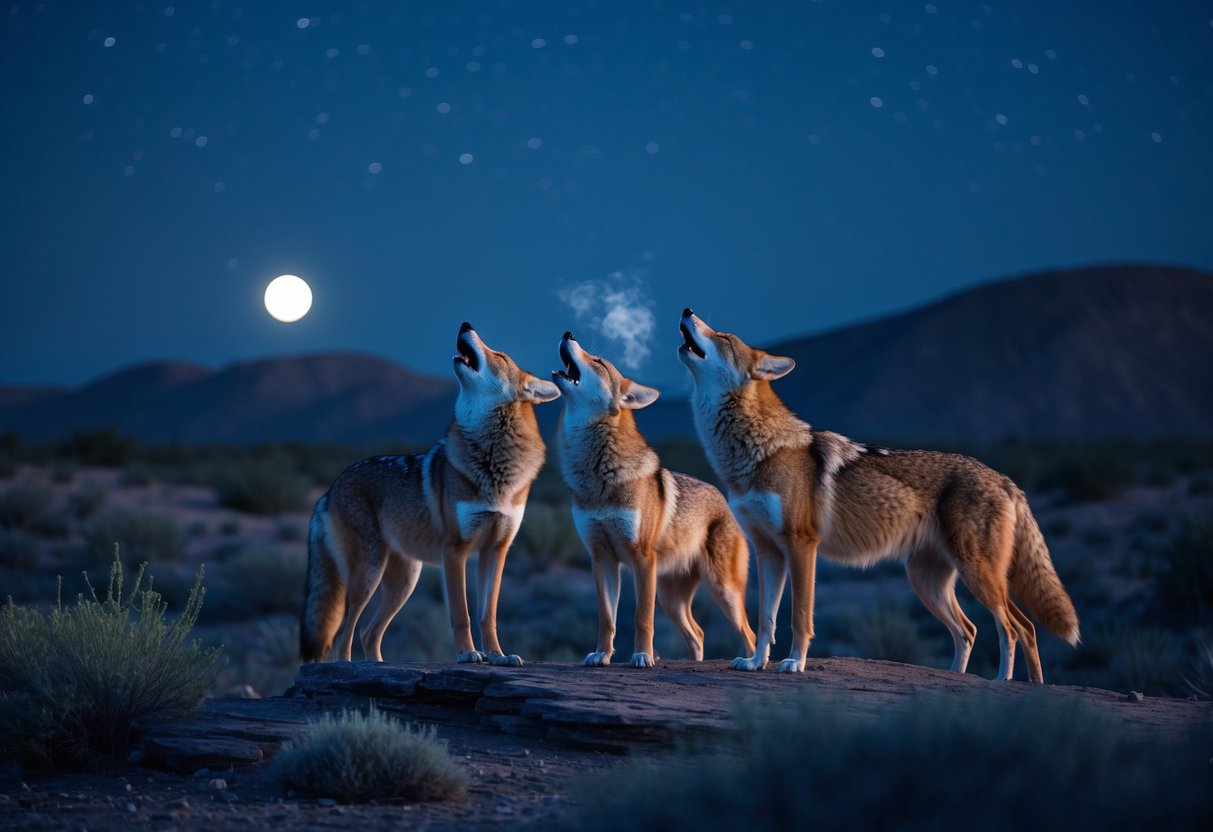
Coyotes howl to talk with their pack or let others know, “Hey, this is my turf!” So, when those wild calls echo through the night, you’re eavesdropping on nature’s own group chat. It’s kind of amazing, honestly.
If you live near wild areas or have pets, knowing how close coyotes might be can help you keep an eye out. Let’s look at what changes how far you can hear them and what those sounds even mean.
How Close Are Coyotes When You Hear Them Howling?

When you hear a coyote howling, figuring out how close they are isn’t easy. Their calls travel far, and the sound can seem closer or farther depending on what’s around you.
If you know the usual distances and a bit about how sounds act, you can get a better sense of coyote behavior.
Typical Distances for Coyote Howls
Coyotes might be just a few hundred feet away, or maybe over a mile off, when you hear them. In open fields or prairies, their howls can reach your ears from up to three miles away.
But in the city or a thick forest, sound doesn’t travel as far—usually less than a mile. Wind, hills, and even the temperature all play a part.
On cool, calm nights, their howls seem to carry forever. If you hear a howl loud and clear, chances are the coyote is probably within a mile.
Why Coyote Howls Sound Closer Than They Are
Sometimes a coyote’s howl feels like it’s right outside your window, but it’s actually much farther. Sound bounces around—hills, rocks, or canyons can echo the noise back at you and make it seem louder or closer.
Coyotes often howl together. When a few of them start up, their voices blend and travel farther than just one would.
This “chorus” can make you swear there’s a pack right nearby, even if they’re not. And if everything else is quiet, even a distant howl can sound close.
That’s just how our ears and brains work, I guess. If you want more details, here’s some good info on how far you can hear them.
Decoding Coyote Sounds and What They Mean

Coyotes don’t just howl. At night, you might hear all sorts of noises—each one gives you a little clue about what’s going on.
From long howls to quick yips, these sounds are just coyotes talking to each other.
Types of Coyote Noises You Might Hear
Coyotes make all kinds of sounds: howls, yips, barks, growls, and yelps. Howls can be long and steady, or short and sharp. They’re mostly for long-distance chatting and keeping the pack together.
Yips and yaps are usually higher and come from pups or younger coyotes. Barks are low and act as warnings.
Growls and snarls show up when a coyote feels threatened or is trying to look tough.
Sometimes, all these noises mix together. A few coyotes can sound like a whole crowd—this is the “beau geste” effect. It’s pretty clever, really.
If you’re curious about the different coyote sounds, check out this guide.
Reasons Coyotes Howl and Communicate
Coyotes mostly howl to mark their territory and keep in touch with their family. When a pair lets out a mix of howls, yips, and barks, they’re basically saying, “Hey, this spot’s ours,” and warning others to back off.
These sounds also help keep the family tight-knit. You can almost hear the bond in their calls.
Sometimes, howling means a coyote feels distressed or excited. If one senses danger or spots a rival, it’ll bark and howl to warn the pack.
The more intense the howling, the more worked up the coyote is. It’s kind of fascinating how their mood comes through in the noise.
Every coyote has its own style of howling. These unique voices let them recognize each other, even from far away.
So, if one calls for help or warns of a threat, the pack knows who it is and can react fast. Curious about what their sounds really mean? Check out what coyote cries mean.


