
Trying to spot a queen bee in a hive full of busy bees can feel a bit overwhelming at first. Honestly, it’s easy to get lost in the crowd. But once you know what to look for, it gets a lot less confusing.
The queen bee stands out because she’s bigger than the workers. Her abdomen stretches past her wings, and she’s just a different shape overall.
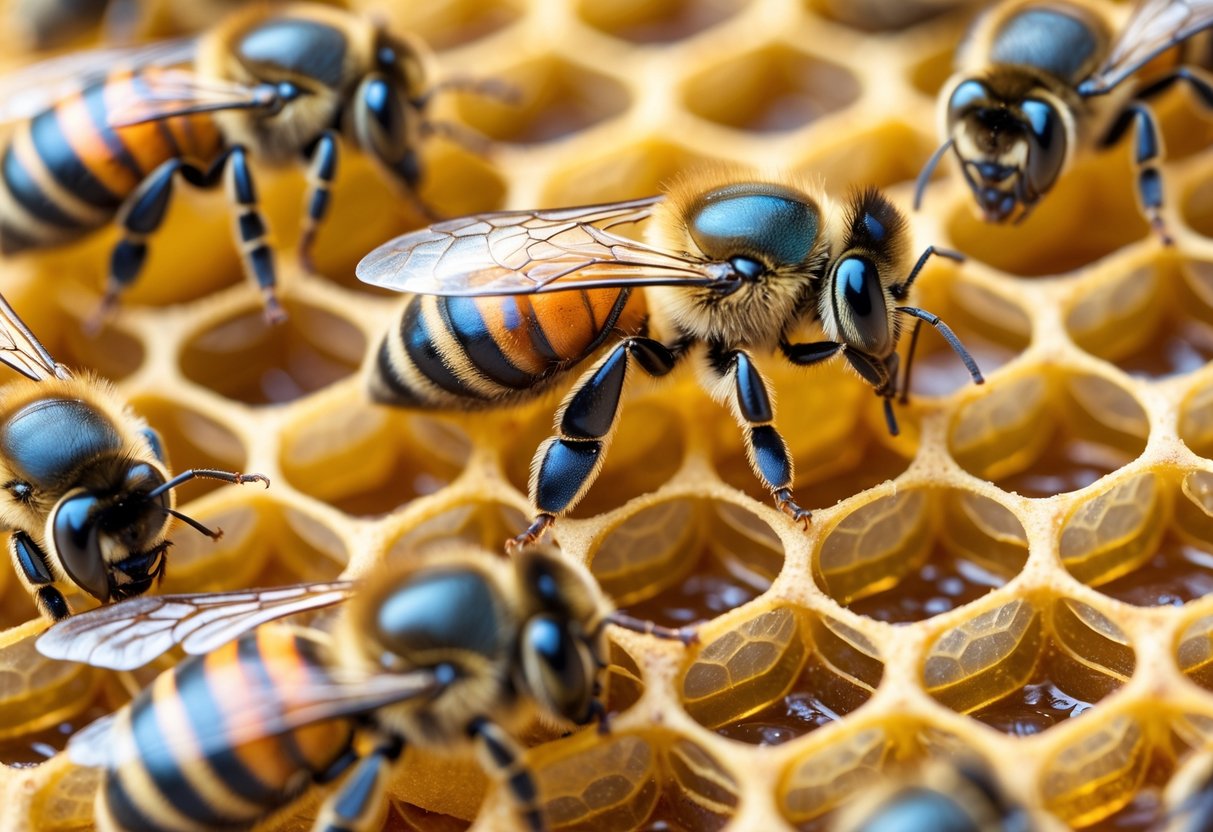
Besides her size, the queen acts differently. She moves slowly and almost always has worker bees fussing over her.
She’s the only one laying eggs, so the whole colony depends on her. That’s a big job, right?
If you watch for her size and how the other bees treat her, you’ll start to feel more confident picking her out. Learning these little tricks is pretty important for any beekeeper or just someone fascinated by bees.
For more tips, check out how you can tell the queen bee from a regular bee.
Key Differences Between Queen Bees and Regular Bees

You’ll notice a queen bee if you look closely at her size, her shape, and the way she acts in the hive. She also has a totally unique job, which changes how she lives and how long she sticks around compared to worker bees and drones.
Physical Traits to Identify a Queen Bee
Queen bees are just bigger than the others. She usually measures about 20 millimeters, while workers are more like 11 to 15 millimeters.
Her body looks long and slender, with a tapered abdomen that’s pretty noticeable. Her back is darker, and underneath she’s got a lighter, kind of tawny color.
You’ll see her legs are longer, but her wings are actually shorter than the workers’. One big clue? Her sting is curved and stronger, made for fighting other queens.
If you look closely, you’ll spot these features even though she’s surrounded by so many workers.
Behavioral Clues and Movement Patterns
Queen bees don’t dart around like workers. She walks calmly and steady, not in a hurry.
Usually, a circle of worker bees hangs around her, feeding and cleaning her. People call this her “court,” and honestly, it’s a great way to find her—just look for the cluster.
While workers are out foraging or buzzing from task to task, the queen sticks to laying eggs. She doesn’t bother with nectar or pollen collecting.
Colony Roles and Life Cycle Variations
The queen bee lays all the eggs in the hive. She’s the only fertile female, which is wild if you think about it.
Worker bees, even though they’re mostly female, can’t lay eggs. Instead, they build the hive, feed the larvae, and collect food.
Drones are the males. Their only job is to mate with queens from other hives.
Queens start as larvae, but the workers feed them royal jelly. That special diet changes everything for them.
A queen can live for years, but workers only last weeks or months, depending on the season. Drones don’t make it past mating or, honestly, winter.
All these differences keep the hive running smoothly. If you pay attention, you can use these clues to pick out the queen in a crowd.
For a deeper dive, here’s a handy guide on how to tell the difference between a queen bee and a regular bee.
Tips and Tools for Spotting the Queen Bee

Spotting the queen bee takes a bit of practice and the right attitude. If you know how to check your hive carefully and use a few handy tricks, you’ll find her much faster.
Essential Hive Inspection Techniques
When you check your hive, open it slowly and go frame by frame. The queen usually hangs out near the brood nest where you’ll see eggs and young bees.
Look for a bigger bee with a long abdomen and a shiny thorax. Move slowly and give each frame a good look.
Worker bees tend to bunch up, but the queen moves with a certain calm purpose. You’ll start to recognize her walk.
Keep your inspections short so you don’t stress the bees too much. Good lighting helps a lot, too.
Use natural light or a gentle flashlight—too much glare just upsets the bees. Take your time and scan every frame if you want to manage your hive well.
Using Marking and Visual Aids
If you spot your queen, mark her with a little dot of paint on her back. It makes future inspections so much easier.
A magnifying glass can help you pick out her long wings and special shape. Some beekeepers use queen excluders to keep her in certain parts of the hive, which also makes things easier.
Photos and diagrams of the queen’s features are helpful, especially when you’re just starting out. Lots of beekeeping guides include fold-out charts or queenspotting images you can bring with you during inspections.
Common Challenges When Locating the Queen
Finding the queen isn’t easy. She blends in with thousands of worker bees and moves fast.
Sometimes, she slips underneath brood comb or hides out in queen cells. That makes her even tougher to spot.
When the colony gets big or extra busy, you might miss her entirely. Honestly, it can take several short inspections before you start feeling confident.
If beekeepers replace the queen or she goes missing, the whole search gets trickier. You can’t really rush this process.
Don’t mistake those bigger worker bees or drones for the queen—they can throw you off. If you know her unique features and watch how she acts, you’ll make fewer mistakes.
Practice helps a lot. Over time, you’ll get better at finding her and keeping tabs on hive health.
Want more details? Check out these tips for spotting the queen bee during hive inspections and using handy tools to identify her quickly.


