
Ever spotted tiny holes in your yard or right next to your house? You might be wondering just how small of a gap a chipmunk can squeeze into. Honestly, chipmunks can fit through holes as small as 2 inches wide—it’s kind of wild how easily they slip into spaces you wouldn’t expect.
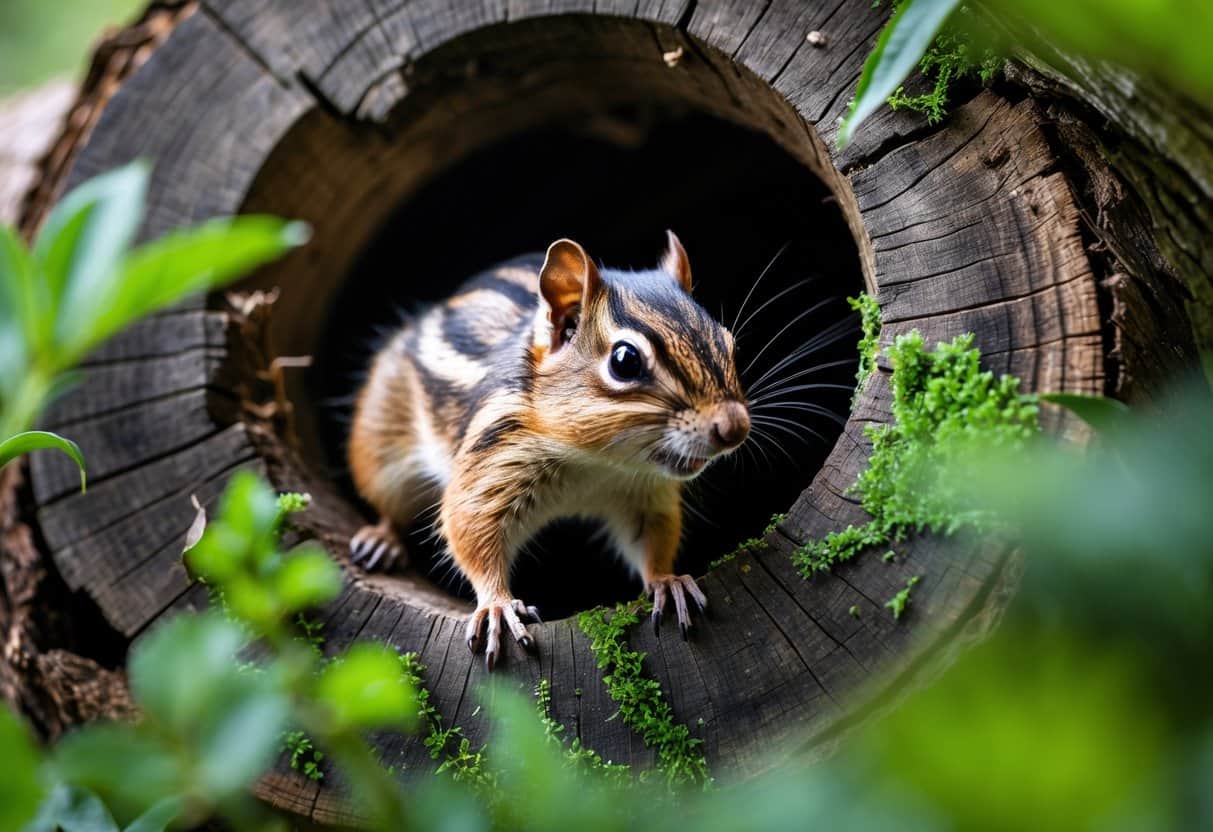
These little guys are experts at finding small gaps around your property. Even the younger chipmunks can slip through spaces just 1 to 1.5 inches wide.
If you know this, you can spot their entry points more easily and stop them before they really settle in.
How Big of a Hole Can a Chipmunk Fit Through?
Chipmunks squeeze through tiny spaces thanks to their size and shape. If you know what size holes they use, you can spot their burrows and keep them out of certain spots.
Typical Hole Size for Chipmunks
Usually, chipmunk holes measure about 2 to 3 inches wide. That’s just enough space for them to dart in and out, while staying hidden and protected.
Their burrows don’t have those big dirt piles you see with moles or gophers. Most chipmunk holes sit flat at ground level.
The size of these holes matches the chipmunk’s slim, little body. So if you find holes around 2 or 3 inches, there’s a good chance chipmunks made them.
If the holes are much bigger, you’re probably dealing with a different animal.
Chipmunk Body Adaptations
Chipmunks use their flexible bodies and sharp claws to dig and squeeze into tight spots. Because they’re so small, they slip through holes barely bigger than themselves.
Most of the time, they only need a space a bit over 2 inches wide. Their flattened skulls and bendy joints help them move through narrow underground tunnels.
When they dig, chipmunks even carry dirt in their cheek pouches, which just shows how compact and efficient they are.
Honestly, if they can dig a hole, they can probably fit through it.
Comparing Chipmunk Holes to Other Animals
Chipmunk holes look smaller than holes from a lot of other burrowing critters.
For example:
- Mole holes come with bigger dirt mounds and usually measure 3 to 4 inches wide.
- Squirrels need at least a 3 to 4 inch opening, sometimes even bigger.
- Rabbits go for holes 4 inches wide or more.
If you know these size differences, you can guess what animal made the hole. Chipmunk holes are pretty small and neat—about the size of a silver dollar, maybe a little bigger.
If you want more details on chipmunk burrow sizes, check out Chipmunk Holes: How To Identify & Fill Chipmunk Burrows.
Dealing With Chipmunk Holes and Preventing Return
If you want to deal with chipmunk holes, you’ll need to do more than just fill them in. The right materials matter, and you’ve got to make sure they don’t just come right back.
Protecting your yard and home is the best way to stop new holes from showing up.
How to Fill Chipmunk Holes
When you fill chipmunk holes, go with dirt or gravel—not stuff like cat litter. Dirt is easy to pack, but chipmunks might just dig it out again.
Gravel works better because it’s loose and uncomfortable for them to burrow through. Start by clearing out loose debris from the hole.
Then pour in gravel until it’s about halfway full, and top it off with dirt to hold everything in place. Don’t block every entrance at once, or you might trap a chipmunk inside, which could mess up your yard even more.
Keep an eye on the holes and refill as needed—chipmunks can be persistent until they give up.
Effective Materials for Filling
The best stuff to use in chipmunk holes is natural and non-toxic.
- Gravel makes it tough to dig.
- Soil or garden dirt can help pack the hole tight.
- Skip the cat litter, since it can spread parasites and isn’t safe.
- Some folks toss in rocks or small stones too, just to make the tunnel less appealing.
You want to make the hole feel unsafe or just plain uncomfortable for chipmunks.
Long-Term Prevention Methods
Just filling holes won’t solve the problem for good. You’ve got to make your yard less appealing to chipmunks.
Try these ideas:
- Plant daffodils or allium—chipmunks really don’t like them.
- Put gravel borders around your garden beds.
- Install fencing that goes at least 6 inches underground to block entry.
- Clear away piles of debris, wood, or thick bushes that give chipmunks places to hide.
If you keep up with regular yard work, you’ll make it harder for chipmunks to dig new holes.
Protecting Your Yard and Home
Watch for holes around 2-3 inches wide—chipmunks love squeezing through tiny gaps you might not even notice.
- Seal up cracks or holes in your foundation and walls if they’re at least 2 inches across.
- Put fine mesh screens over vents and crawl spaces.
- If you spot a chipmunk inside, try to keep it in one room. Then, crack open a door or window so it can find its way out.
- If you really have to, set up a humane live trap with peanut butter as bait.
Taking these steps makes it a lot harder for chipmunks to show up where you don’t want them.


