
If you’re worried about coyotes hanging around your home, you might wonder if yelling actually works to keep them away. Yelling does scare off coyotes because loud, sudden noises can startle them and send them running.
Coyotes usually avoid people, so just raising your voice often reminds them to steer clear of your yard.
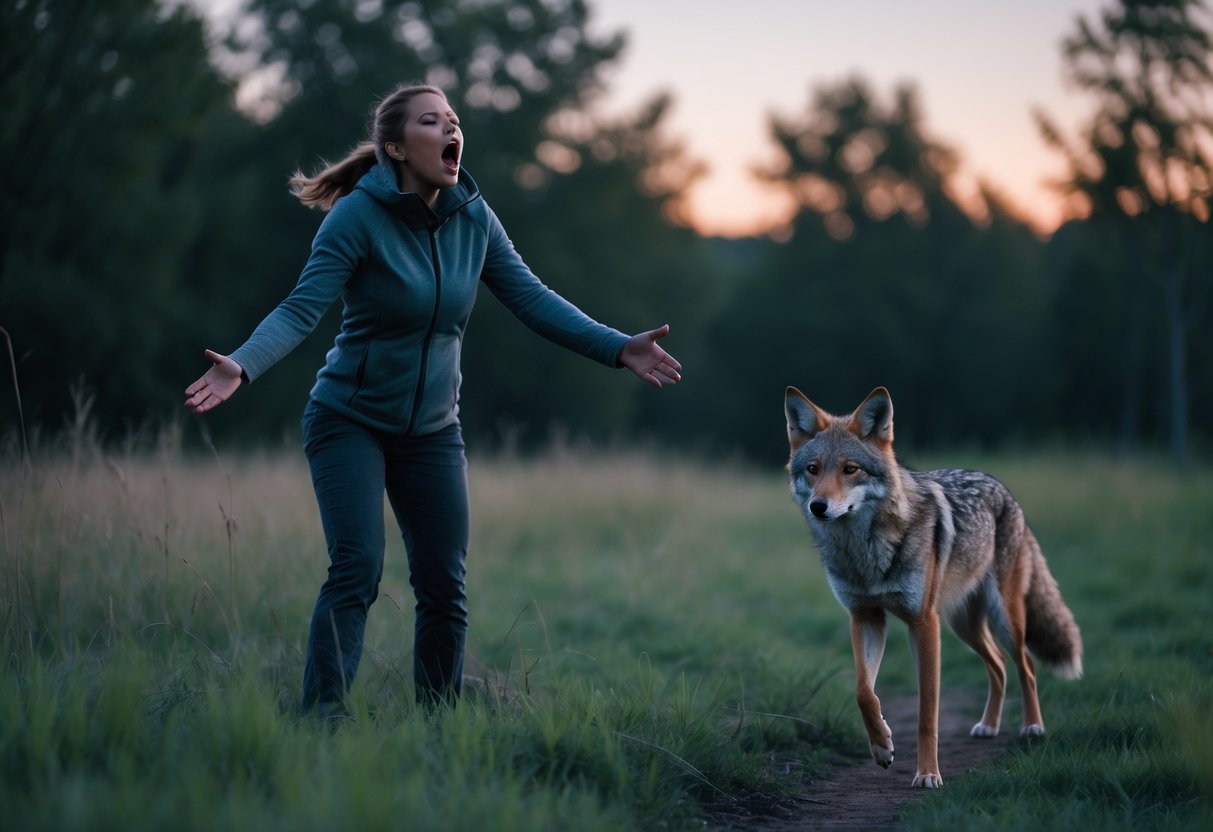
Try using your voice along with other loud sounds, like clapping or banging pots together. That combo can be even more effective.
It’s a simple, cost-free way to protect your pets and property. No fancy gadgets needed.
Let’s get into how yelling fits into a bigger plan for keeping coyotes at a distance.
Effectiveness Of Yelling And Loud Noises On Coyotes

Yelling and making noise can scare off coyotes by making you seem bigger and more threatening. Mixing up your sounds and actions keeps them guessing.
If you use a blend of noises and movements, you’re more likely to get the coyote to leave.
How Coyotes React to Human Yelling
When you yell at a coyote, it usually feels threatened and confused. Some coyotes, especially ones that haven’t been hazed before, might not run off right away.
You might have to get a bit closer, yell louder, and wave your arms. If the coyote bolts but then stops to watch you, keep making noise and move toward it.
This shows you mean business and usually makes the coyote leave for good.
Yelling taps into the coyote’s natural fear of humans. That fear helps keep them from sticking around your home.
Types of Noises That Deter Coyotes
Coyotes really don’t like sudden, loud noises. Yelling “Go away, coyote!” works surprisingly well.
You can also try:
- Air horns
- Whistles
- Pots and pans banging together
- Noisemakers like cans with pennies inside
These loud, sharp sounds startle coyotes and usually send them packing. If you keep using the same noise, they might get used to it, so switch it up sometimes.
Even stomping your feet or clapping can work when you don’t have anything else handy.
Role of Hazing in Changing Coyote Behavior
Hazing means you use noises and actions to teach coyotes to stay away. You want them to keep that healthy fear of humans.
Combine yelling, waving your arms, and loud noises for a strong message. You can add water sprays or toss a light object near (not at) them to make your point.
If a coyote comes back after hazing, just repeat the process. Most of the time, it only takes a couple tries before the coyote decides your yard isn’t worth the trouble.
Hazing helps you keep your pets and kids safer by making bold coyotes think twice. If you want more, check out coyote hazing.
Best Strategies To Scare Off Coyotes In Urban Areas

Coyotes in cities can act pretty bold. But you’ve got a few good ways to keep them back.
Making loud noises, using strong smells, and protecting your yard all work well together.
Using Noise Tools Like Air Horns and Pots
Loud sounds are probably the easiest way to scare off coyotes. Sure, you can yell, but air horns or banging pots make your noise way more powerful.
Keep an air horn handy when you walk your dog. If a coyote shows up, blast the horn.
That sudden noise almost always makes them run. If you’re at home, bang pots or shake metal lids.
Those sharp sounds grab a coyote’s attention and remind it that your yard isn’t safe.
Try to make noise right away. The quicker you react, the better your odds of chasing a coyote off.
Scents and Repellents, Including Ammonia
Coyotes really don’t like strong smells like ammonia. You can soak rags in ammonia and put them near pet doors, fence lines, or places coyotes visit.
Other scents that seem to work include vinegar or predator urine. These smells can confuse or scare coyotes without harming your pets or kids.
Make sure to refresh these scent repellents often. Rain and wind can wash them away, so check and replace the rags every few days.
If you use scent repellents along with loud noises, you send a clear message. Coyotes will figure out your yard isn’t a good place to hang out.
Tips for Protecting Yards and Pets
Cut back tall grass and clear out brush in your yard. Coyotes love hiding in overgrown spots, so a tidy yard keeps them away.
Make sure you secure your garbage cans really well. Even a faint smell can pull a coyote in from blocks away.
Put up fences that stand at least 6 feet tall. If you can, add a coyote roller on top—those rollers make it tough for them to climb over.
Bring small pets inside at dawn, dusk, and during the night. Coyotes usually roam around more during these times.
Keep animals like chickens or rabbits in sturdy enclosures. Don’t give coyotes an easy meal.
When you walk your dog, carry a noise maker. If you run into a coyote, a loud sound can scare it off.
Always keep an eye on your pets, especially in urban areas. It’s surprising how quickly a coyote can appear.
For more details, check out the guide to best ways to keep coyotes away from your yard.


