
Ever wondered if a coyote could actually catch a cat? Well, honestly, yes—it happens. Coyotes are pretty skilled hunters and can overpower most domestic cats without much trouble.
They use a mix of stealth and patience to stalk their prey. That makes outdoor cats, especially at night, pretty vulnerable.
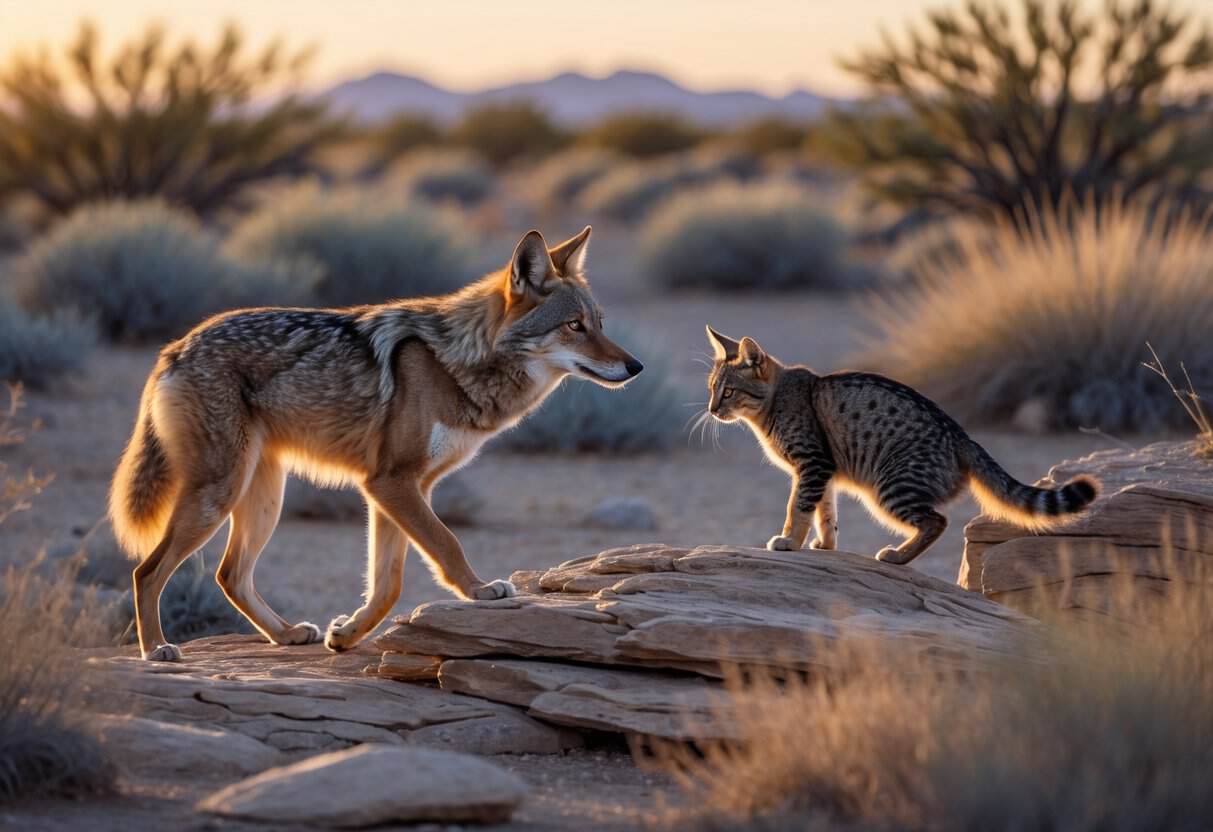
If you understand how coyotes hunt and what risks they pose, you’ll have a better shot at keeping your pet safe. Living in a place where coyotes roam means you need to know what to watch for and how to protect your cat.
Let’s get into why coyotes go after cats, what makes cats easy targets, and what you can actually do to keep your feline friend out of trouble.
Can a Coyote Catch a Cat?
Coyotes hunt using sharp instincts and by making the most of their surroundings. When you know how these animals behave, it’s easier to see why your cat could be at risk.
Your cat’s age and the time of day matter a lot here.
Coyote Hunting Behavior and Adaptability
Coyotes adapt to just about anywhere, honestly. You’ll find them in cities, suburbs, and wild places.
They usually hunt alone, which lets them stay quiet and out of sight. Most of their activity happens at dawn, dusk, or late at night—unfortunately, those are times when a lot of cats are outside.
Coyotes eat whatever’s easiest to catch, especially if they’re hungry. If they spot a domestic cat, they’ll go for it.
Their knack for living near people and finding food—like pet food or small critters—makes them a real threat to cats.
Predatory Strategies Used by Coyotes
Coyotes watch their prey from a distance, sometimes for quite a while. They hide and move quietly, barely making a sound.
When they see a good opportunity, they pounce fast. They rely on surprise, speed, and strength.
Even if your cat climbs a tree, it might not be safe—coyotes can jump up to six feet. If a coyote catches a cat, it usually ends quickly.
Factors Affecting the Risk to Cats
A cat’s risk really depends on a few things. Older or weaker cats can’t run or react as fast.
Cats that go outside at night or early morning face more danger, since that’s when coyotes hunt. If your cat spends time alone outside or hangs around where there’s food—like pet bowls or trash—coyotes might show up.
Keeping your cat indoors or at least supervised, especially during those risky hours, makes a huge difference.
If you want more details on how coyotes hunt cats, check out this resource.
How to Reduce the Risk of Coyote Encounters
You can keep your cat safer by figuring out where coyotes might roam near your place. Use sturdy outdoor enclosures and tweak your cat’s habits a bit.
These steps really do lower the odds of a run-in with a coyote.
Understanding Coyote Habitats Near Homes
Coyotes are clever and can live surprisingly close to people. They like spots with brush, trees, or open fields near houses.
Look out for hiding places—woodpiles, thick bushes, or even trash bins can attract them. Keep your yard clean and pick up leftover food or fallen fruit.
Take down bird feeders if coyotes are a problem, and make sure your trash cans have tight lids. Coyotes don’t like bright lights or loud noises, so motion-activated lights or sudden sounds can help scare them away.
Knowing when coyotes are out and about helps, too. They usually hunt at dawn, dusk, and night.
If you’re extra cautious with your cat during those times, you’ll lower the risk.
Effective Cat Enclosures and Catios
A sturdy cat enclosure or catio is probably the best way to let your cat enjoy the outdoors safely. Pick one with solid walls or thick wire—nothing coyotes can squeeze through or tear apart.
Make it tall enough and add a secure roof so coyotes can’t jump in. Throw in some shelves or climbing spots inside so your cat can hang out up high.
Coyotes can’t climb, so your cat stays out of reach. Keep the enclosure tidy and don’t leave food scraps around, since that might attract unwanted visitors.
You might even try putting ammonia-soaked rags nearby—coyotes hate the smell, and it could help keep them away.
Cat Behavior That Impacts Safety
What your cat does each day can really change how safe it is around coyotes. If you let your cat roam, especially after dark, it faces a much bigger risk.
Try bringing your cat inside during the evening and early morning since that’s when coyotes tend to hunt.
If your cat insists on going outside, you might want to tire it out before nightfall. Playing and feeding your cat about an hour before dusk can help it settle down and stay inside for the night.
Show your cat how to use high spots like trees or shelves outside. Coyotes just can’t climb, so these spots give your cat a quick escape.
Steer your cat away from low bushes, though. Coyotes can hide there and wait for the perfect moment to pounce.


