
You might assume seahorses are just odd little creatures, but honestly, they show some surprisingly sweet signs of affection. Seahorses form close pair bonds, do daily greeting dances, and many stick with the same partner for several breeding cycles. That’s not just cute—it shapes how they mate, raise their babies, and try to survive as their habitats disappear.
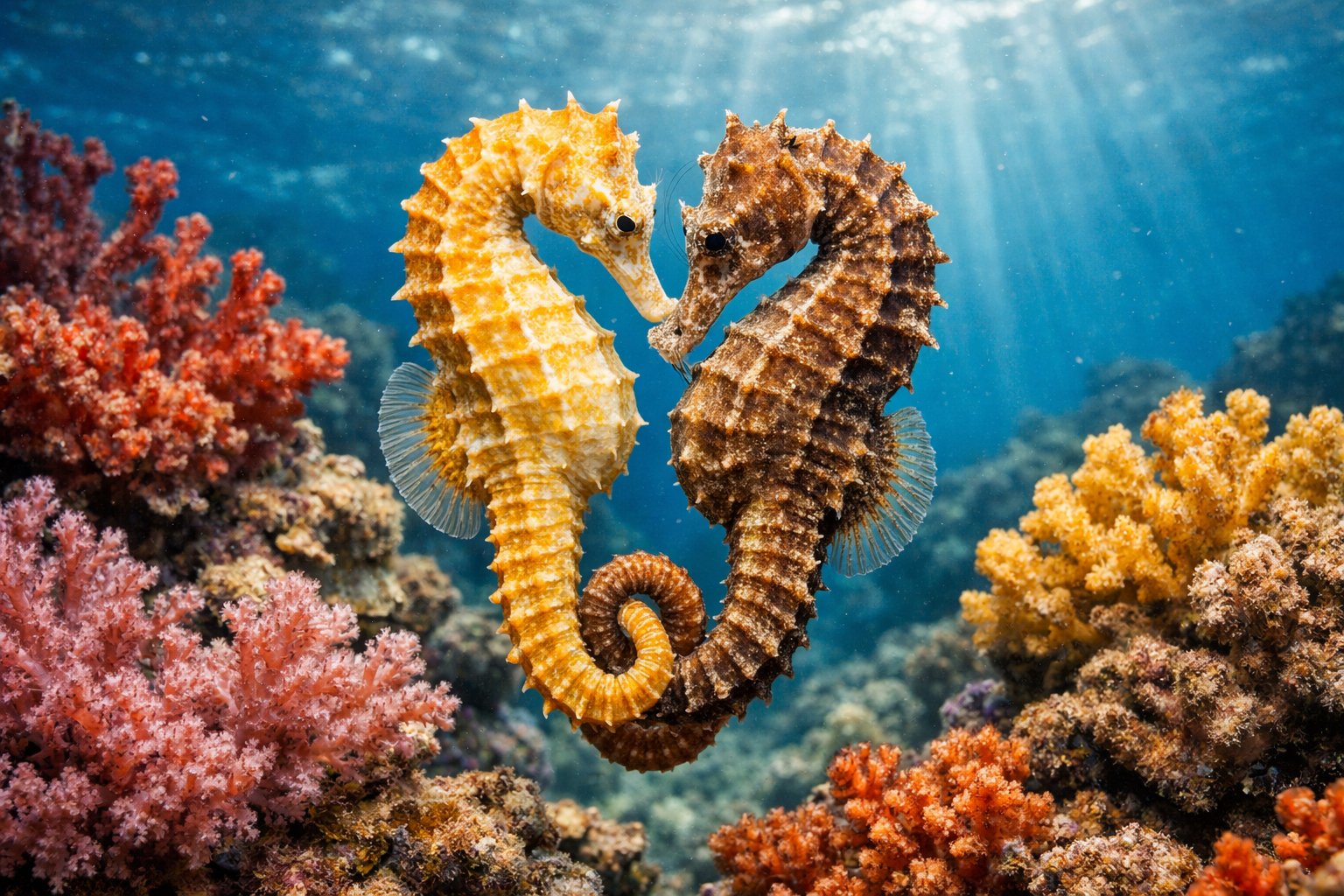
If you read on, you’ll see how seahorses show affection with tail-holding, synchronized swimming, and even shifting their colors. There’s also the wild parenting role swap and the tough environmental threats that mess with those bonds. Honestly, it’s a lot for a little fish.
How Seahorses Show Affection

Seahorses stick together using repeated behaviors that help them bond and get ready to mate. You’ll notice daily dances, close contact, and long-term partnerships that make egg transfer and raising young a bit smoother.
The Daily Courtship Ritual
If you look for seahorses at dawn or dusk, you might catch pairs doing a synchronized dance. Sometimes this dance goes on for days.
They swim side by side, mirror each other, and even change color as they move. The whole point is to get their timing right so the female can safely pass her eggs to the male’s pouch.
Amanda Vincent and other researchers have watched these displays and say they help reinforce the pair’s bond. The routine has bursts of pumping, rising and falling together, and little pauses where they just face each other.
These moves keep them in sync and cut down on mistakes during mating.
Tail Twining and Physical Touch
Seahorses use their prehensile tails to grab each other or the same bit of seagrass. You’ll often see them with tails wrapped together.
This keeps them close in the current and shows trust. It can even calm a mate and help them stay together while they eat or rest.
Touch isn’t just about tails, either. Sometimes they line up their heads and necks or gently press their bodies during courtship.
It’s almost like a daily check-in. In some species, the adults let juveniles hitch a ride, which feels like a small act of social tolerance—more about touch than parenting.
Monogamy and Pair Bonding
A lot of seahorse species stick with one partner for at least a breeding season, and some stick together for years. If you watch a bonded pair, you’ll see them repeat rituals every day to keep their timing and trust solid.
Monogamy helps because it saves time looking for mates and boosts the odds of successful mating. Since the male carries the eggs, a reliable partner means less risk of egg rejection or failed transfers.
Conservationists like Amanda Vincent pay close attention to these bonds. They use this info to figure out how to protect habitats so seahorses can actually find and keep their partners.
Seahorse Partnership, Parenting, and Challenges

Seahorses build tight bonds, share parenting in a way that’s honestly pretty wild, and face real threats that put those bonds in danger. There’s a lot going on with their parenting and the risks they face.
Male Pregnancy and Shared Parenting
Male seahorses carry fertilized eggs in a brood pouch until the young are ready to pop out. The female puts her eggs in the male’s pouch, and he fertilizes, oxygenates, and nourishes them for days or weeks, depending on the species.
Pairs do morning greeting dances to stay in sync before each round of mating. This role reversal means both partners really invest in reproduction.
Males sometimes give birth to hundreds or even thousands of fry at once. That’s a lot, so timing and pair coordination really matter for reproductive success.
If you want to dig deeper, Project Seahorse and iseahorse.org have some good info about this and how people keep track of seahorse populations.
Threats to Seahorse Relationships
Seahorse pairs need stable habitats and low fishing pressure to keep meeting and reproducing. Unsustainable fishing, like bottom trawling or nonselective nets, wrecks seagrass beds and coral where seahorses live.
Habitat loss from coastal development and pollution also takes away the places where pairs can anchor and feed. When population density drops, it gets tough for seahorses to find mates, so pairs can break up or never form at all.
Overcollection for the aquarium trade and traditional medicine cuts local numbers even more. All these pressures make it harder for seahorses to maintain long-term bonds and raise their young.
The Role of Conservation Efforts
Groups like Project Seahorse work hard to protect seahorse pairs and give them a fighting chance. If you want to help, you can support marine protected areas (MPAs) that block trawling, harsh fishing gear, and coastal destruction around seahorse habitats.
MPAs create safer spots where seahorses can feed, find a mate, and raise their young. It’s not perfect, but it’s a start.
You can also jump into community science efforts. Platforms like iseahorse.org let you share your sightings with researchers who track these populations and watch for threats.
When people push for policies to limit unsustainable fishing and bring back seagrass or reef habitats, seahorse pairs get a real shot at stability and breeding. Your voice and actions, even small ones, genuinely help these fascinating animals.


