
You might imagine a gentle animal kneeling to give birth, but giraffes? They do things their own way. Yep — giraffes give birth standing up, and their newborn calves drop several feet to the ground. That fall actually helps break the amniotic sac, snaps the umbilical cord, and jumpstarts the calf’s first breath.

Standing helps the mother stay safer from predators, and the calf’s long legs and neck kind of make lying down impossible anyway. In the next bit, we’ll walk through how giraffe labor works and what those frantic first minutes look like for the calf as it scrambles to stand and nurse.
Let’s get into how this dramatic entrance actually boosts survival and what goes on between mothers and calves in those first wild hours.
How Giraffes Give Birth Standing Up

Giraffe mothers stay on their feet during labor to protect themselves and their calves. Standing keeps them alert to predators and gives the calf’s long neck room to come out straight.
Usually, when a giraffe goes into labor, she stands the whole time. This lets her keep an eye out for danger and makes sure the calf’s neck doesn’t get bent on the way out.
Labor can take hours, and the mother might shift her stance a bit, but she almost never lies down for the delivery. Calves are big at birth—over 100 pounds and already several feet tall.
The mother’s pelvis and birth canal are shaped so the calf can pass through while she’s standing. Sometimes, you’ll see the mother rubbing against a tree or something nearby to help break the membranes or position the calf.
Most of the time, there’s just one calf. Twins are super rare and honestly, they’re risky for both mom and babies.
The standing birth really fits giraffes’ size and the open habitats they live in. It lets the mother stay ready to bolt if a predator shows up.
The Dramatic Drop: What Happens at Birth
When the calf comes out, it usually leads with its head and front legs stretched forward, almost like a superhero pose. As soon as the calf clears the mother, it drops about five or six feet straight to the ground.
That sudden drop tears the amniotic sac and snaps the umbilical cord. The impact also basically shocks the calf into taking its first breath.
The mother jumps into action right away, licking and nudging her calf to clear its airways and get it moving. Within minutes, the calf starts to stir.
Most calves manage to stand up somewhere between 5 and 20 minutes after hitting the ground. They nurse soon after, which is huge because they need that first milk—colostrum—to get their immune system going.
If the calf lands wrong or if the birth is breech, things can go badly for both calf and mother. That’s why the typical front-first delivery and that big drop matter so much for giraffes.
Why Giraffes Rarely Lie Down During Birth
You almost never see a giraffe give birth lying down. Why? It’s just too risky. A giraffe on the ground can’t get up quickly, and predators like lions or hyenas can take advantage of that.
Staying upright also protects the calf’s long neck. If the mother tried to give birth lying down, the calf’s neck could bend or get injured.
Zoos and wildlife parks have reported rare cases where sitting births led to neck injuries in calves, which shows why standing births are the norm.
Giraffes live out in open savannas, always on the lookout for predators. Standing up during birth is a smart adaptation that lets the mother protect herself and her calf.
Baby Giraffes’ First Moments and Survival
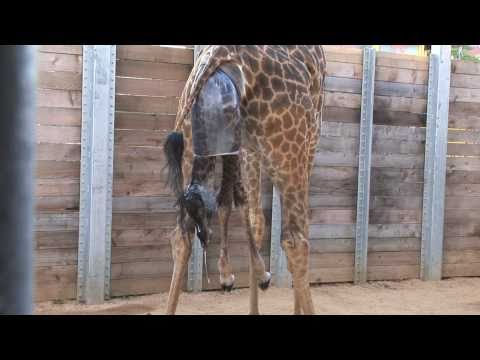
So what happens right after birth? The newborn lands, gasps that first breath, and then tries to get up—fast. The mother and even the herd play a big role in protecting the calf, but threats are everywhere in the wild.
Newborn Calf Position and Birth Process
Most giraffe calves come out head and forelegs first, with their front legs stretched forward like they’re diving. This helps the long neck and shoulders slide through the birth canal without getting stuck.
Labor can drag on for hours, but once the shoulders are out, the final stage happens quickly. As soon as the calf is clear, it drops to the ground from about five or six feet up.
That drop tears the amniotic sac and breaks the umbilical cord. The jolt also gets the calf breathing for the first time.
Newborns are hefty—about 100 kg (220 pounds) and roughly 1.8 meters (close to 6 feet) tall at the shoulder. That’s a big baby.
Immediate Aftercare: Standing, Nursing, and Herd Protection
A healthy calf tries to stand within 5 to 20 minutes. The mother nudges and licks the calf, helping it breathe and move.
Colostrum from the mother’s milk gives the calf essential antibodies and energy in those first hours. Within a few hours, the calf will nurse and then often find a hiding spot while the mother grazes nearby.
Sometimes, calves gather in little nursery groups watched over by other females. If you’ve seen births at places like Monarto Safari Park or followed April the giraffe’s famous labor, you’ll notice the same stuff: quick first breaths, wobbly first steps, and mothers right there, making sure their calves get off to a strong start.
Risks, Survival, and Adaptations of Giraffe Calves
During their first weeks, calves deal with predators like lions, hyenas, and leopards. The mother gives birth standing up, which keeps her less vulnerable and lets the calf get moving quickly.
Survival rates change depending on where the giraffes live and which subspecies they belong to. Factors like predator numbers, habitat, and human activity all play a part.
Calves benefit from a few clever adaptations. That dramatic drop at birth actually kicks off their breathing, and they can stand and walk surprisingly fast. The mother stays alert and protective, always ready to defend her calf.
Twin births don’t happen often, but when they do, the risk goes up. If a calf can’t stand or nurse soon after birth, its odds drop fast—so being able to move early and get that first milk really matters.


