
Many pet owners wonder if foxes upset dogs. In general, foxes do not pose a significant threat to dogs and tend to avoid them. However, there are times when a curious fox might trigger a reaction in your dog, especially if they are small or easily startled.
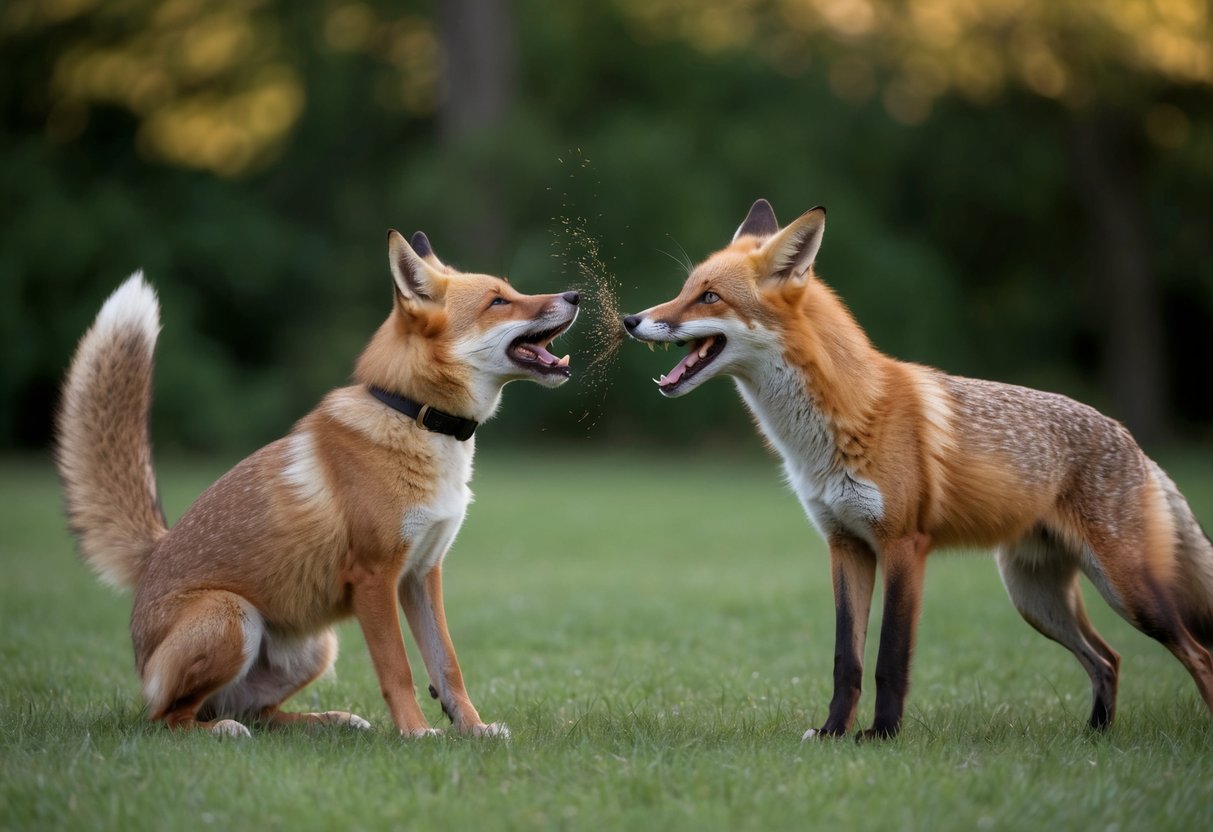
Dogs are known for their curious nature, and the sight or smell of a fox can excite them. If your dog spots a fox, they may bark or try to chase after it. While this is a natural behavior, it’s important to keep an eye on your pet, as unexpected encounters can lead to stress for both your dog and the fox.
Understanding the dynamics of your dog’s reaction to foxes can help you create a safer environment for your furry friend. By knowing how to handle these situations, you can enjoy walks in nature while keeping both your dog and the local wildlife safe.
Understanding Fox and Dog Interactions
When foxes and dogs meet, their behaviors can lead to interesting and sometimes tense situations. Knowing how foxes act and how your dog might react can help you manage their encounters.
Fox Behavior Towards Dogs
Foxes are generally cautious and intelligent creatures. They might see larger dogs as threats while perceiving smaller dogs as potential prey. If a fox feels threatened, it may growl or make loud calls to warn the dog away. This can lead to tension in the encounter.
Foxes often prefer to avoid conflict and may stalk from a distance rather than confront directly. If they feel cornered or if their young are nearby, they can get defensive. Understanding these behaviors is crucial. Awareness of a fox’s actions allows you to guide your dog accordingly and avoid any possible disagreements between them.
Common Reactions of Dogs to Foxes
Dogs respond to the presence of foxes in various ways. Many dogs will bark, growl, or act excitedly when they spot a fox. This instinctive behavior is often driven by their natural chase instinct. Smaller dog breeds are particularly prone to barking and growling, as they may feel threatened or want to protect their territory.
It’s also important to note that some dogs may be curious rather than aggressive. This curiosity can lead to a chase, which can be risky. Keeping your dog on a leash in areas where foxes are common can help you manage these reactions. Understanding these behaviors helps to ensure safer interactions for both dogs and foxes.
Risks and Prevention of Fox Attacks

When you walk your dog, understanding the risks of fox encounters can help keep your furry friend safe. Knowing how to identify potential hazards and what safety measures to take is vital for all dog owners, especially those with small breeds.
Identifying Potential Hazards
Foxes can pose a threat to small dogs, particularly if they feel cornered or are protecting their young. These animals are opportunistic hunters and may see small dogs as prey.
Be aware of your surroundings when out on walks, especially in areas where foxes are known to live. Look for signs like fox tracks, feces, and even dens that might indicate a nearby litter of kits.
Additionally, keep an eye out for any unusual behavior in your dog. If your dog acts scared or agitated, it could signal the presence of a fox nearby. Being vigilant can help you spot potential hazards before they become a problem.
Effective Safety Measures
To protect your dog from possible fox attacks, keep him on a leash, especially in wooded or overgrown areas. This gives you control and prevents your dog from wandering too close to a fox den.
If you know there are foxes in your area, consider using a muzzle during walks, particularly for smaller breeds. While foxes are generally not aggressive, aggressive behavior can occur if they feel threatened or if a fox is rabid.
Training your dog to respond to commands can help keep him safe. Teach simple commands like “come” or “leave it.” This enables you to redirect your dog quickly if you spot a fox.
Finally, secure your yard with fences and remove any food sources that might attract foxes. Keeping trash covered and avoiding leaving pet food outside can make your property less appealing to these wild animals.
Enhancing Backyard Security

To keep your dog safe from potential encounters with foxes, it’s important to take specific steps to enhance your backyard security. Focusing on proper fencing and eliminating attractants can help reduce risks.
Securing Your Property
Start by installing a sturdy fence around your yard. A fence that is at least six feet high can deter foxes from jumping over. Ensure there are no gaps or holes that a fox could squeeze through. Consider burying the bottom of the fence a few inches underground to prevent digging.
You should also regularly check for and secure any openings. Remember, foxes are clever and can find their way through small spaces. Keep areas like decks and sheds locked up and closed to avoid accidental entry.
Natural and Artificial Deterrents
Using natural or artificial deterrents can discourage foxes from coming near your property. Motion-activated lights can startle foxes, making them less likely to approach. Place these lights around the perimeter of your yard as an active deterrent.
Additionally, remove any food sources that might attract foxes. Secure your garbage cans with tight lids and avoid leaving pet food outside. If you have a garden, consider using repellents that can make your space less appealing to foxes.
By combining these strategies, you create a safer environment for your pet and decrease the chances of unwanted visitors.
Health Concerns and Veterinary Care
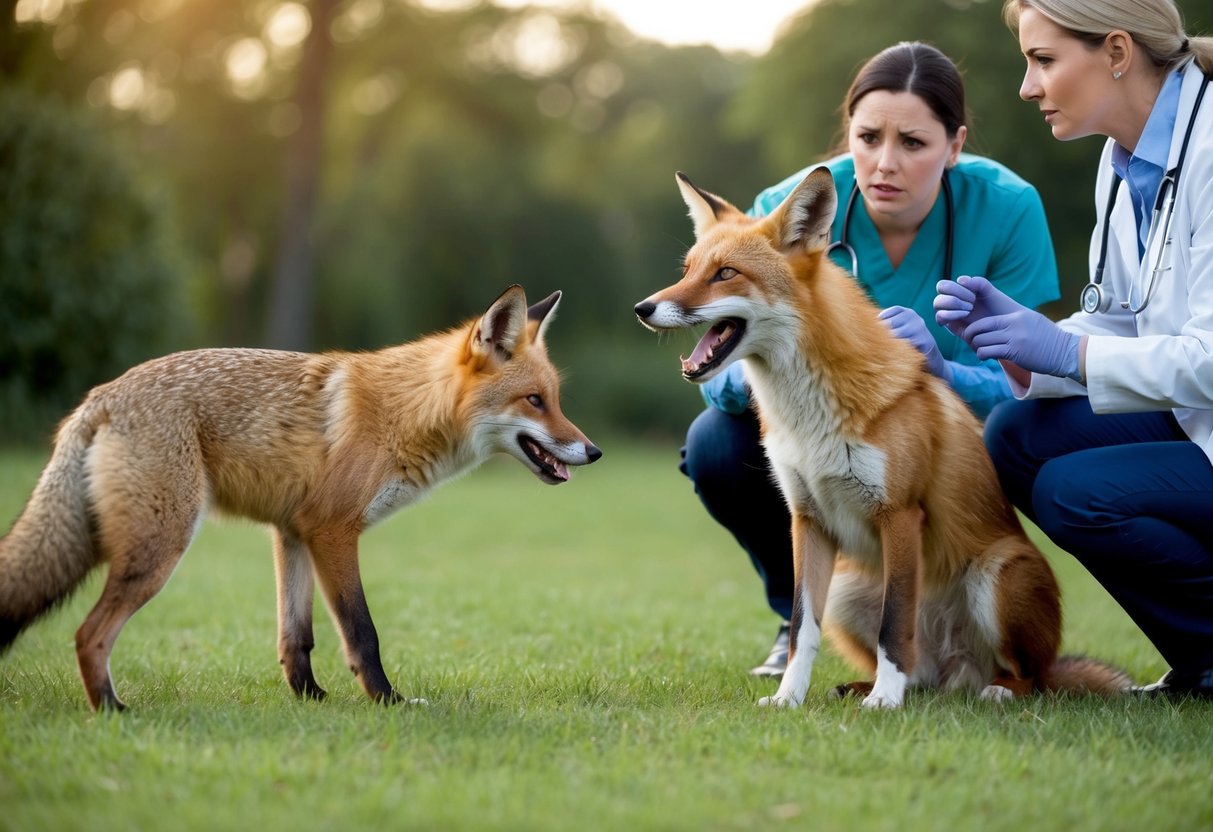
When it comes to foxes and your dog, a few health concerns need to be considered. Though attacks are rare, you should be aware of potential risks.
Rabies is one of the biggest worries, especially if a fox behaves strangely. If you suspect a fox might be rabid, avoid contact and contact local wildlife control immediately. You should also make sure your dog is up to date on their rabies vaccination.
Another concern is mange, a skin condition caused by mites. If your dog comes in contact with a fox that has mange, your pet could get it too. Watch for excessive itching, redness, or hair loss and consult your vet if you notice these signs.
Parvovirus is a serious illness that can spread through the environment. While foxes are not direct carriers, if a fox comes near an area where dogs play, it’s a good idea to keep your dog vaccinated against parvovirus.
If your dog encounters a fox or shows signs of illness after such an encounter, it’s essential to seek veterinary care promptly. Regular check-ups will ensure your dog remains healthy and protected against these concerns.
Taking these steps can help keep your furry friend safe and happy. Always consult your vet for personalized advice and care options.


