
Boxer dogs are known for their playful spirit and loyalty. As family pets, they provide companionship and protection. However, most boxers do not turn on their owners without reason. Understanding their behavior is key to ensuring a happy relationship.

Boxers were originally bred to be guard dogs, which means they possess an instinct to protect their families. This protective nature can sometimes lead to aggressive behaviors if they feel threatened or challenged. Knowing how to train and socialize your boxer can help prevent any unwanted aggression.
Building a bond with your boxer and providing consistent training is crucial. By establishing yourself as the pack leader, you can foster a trusting relationship. This way, your boxer will feel secure and remain a devoted companion.
Understanding Boxer Temperament and Behavior

Boxer dogs have a unique blend of personality traits that make them special companions. From their lively nature to their protective instincts, understanding these aspects is crucial for responsible ownership.
Boxer Personality Traits
Boxers are known for their playful nature and high energy level. They love to engage in games and activities, making them great partners for active families. Their intelligence shines in training, but they can also show stubbornness, requiring consistent and positive reinforcement.
Their muscular build adds to their lively demeanor. You might notice your Boxer performing entertaining antics to get your attention. They are affectionate and form strong bonds with their families. This loyalty drives their protectiveness, making them alert watchdogs. They thrive on social interaction, so regular playtime and mental challenges are essential.
Common Behavioral Issues in Boxers
While Boxers are wonderful pets, they can face certain behavioral challenges. Separation anxiety is common if they are left alone for long periods. They may develop destructive habits, such as chewing furniture or barking excessively.
Boxers can also be prone to aggression, particularly if not socialized properly. They need exposure to various people and pets from a young age. Training should start early to help curtail any negative behaviors. Regular exercise is key to channeling their energy positively and reducing restlessness. Ensuring they have enough activity can prevent issues related to boredom.
The Role of Genetics in Boxer Behavior
Genetics play a significant role in shaping a Boxer’s temperament and behavior. Certain lines may have varying traits, influencing how playful or protective they are.
Boxers are bred for specific purposes, like guarding or companionship, impacting their instincts. Understanding their lineage helps in predicting behavior patterns. You may encounter Boxers that seem more reserved or others that are particularly exuberant.
It’s essential to respect these genetic traits and provide an environment that caters to their needs. Regular training and socialization can help balance their natural instincts and ensure they integrate well into your family life.
Factors Contributing to Aggression in Boxer Dogs

Understanding what drives aggression in Boxer dogs is important for ensuring a safe and positive environment. Various factors, such as fear, territory, and specific behaviors, can lead to aggressive actions. Let’s explore these elements in detail.
Identifying Aggression in Boxers
Recognizing the signs of aggression in your Boxer is crucial. Some common indicators include raised hackles, growling, barking, or lunging. You might notice your dog stiffening or showing their teeth when feeling threatened.
Be aware of your pet’s body language. A wagging tail does not always mean they are friendly. An aggressive Boxer may have a tense posture and maintain direct eye contact. Understanding these signs can help you react appropriately and keep the situation under control.
Redirected Aggression and Its Triggers
Redirected aggression often happens when your Boxer becomes upset or agitated, usually triggered by another dog or person. If they are unable to reach the source of their frustration, they may lash out at a nearby person or pet.
Common triggers include loud noises, other animals in the vicinity, or even a perceived threat to their owner. It is important to recognize these triggers and work to manage them. Keeping your dog away from stressful situations can help reduce the risk of redirected aggression.
Fear-Based and Territorial Behavior
Fear-based aggression typically stems from anxiety or insecurity. If your Boxer is not well-socialized, they may react aggressively when encountering unfamiliar people or dogs. They may interpret new experiences as threats, prompting a defensive response.
Territorial behavior is another common issue, where your dog feels the need to protect their space. This can lead to aggressive behavior towards visitors or other animals entering their territory. Knowing the reasons behind these behaviors allows you to train and correct them effectively, fostering a well-adjusted Dog.
Positive Approaches to Training and Socialization
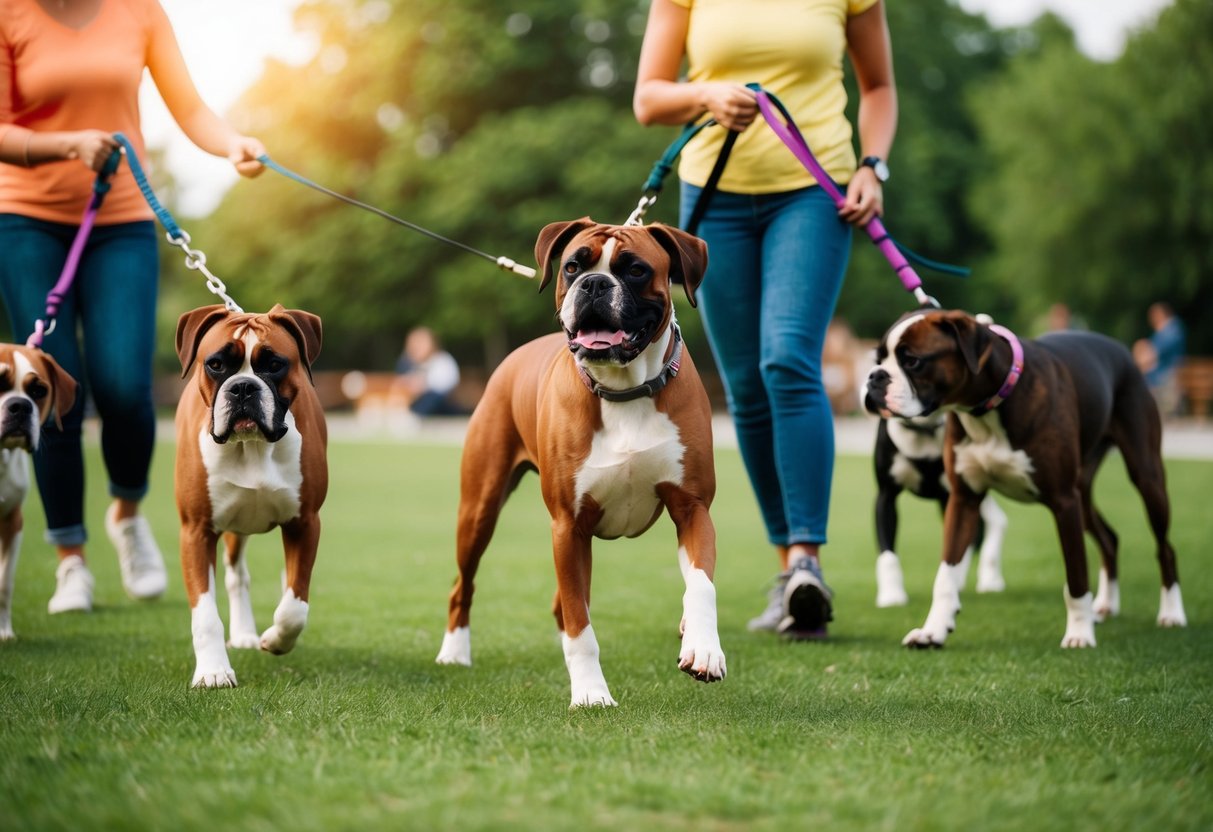
Effective training and socialization are key to a happy and healthy relationship with your Boxer. Approaching these topics positively can lead to better behavior, stronger bonds, and happier interactions with your dog.
Importance of Obedience Training
Obedience training is essential for Boxers. It helps them learn commands, which can prevent unwanted behaviors and improve safety. Consistent training teaches your dog to respond to cues like “sit” or “stay.”
Using positive reinforcement is crucial. Reward your dog with treats or praise when they follow commands. This encourages them to repeat good behaviors.
Regular training sessions should be short but engaging. A mix of commands and fun activities keeps your Boxer mentally stimulated. This not only aids their development but also strengthens your bond. Boxers need both physical exercise and mental stimulation, so make training a part of their daily routine.
Behavioral Modification Techniques
If your Boxer shows signs of aggression or fear, behavior modification techniques are helpful. Start with desensitization, which helps your dog get used to things that scare them. Gradually introduce them to new situations or sounds in a controlled way.
Positive reinforcement can also play a role in this process. When your Boxer reacts calmly in a stressful situation, reward them. This teaches them that staying calm leads to good things.
Consistency is key in modifying behavior. If your Boxer responds poorly, revisit training steps and ensure you are using clear commands. You may also consider working with a professional trainer who specializes in behavioral issues to further assist in the process.
Working with Professionals

If you’re facing challenges with your Boxer’s behavior, getting help from experts can be crucial. Understanding when to consult a veterinary behaviorist or a professional dog trainer can set you on the right path to improving your dog’s behavior and your relationship with them.
When to Consult a Veterinary Behaviorist
If your Boxer shows signs of aggression, it may be time to see a veterinary behaviorist. These experts can diagnose specific behavioral issues, such as aggression that could stem from underlying medical conditions or genetics.
Signs that you should consult a veterinary behaviorist include:
- Frequent outbursts of aggression
- Fear-based reactions to common stimuli
- Sudden changes in behavior
A veterinary behaviorist will assess your dog’s health and develop a treatment plan just for your Boxer. This may include behavior modification techniques, medications, or changes in your dog’s environment to help reduce anxiety and improve behavior.
The Role of a Professional Dog Trainer
A professional dog trainer can teach you techniques to train your Boxer. With their help, you can manage aggression and improve behavior.
A trainer familiar with breed-specific issues can also help you understand your dog’s natural instincts. For example, they can help you understand if your dog has a watchdog or guard dog instinct.
When choosing a trainer, look for someone who uses positive reinforcement methods. This is vital for building a trusting relationship with your dog.
Key areas a trainer can help with include:
- Basic obedience commands
- Socialization with other dogs and people
- Addressing specific behavioral issues, like barking or jumping
Training classes can provide support both for you and your Boxer. This makes it easier to handle challenges as they arise.


