
If you own a boxer dog, you might often wonder about their energy levels and hyper behavior. These playful pups are known for their enthusiasm, which can sometimes feel overwhelming.
Boxer dogs typically begin to calm down around the age of 2 to 4 years old, but they can remain energetic longer than many other breeds.

Understanding when your boxer will settle down can help you manage their active nature. The journey from puppyhood to adulthood can be a bumpy ride filled with high energy and excitement.
With the right training and socialization, you can support your boxer in transitioning to a calmer dog while still preserving their playful spirit.
As you read on, you’ll discover tips to help you navigate this lively phase and learn more about what to expect as your furry friend matures.
Understanding Boxer Dog Behavior

Understanding how your Boxer behaves can help you manage their energy and create a calm environment. Boxers are known for their unique temperament and high energy levels. Recognizing why they might be hyperactive is essential for effective training and care.
Typical Energy Levels and Temperament
Boxers are naturally energetic dogs. As puppies, they often exhibit playful and enthusiastic behavior. This energy can sometimes turn into overexcitement, making them appear hyperactive.
Most Boxers will start to mellow out between the ages of 2 to 4 years, but each dog is different. Some may remain more energetic than others throughout their lives.
Regular exercise, such as walks and playtime, is crucial to help maintain a calm demeanor. Daily activity not only channels their energy but also keeps them physically and mentally healthy.
Common Causes of Hyperactivity
Several factors can contribute to a hyper Boxer. Genetics plays a role, as some Boxers naturally have higher energy levels.
Additionally, lacking engagement can lead to boredom-driven hyperactivity. Boxers thrive on interaction, so ensuring they have toys and activities is vital.
Environmental factors can also affect their behavior. If your Boxer senses a lot of excitement around them, it may ramp up their energy.
Training and consistency are key to managing hyperactive behavior. Use positive reinforcement to encourage calmness and obedience. With a bit of effort, you can help your Boxer become a more settled companion.
Effective Training Strategies

Training your boxer dog can lead to a well-behaved companion. Consistency and positive reinforcement are key to helping them learn and calm down. Here are strategies you can use effectively.
Establishing Routine and Consistency
Establishing a daily routine is vital for your boxer. Dogs thrive on predictability, so set regular times for feeding, walks, and play. This stability helps them feel secure.
Incorporate training sessions into your routine. Aim for short, daily sessions to keep your dog’s attention. Spending even five minutes daily can make a big difference.
Be consistent with commands. Use the same words for training over time. If you say “sit,” always use that word, not variations. This helps your boxer understand what you want.
Also, make sure everyone in your household follows the same rules and commands. Consistency from all family members reinforces learning and reduces confusion.
Positive Reinforcement Techniques
Positive reinforcement encourages good behavior in your boxer. Use treats, praise, or playtime when they follow commands. This encourages them to repeat those actions.
When your boxer does something right, reward them immediately. This connection helps them understand what earned the reward. You can create a simple rewards chart to track their progress and celebrate milestones.
Try to offer rewards frequently during training. Once your boxer masters a command, you can slowly reduce the treats. Continue using praise to motivate them even more.
Avoid using negative reinforcement, like yelling or scolding. This may frighten your dog and hinder learning. Instead, focus on encouraging and supporting their positive actions.
Exercise and Mental Stimulation
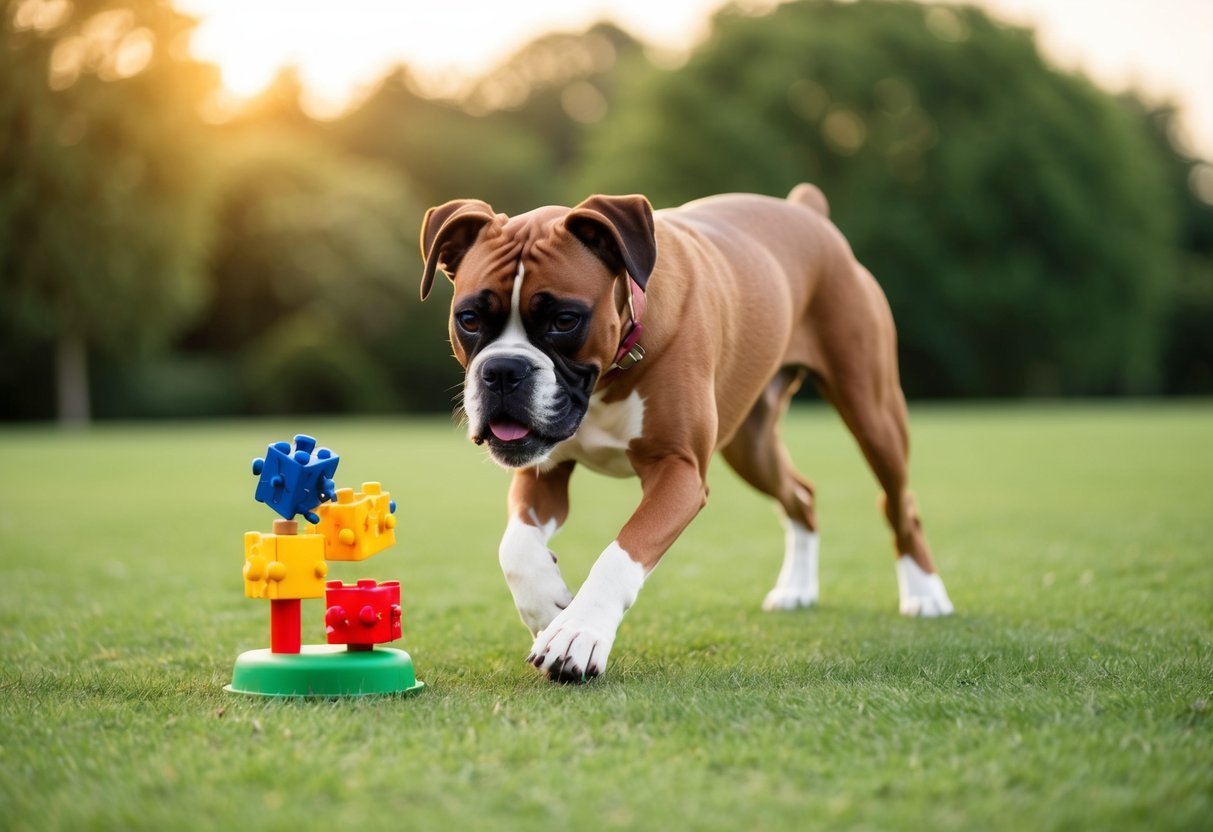
Keeping your Boxer happy and calm involves providing both physical exercise and mental stimulation. These activities play a vital role in reducing excess energy and anxiety.
Daily Physical Exercise Requirements
Your Boxer needs regular physical exercise to stay healthy and well-balanced. Aim for at least 60 to 90 minutes of exercise each day. This can include activities like daily walks, running, or playing fetch.
Taking your Boxer for a walk not only helps burn off energy but also provides opportunities for socialization. You might also consider agility training to engage both their body and mind. This can be a fun way for you and your Boxer to spend time together. Remember, a tired dog is a happy dog!
Mental Stimulation through Play and Training
Mental challenges are just as important as physical activity for your Boxer. Engage their mind through training sessions and games. Teaching new commands or tricks not only helps with discipline but also keeps their brain active.
Activities like nose work games allow your Boxer to use their keen sense of smell. You can hide treats around your home and encourage them to find them. This kind of play enriches their environment and provides fulfilling mental exercise.
Interactive and Puzzle Toys
Adding interactive and puzzle toys to your Boxer’s routine can significantly boost their mental stimulation. These toys require problem-solving skills, which can tire them out just like physical exercise.
Choose toys that dispense treats as your Boxer interacts with them. This can keep their attention focused and help stimulate their brain. Spend some time rotating these toys to keep playtime fresh and exciting. Your Boxer will appreciate the challenge and it can help reduce boredom.
Socialization and Managing Separation Anxiety
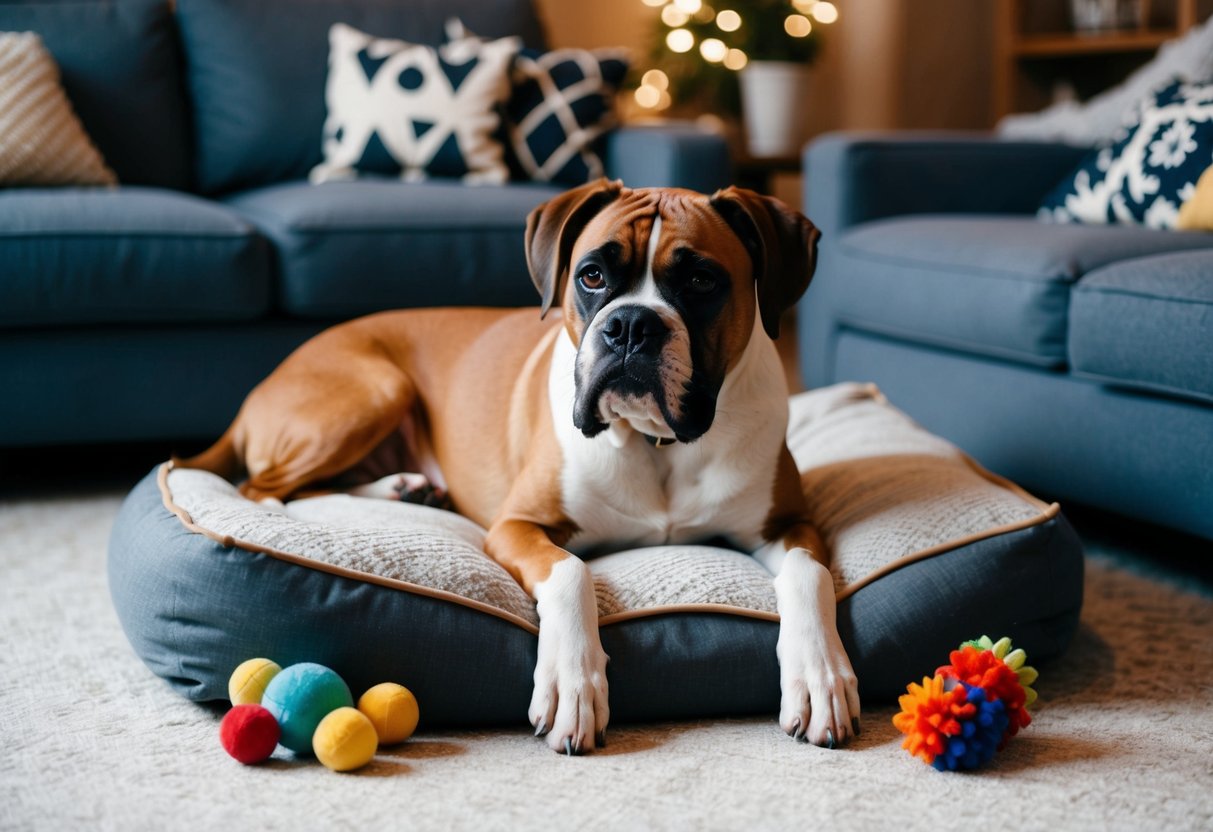
Helping your Boxer feel secure and calm involves both socialization and managing separation anxiety. Proper socialization can reduce anxiety by making your dog comfortable in different environments and with various people and dogs. Creating a calm environment at home also plays a crucial role in managing their stress levels.
Benefits of Early Socialization
Early socialization is important for your Boxer. It exposes them to different sights, sounds, and experiences. This exposure helps them develop confidence and reduces the chances of aggressive behavior or fearfulness.
You should start socializing your Boxer as a puppy. Arrange playdates with other dogs and take them to parks. Consider puppy classes for guided experiences. Positive experiences during this critical period will significantly improve their behavior as adults.
Creating a Calm Environment
A calm home environment makes a big difference for your Boxer. Make sure their space is quiet, safe, and free of distractions. Provide a cozy bed where they can retreat when they feel anxious.
Additionally, using calming tools can help. Music designed for dogs or specific scents, like lavender, can reduce stress. You might also consider supplements such as L-theanine, which can promote relaxation. Keeping a consistent routine also helps your dog know what to expect, which can ease anxiety.
Strategies to Mitigate Separation Anxiety
Managing separation anxiety requires a proactive approach. Begin by gradually increasing the time your Boxer spends alone. This helps them get used to being by themselves without feeling scared.
When you leave, make sure you have a routine in place. Use toys that engage their mind or provide a puzzle feeder to keep them busy. You can also have background noise, like a radio or TV, to make your dog feel less isolated.
In addition, training exercises that reinforce positivity about your departures and arrivals can help them remain calm. If your Boxer’s anxiety persists, consult a veterinarian or a dog trainer for tailored strategies to support your Boxer.


