
Ever wondered if bees actually know who you are when they buzz around? It sounds wild, but bees really can recognize human faces. Their brains are tiny, sure, but they manage to learn and remember individual faces—kind of the same way you remember your friends.

This skill helps bees interact with the world around them. Some beekeepers even think their bees know them by sight.
It’s kind of mind-blowing that such small creatures can pull off something as tricky as face recognition.
Can Bees Recognize Human Faces?

Bees can tell human faces apart by picking up on unique patterns. They don’t recognize faces exactly like we do, but they use important visual clues.
This ability helps bees remember and react to specific people, like their keepers.
How Scientific Studies Test Bee Face Recognition
Scientists have trained bees to spot human faces by showing them photos. When bees pick the right face, they get a reward—usually a little sugar water.
After lots of practice, bees learn to choose one face from several different ones.
A 2004 study from Cambridge showed that bees could tell apart real human faces, not just simple shapes.
Researchers then checked if bees could remember these faces later, and they could. These experiments show bees can pick up on complex patterns.
Comparing Bee and Human Face Recognition Abilities
It’s tempting to think bees and humans see faces the same way, but that’s not really true. Humans use a special part of the brain for faces.
Bees, with their tiny brains, focus more on details like shapes and the positions of features.
Bees only have a tiny fraction of the neurons humans do. Still, they can spot things like the eyes, nose, and mouth placement to tell faces apart.
They remember complex patterns, not faces in the way we understand them.
Why Bees May Recognize Human Faces
Honeybees run into their keepers often, so recognizing faces helps them notice who’s around. This might let them act differently around people they know.
Being able to tell faces apart could also help bees navigate. Remembering patterns is useful for finding flowers and getting back home.
For more on how bees remember faces, check out this explanation about bees and human faces.
How Pattern Recognition Works in Bees
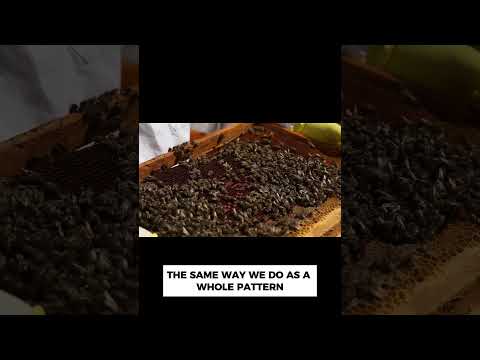
Bees use their special vision to spot shapes and patterns that help them find food and get around. Their eyes work with their brains to pick out details in flowers and other objects.
This skill even helps them identify faces by catching certain patterns.
Bee Vision and the Role of Compound Eyes
A bee’s eyes have thousands of tiny lenses called compound eyes. These lenses grab lots of small images at once, giving bees an impressively wide view.
Because of this, bees see the world differently than we do. They focus on colors and shapes that stand out.
That helps them find flowers quickly and remember important details.
Their compound eyes also help them notice movement and patterns. That’s why they can pick out floral designs—and yes, even human faces.
The way their eyes work plays a huge part in their pattern recognition.
Configural Processing and Pattern Recognition
When bees look at something, they don’t just see separate parts—they process the whole pattern at once. Scientists call this configural processing.
This lets bees tell one face or flower from another by how all the features fit together. It’s kind of like a puzzle, where the big picture matters more than each piece.
Bees use this to spot unique patterns on flowers and faces, even if those patterns get complicated.
This skill helps them with daily tasks like finding food and figuring out where they are.
Visual Skills for Pollination and Finding Nectar Guides
Bees use their sharp visual skills to search for nectar, that sweet treat hiding inside flowers. Flowers often show off special markings—nectar guides—that basically point bees to the right spot.
These guides come in all sorts of shapes, colors, and patterns. Bees can spot them pretty easily, honestly. When bees recognize these hints, they find nectar faster and end up spreading pollen as they go.
A bee’s brain connects these patterns with rewards, so it remembers which flowers are worth a visit. That link between spotting patterns and pollinating really makes bees crucial for plants.
Curious about how bees actually see the world? Check out more details here.


