
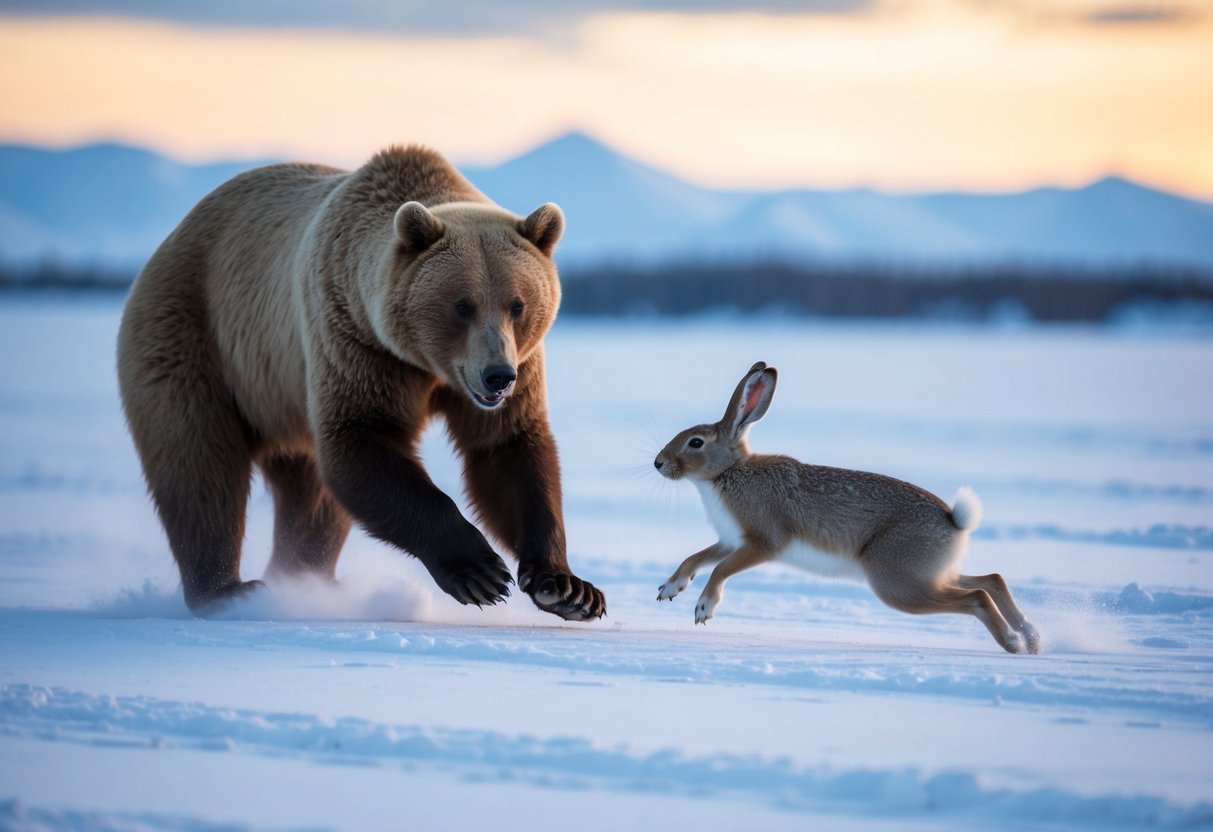
In the vast Arctic Tundra, the food chain is a fascinating web of interactions. Many animal species, including the Arctic hare, thrive in this cold environment, using their adaptations to survive in challenging conditions. While you might wonder about the role of predators in this ecosystem, polar bears do not typically eat Arctic hares as they primarily hunt marine mammals.
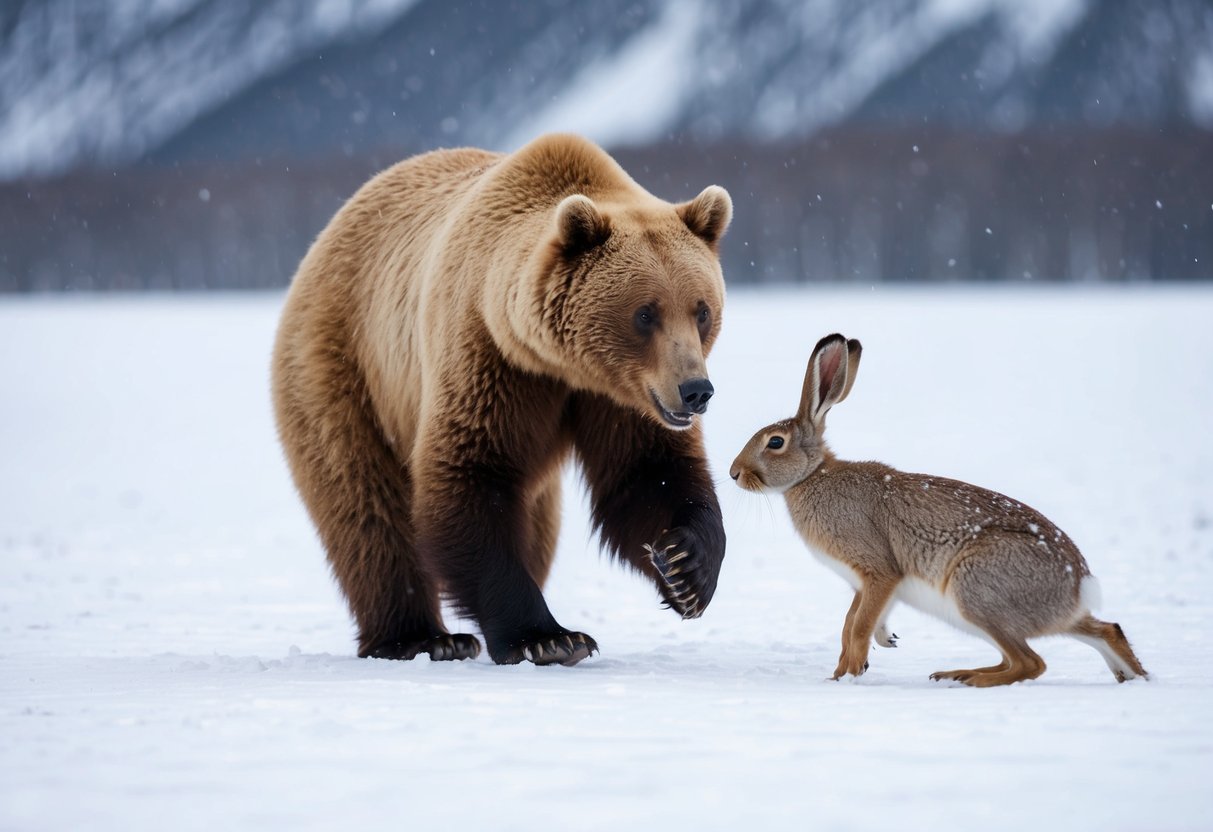
Understanding the diet of animals like bears can give you insight into the delicate balance of their habitats. While Arctic hares may face threats from other predators, polar bears focus on different food sources. This leaves the Arctic hare to continue its life among the resilient flora and fauna of the tundra. With so many unique interactions in the Arctic ecosystem, learning more about these relationships can deepen your appreciation for nature’s complexity.
The Arctic Hare’s Habitat
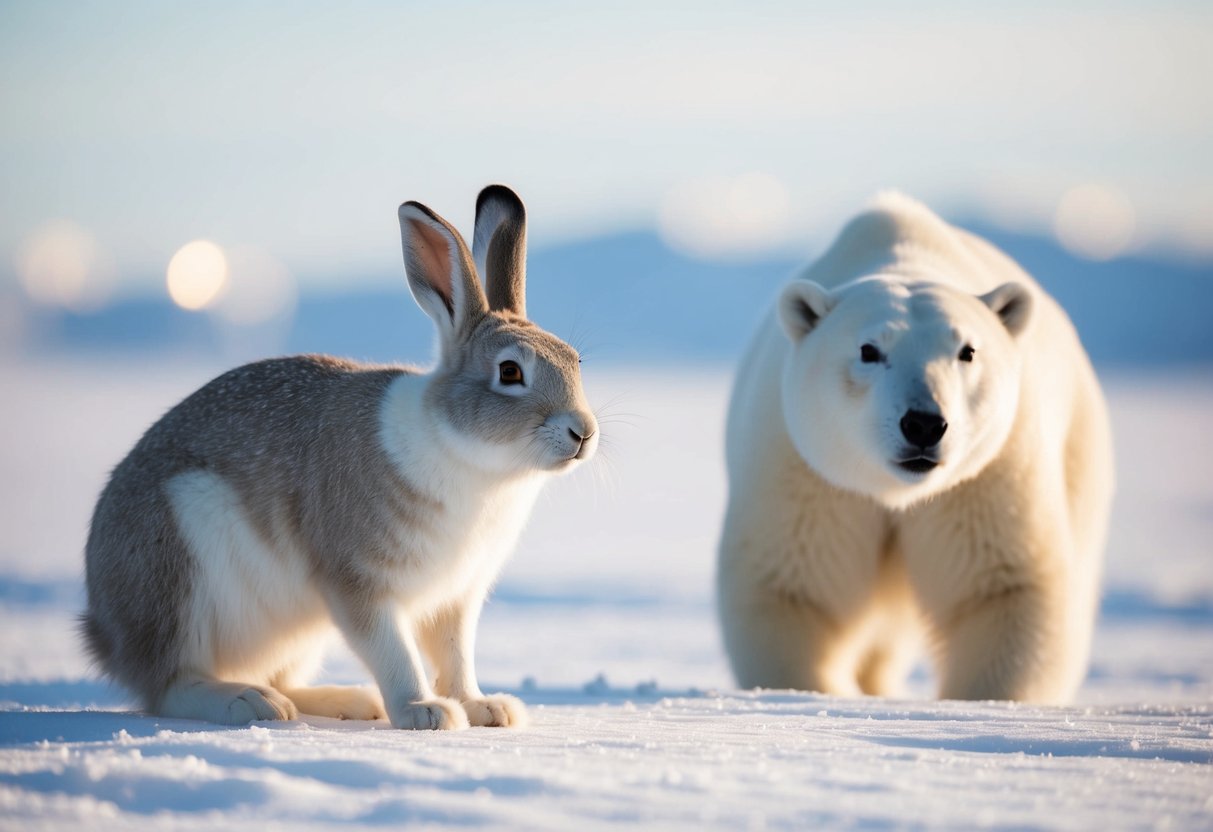
The Arctic hare lives in unique settings that help it survive harsh conditions. Understanding its habitat provides insight into its adaptations and range across North America.
Adaptations to the Arctic Environment
The Arctic hare has several adaptations that allow it to thrive in extreme cold. Its thick, fluffy fur keeps it warm and can change color with the seasons. In winter, it turns white to blend in with snow.
These hares also have large, furry feet for better traction on snow and ice. They build shallow depressions in the snow, known as “forms,” to shield themselves from wind and predators. They eat a variety of foods, including hardy plants like mosses and lichens, which grow in tough climates. Their ability to dig beneath the snow for food helps them survive through the winter months.
Range and Distribution in North America
You can find the Arctic hare mainly in the Arctic tundra. This includes areas in Alaska, Canada, and parts of Greenland. They prefer open, snow-covered areas where they can easily spot predators, such as Arctic foxes.
Their range often changes with climate conditions. As climate change and global warming affect their habitats, you might notice shifts in where they are found. These changes can impact their food supply and overall survival. Understanding their distribution helps the conservation of these fascinating creatures and their unique environments.
Diet and Foraging Behavior
Understanding the diet and foraging behavior of Arctic hares is key to knowing how they survive in their harsh environment. Their food choices vary by season and are influenced by the availability of plants.
Summer and Winter Diet Variations
In summer, Arctic hares enjoy a wide variety of food. They eat berries, grass, and flowers that grow in abundance. These food sources are rich in nutrients, helping them gain weight before the cold months arrive.
As winter sets in, food becomes scarce. The hares shift to eating willow and other woody plants. They dig through the snow to reach these foods. This ability to find leaves and bark beneath the snow is essential for survival.
They adapt their diet based on what is available, ensuring they have enough to eat throughout the year.
Predation and Food Competition
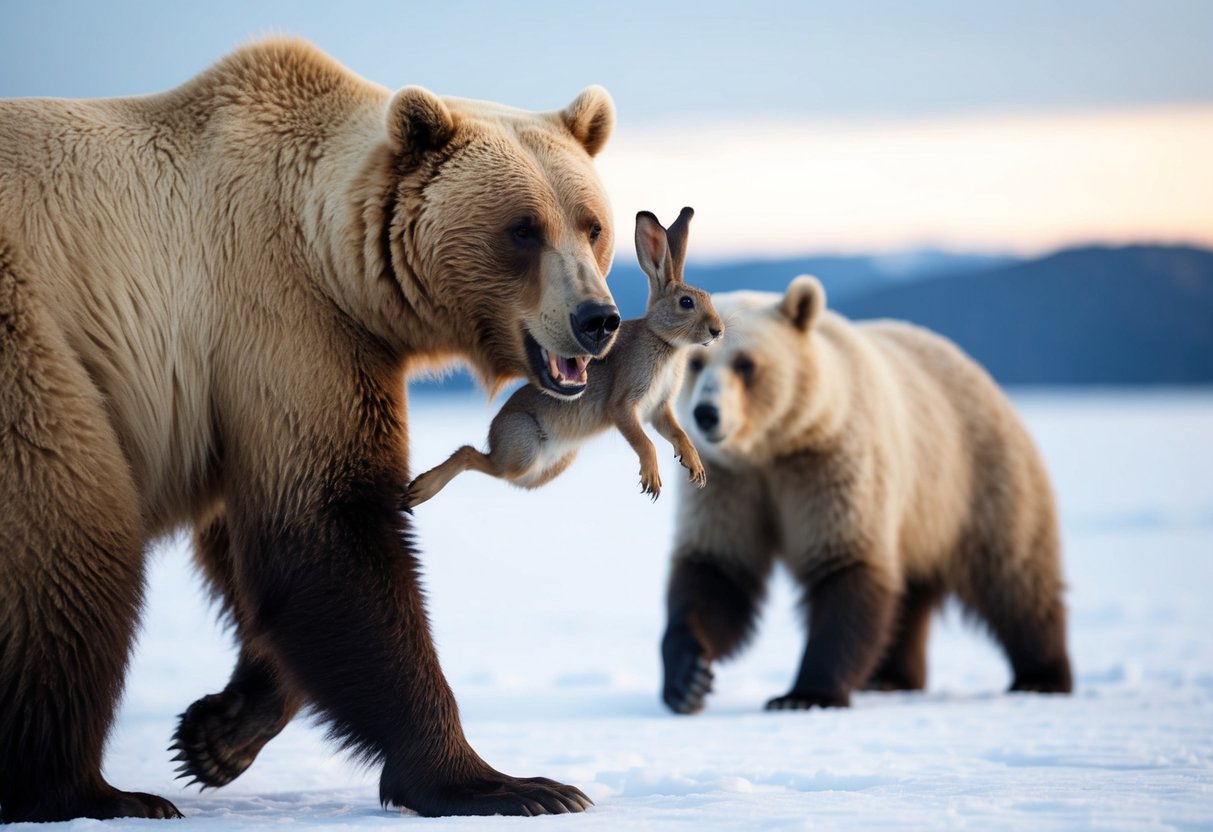
Arctic hares are prey for several predators, including the Snowy Owl, foxes, and wolves. As herbivores, they must always be vigilant. Their status as a food source keeps them on guard, especially when searching for food.
Competition for food can be fierce during the harsher months. When resources are low, hares may have to share their habitat with other herbivores. To survive, they rely on their quickness and camouflage in the snow, which helps them evade hungry predators. Adjusting their foraging behavior helps them stay one step ahead in their quest for survival.
Predation and Survival Strategies
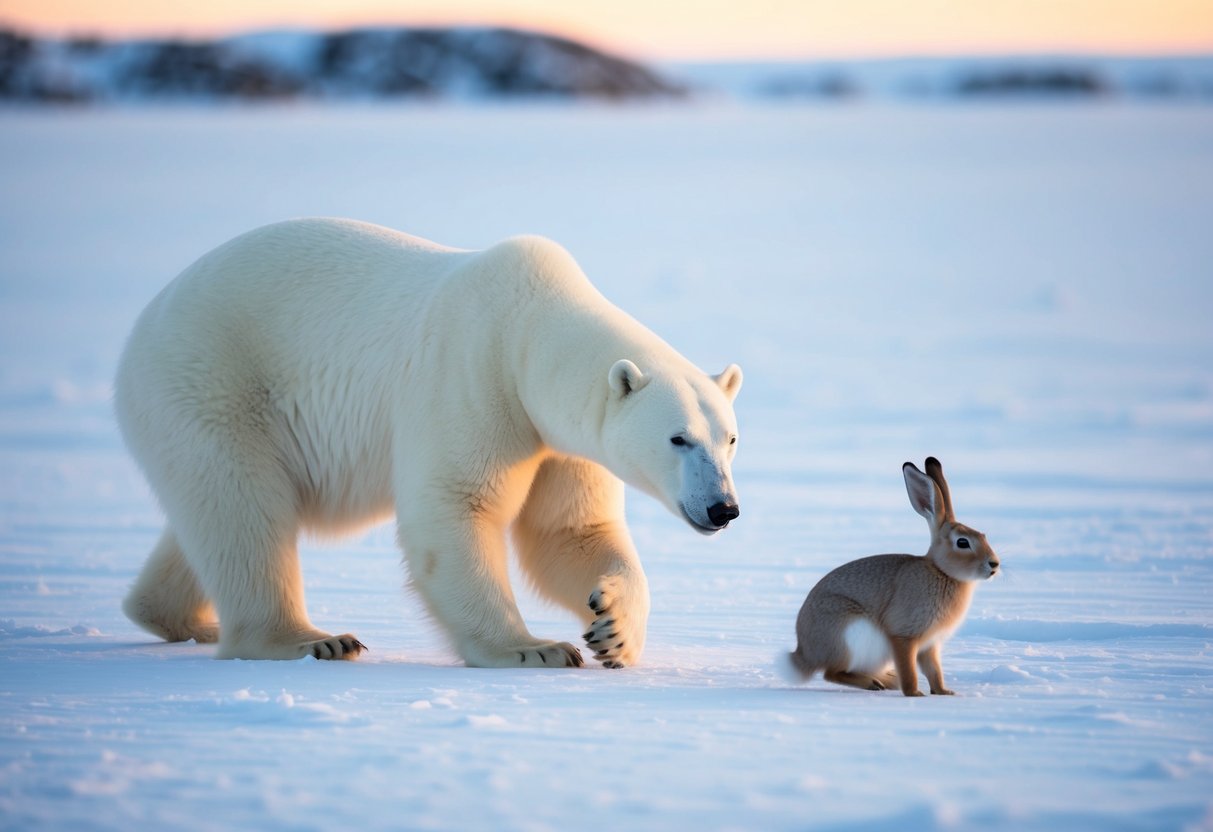
Arctic hares face many challenges in the wild. Understanding their predators and how they survive is essential for appreciating these unique animals. Below, you will find details about the common predators of the Arctic hare and the various survival strategies they use.
Common Predators of the Arctic Hare
Arctic hares are preyed upon by several animals that are well-adapted to the harsh Arctic environment. Key predators include:
- Arctic Foxes: These clever hunters rely on stealth and speed to catch Arctic hares.
- Red Foxes: Red foxes also hunt hares, using their keen sense of hearing to locate them.
- Wolves: Grey wolves form packs and can chase down hares over long distances.
- Lynx: Canadian lynx are specifically skilled at hunting hares due to their large snowshoe-like paws.
- Birds of Prey: Gyrfalcons and rough-legged hawks often hunt hares from above, using their sharp eyesight to spot them.
Polar bears typically do not target Arctic hares, as they prefer marine mammals, but they may eat one if food is scarce, making them an opportunistic threat.
Defensive Mechanisms and Behaviors
To survive against these threats, Arctic hares have developed several effective adaptations. These include:
-
Camouflage: Their white fur blends in with the snow, making it difficult for predators to spot them.
-
Behavioral Adaptations: Hares often freeze in place when they sense danger, relying on their surroundings for cover.
-
Speed and Agility: With strong hind legs, Arctic hares can make quick escapes when pursued. They can change direction rapidly to avoid predators.
These adaptations are crucial for their survival in the wild, allowing them to evade detection and escape from danger. Each feature plays a vital role in helping Arctic hares navigate the challenges posed by their predators.
Reproduction and Lifecycle
Arctic hares have unique breeding habits and a specific lifecycle. Understanding how they reproduce and raise their young can give you insight into their behavior and survival strategies.
Breeding Habits and Litter Size
Breeding occurs between April and May. During this time, male hares will seek out females to mate. They often engage in playful chases as part of their courtship.
Females typically give birth to a litter ranging from 2 to 8 leverets. After mating, gestation lasts about 50 days. The female creates a burrow lined with fur to keep her young warm and protected. This spot is crucial for keeping the leverets safe from predators.
Development and Maturation of Leverets
Once leverets are born, they rely on their mother, but they are relatively mature. Leverets are born with fur and open eyes, which helps them adapt quickly to their environment. They stay in the burrow for the first few weeks of life.
After about 8 to 9 weeks, they become independent and start exploring their surroundings. During this time, they learn to forage for food, which includes plants like grasses and shrubs.
Though arctic hares often lead a solitary life, young hares may be seen playing together. This behavior helps them develop important social skills before they venture out on their own.


