
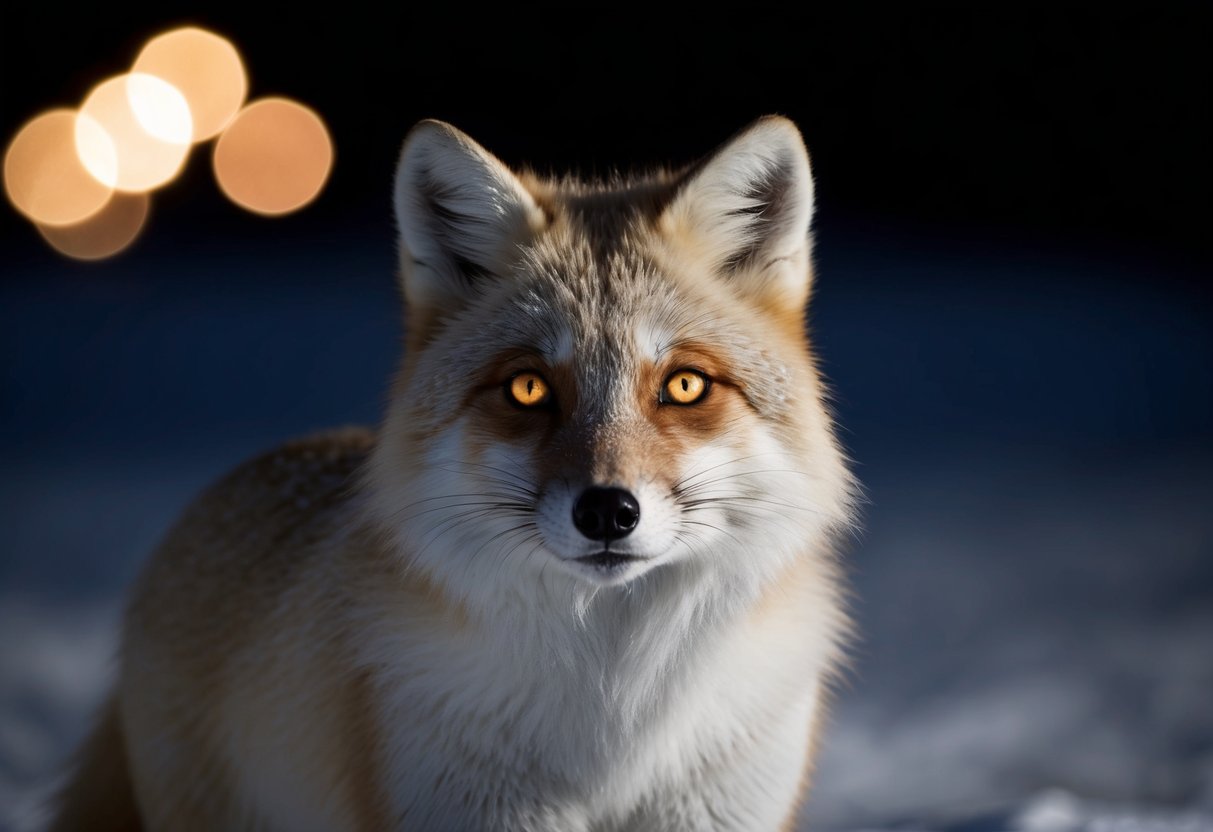
If you’ve ever wondered about the unique features of Arctic foxes, you’re not alone. The fascinating adaptations of these creatures help them thrive in their cold, snowy habitats. Arctic foxes do not have glowing eyes, but their eyes are well adapted to see in low-light conditions. This ability is crucial for hunting and navigating the icy landscape, especially during the long winter nights.
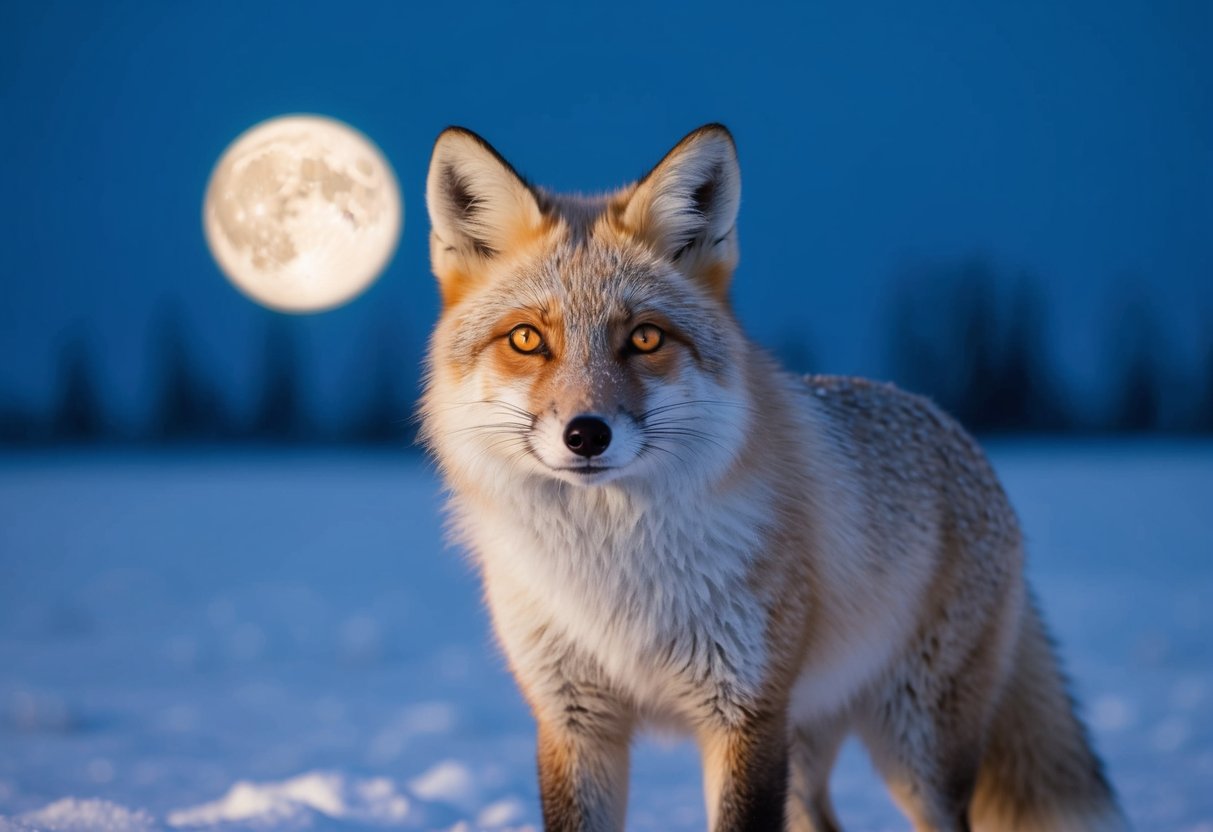
Their eyesight is enhanced by a special layer in their eyes called the tapetum lucidum. This layer reflects light, giving them better vision in the dark, similar to what you might see in other animals with night vision. In the dim light of the Arctic, this adaptation allows them to spot prey that would otherwise be difficult to see.
As you read on, you’ll discover more about how Arctic foxes use their remarkable eyesight to survive in one of the harshest environments on Earth. Their unique adaptations not only help them see but also play a big role in their daily lives, allowing them to be successful hunters and explorers in the dark Arctic wilderness.
Arctic Fox Vision Basics
Arctic foxes have adapted their vision for survival in harsh, low-light conditions. Their unique eye structure helps them navigate and hunt efficiently during the dark months of winter.
Understanding the Tapetum Lucidum
The tapetum lucidum is a special layer behind the retina in an Arctic fox’s eyes. This layer reflects light that passes through the retina back into the eye. The tapetum lucidum enhances the amount of light that the eyes can use, making it easier for the fox to see in dark environments.
When light hits their eyes, it creates a glow, which is often seen at night. This glow appears bright white or blue-green and is a result of the light reflecting. Such adaptations allow Arctic foxes to spot predators and prey efficiently even in very low-light conditions.
The Role of Rod Cells in Night Vision
Rod cells are crucial for night vision. These specialized cells in the retina are sensitive to light and are responsible for black and white vision. In Arctic foxes, a higher number of rod cells improves their eyesight in darkness.
When the light is dim, these cells become more active, allowing the fox to see well despite the absence of bright light. This feature not only helps in finding food but also aids in maintaining depth perception, which is essential for jumping or running under snowy conditions. With this ability, Arctic foxes can adapt to the challenges of their environment effectively.
Adaptations for Nocturnal Activity
Arctic foxes have special features that help them thrive at night. Their adaptations are key for hunting and moving around in the dark. Let’s look at how their eyes and other senses support their nocturnal lifestyle.
Eyeshine and Its Significance
You may have heard that some animals’ eyes glow in the dark. Arctic foxes have a feature called eyeshine, caused by a layer in their eyes known as the tapetum lucidum. This layer reflects light back through the eye, making them more effective at seeing in low light.
When you shine a light on their eyes, they can appear to glow. This is not just a neat trick; it helps them spot prey during nighttime when many small mammals are most active. Their elliptical eye shape also increases their field of vision, enabling them to detect movement from various angles. This ability is crucial as they navigate through their environment to find food and avoid predators.
Enhanced Senses Beyond Vision
In addition to their remarkable eyesight, Arctic foxes have highly developed senses of hearing and smell. Their hearing is sharp, allowing them to pick up the faintest sounds, such as rustling leaves or the movements of potential prey.
Their keen sense of smell enables them to detect scents buried under snow or ice. This skill is critical during winter months when food can be scarce. You will often see them digging into the snow to uncover hidden rodents by following their scent trails.
These adaptations work together, enhancing their ability to hunt and survive in dark conditions. Arctic foxes are well-equipped nighttime predators, making them truly fascinating creatures.
Comparative Analysis Across Species
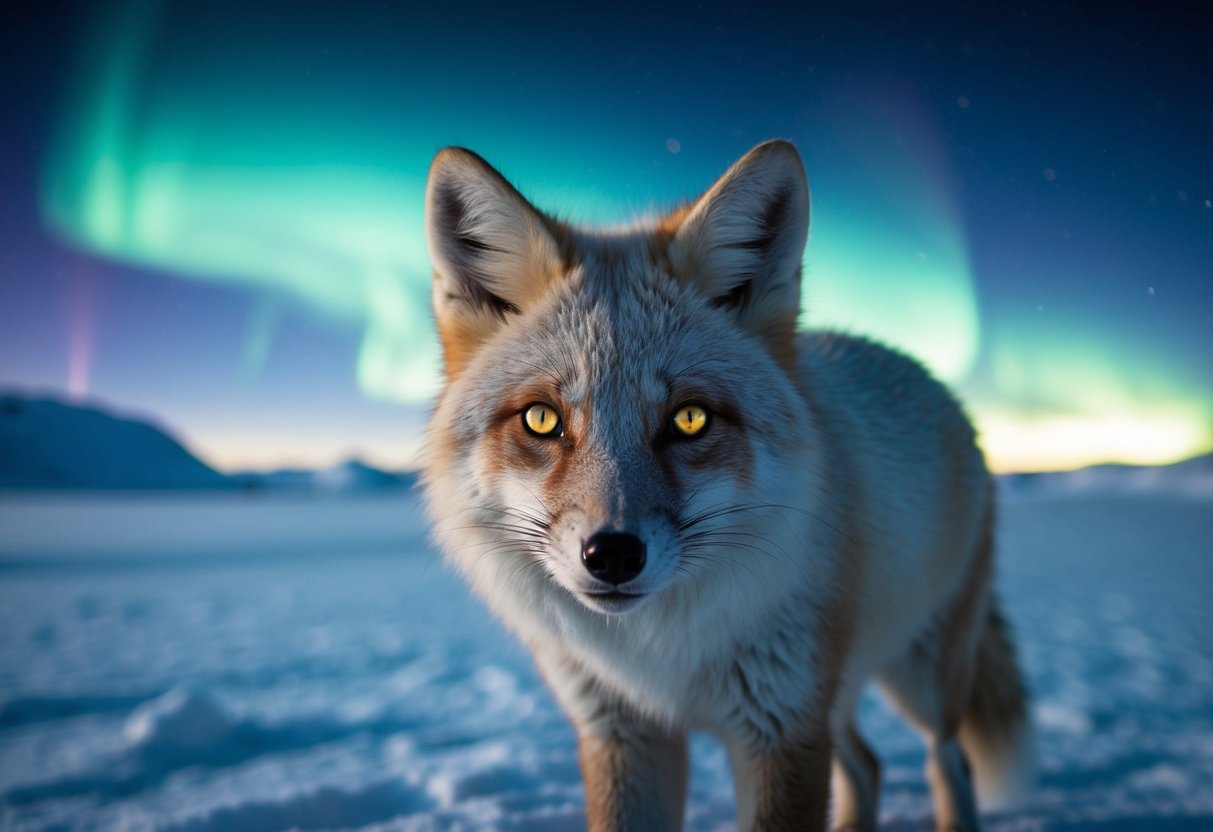
In this section, you will explore how arctic foxes compare to other fox species and nocturnal predators. You will also learn about the differences in eyeshine color among these animals.
Foxes Versus Other Nocturnal Predators
When comparing arctic foxes to other fox species, you’ll notice some similarities and differences. All foxes have adapted eyes that allow them to thrive in low light conditions. This is due to a layer called the tapetum lucidum, which reflects light and enhances their night vision.
Other nocturnal predators, like owls and cats, also have this adaptation. However, foxes often have a wider field of vision due to their eye placement on the sides of their heads. This gives them an advantage in spotting movements around them at night.
In urban environments, you may see urban foxes that also share similar adaptations. They have learned to navigate city life while using their excellent night vision to hunt prey. This adaptability highlights how various fox species adjust to their surroundings.
Variations in Eyeshine Color
Foxes exhibit different eyeshine colors, which can range from green to yellow. For example, arctic foxes often have a golden or yellow eyeshine, while red foxes might display a more intense yellow. This variation occurs because of the specific types of cone cells in their eyes.
In some cases, you may even see blue eyeshine in certain light conditions. This is less common but can occur due to how the tapetum lucidum interacts with light. The intensity and color of eyeshine can also depend on the light source used when viewing them.
Understanding these differences in eyeshine can help you appreciate how each species has adapted to its environment. It also shows the diversity and beauty within the fox family and other nocturnal animals.
Understanding Behavioral Patterns
Arctic foxes have unique behaviors that help them thrive in their cold environments. Their adaptations not only assist in hunting but also play a crucial role in survival and reproduction.
Hunting Strategies in Dim Light
When hunting at night, Arctic foxes rely on their keen sense of hearing and excellent night vision. Their vertically slit pupils allow for better control of light intake, helping them see well in low-light conditions. This adaptation is particularly useful for spotting prey, like small rodents, among the snow.
The foxes also use stealth. They often stalk their prey quietly, relying on sounds from the environment. Their hearing is so sharp that they can detect movements beneath the snow, allowing them to pounce with precision.
This combination of keen senses and hunting strategies makes Arctic foxes skilled predators, even in challenging light conditions.
Survival and Reproduction
Survival in harsh climates demands remarkable behavioral adaptations. Arctic foxes are excellent diggers. They create dens in the snow to keep their young safe from predators and extreme weather.
Reproduction usually occurs in spring. The female gives birth to a litter of kits in the den, which provides warmth and protection. Both parents share the responsibility of hunting and feeding the young.
During the breeding season, Arctic foxes maintain strong family bonds. They work together to ensure the kits grow up healthy and learn vital survival skills. Their social behavior is essential for successful reproduction in such a challenging habitat.


