
Chipmunks do not truly hibernate in the deep-sleep, lowered-body-temperature way many people imagine. If you have wondered if chipmunks hibernate, the closer answer is that they spend winter in a light resting state, waking occasionally to eat and move around.
Chipmunks survive winter by slowing down, staying underground, and relying on stored food. That strategy lets them save energy without staying active through the coldest months.

What Happens To Chipmunks In Winter
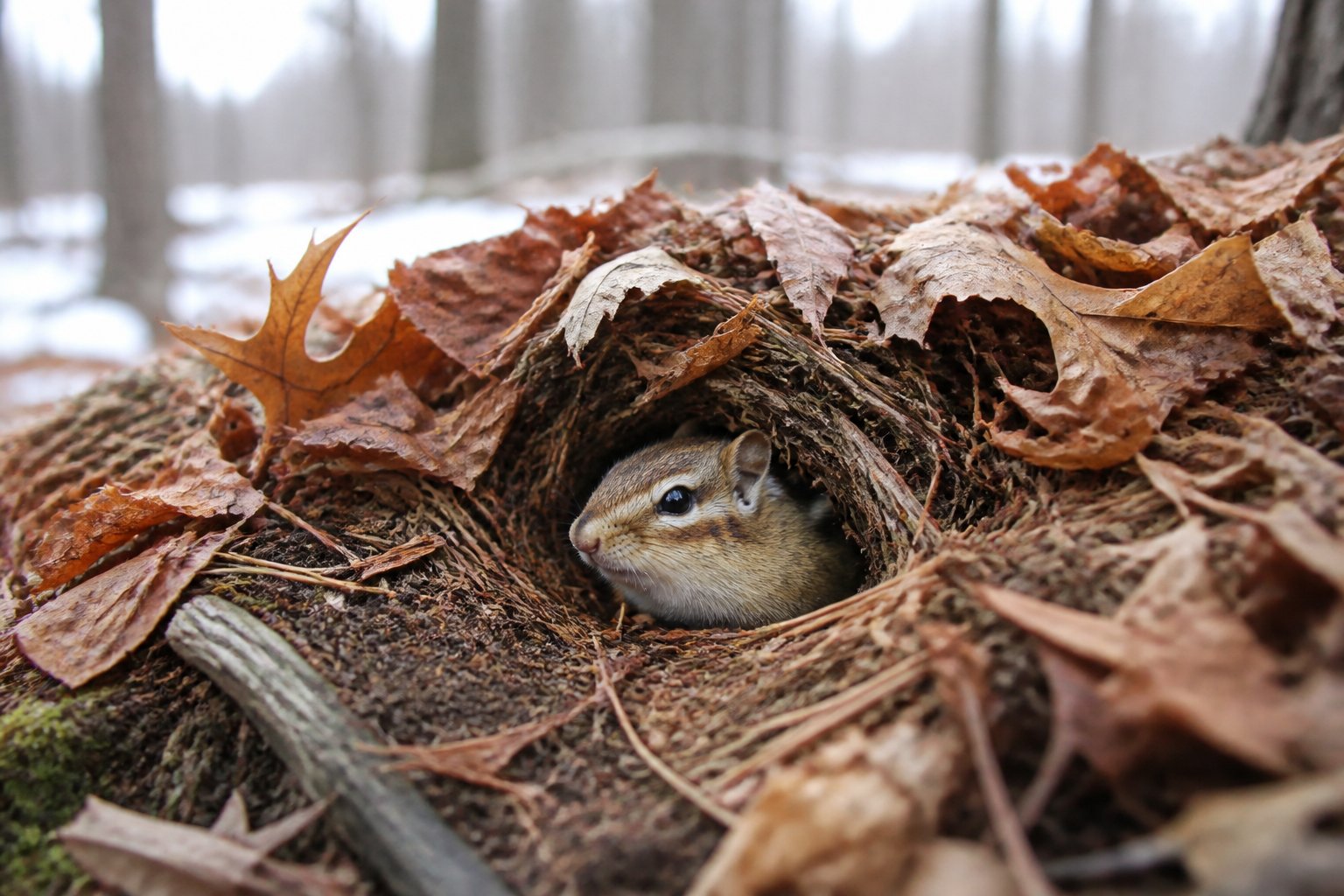
Eastern chipmunks spend most of winter underground in a low-energy state. You may not see much movement above ground, but the animals remain alive and alert enough to wake when needed.
Why Torpor Is Not The Same As True Hibernation
Chipmunks enter torpor, which is a lighter form of energy saving than true hibernation. During torpor, their body activity slows, and they can rouse more easily than animals that hibernate deeply.
How Often They Wake Up During Cold Weather
Chipmunks do not sleep continuously for the entire season. According to Critter Control’s overview of chipmunk behavior, they spend most of the cold months sleeping underground, then wake up periodically to eat.
Why You Might Still See One On A Warm Day
A mild winter day can bring a chipmunk above ground for a quick foraging trip. That brief appearance can make it look like the animal never slowed down, even though it has been conserving energy for weeks.
Where They Spend The Cold Months

You usually will not find chipmunks exposed to winter weather for long. They rely on underground shelters that stay warmer and more stable than the surface, especially during freezes and snow.
Where Chipmunks Hibernate Underground
Chipmunks use underground burrows, not open nests, for winter shelter. These burrows give them a protected place to rest, store food, and avoid predators.
How A Chipmunk Burrow Is Built For Winter
A chipmunk burrow is more than a simple tunnel. Critter Control describes burrows with nesting rooms, storage rooms, and multiple entrances, with some passages covered by leaves for camouflage.
Why Chipmunk Burrows Help Them Survive
Chipmunk burrows help them ride out cold snaps, snow, and wind with less energy loss. The underground setup also keeps food close at hand, which matters when every trip outside costs energy.
How They Prepare And What They Eat

Before winter arrives, chipmunks gather food and pack it away. Their survival strategy depends on calorie-rich foods that store well and are easy to grab during short waking periods.
What Chipmunks Eat Before Winter
Chipmunks eat nuts, seeds, mushrooms, berries, bulbs, insects, and more. In late fall, they focus on foods that can be cached and eaten later.
How Food Storage Supports Winter Survival
Chipmunks build winter stores inside their burrows so they can eat without traveling far. That food reserve helps them stay underground for long stretches and make it through cold weather.
Why Nuts And Seeds Matter Most In Cold Months
Nuts and seeds are especially valuable because they are dense in energy.
They hold up well in storage.
Nuts and seeds give chipmunks the quick fuel they need when they wake briefly and need to restore energy fast.


