
Ever see a chipmunk zip across your yard and think, “Maybe I could have one as a pet?” You’re definitely not the only one. Those tiny, striped critters look adorable, sure, but bringing one home is a whole different story.
Honestly, chipmunks are wild animals. Most people won’t find them easy—or even possible—to keep as pets.
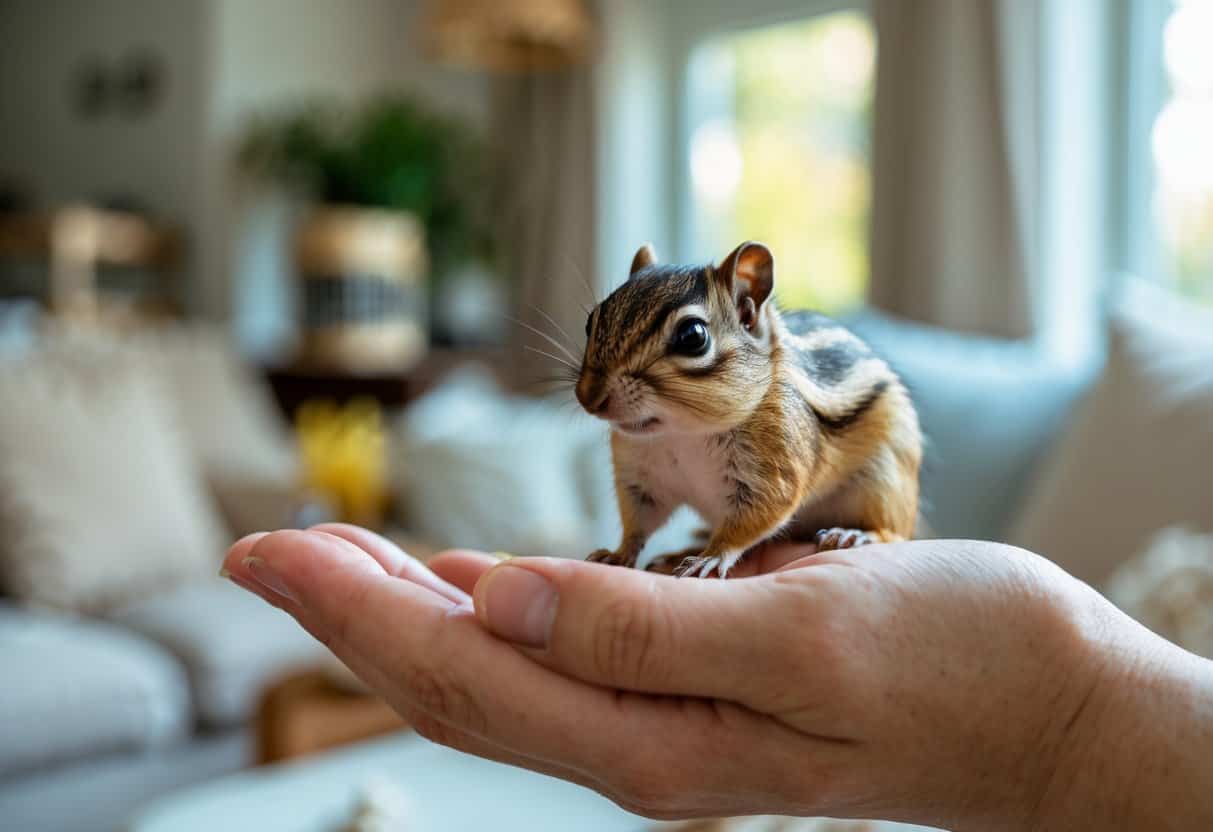
Chipmunks need a very specific setup to stay happy. They’re always moving, love to dig and climb, and get stressed out fast if you keep them indoors or handle them too much.
On top of that, a lot of places don’t allow you to buy or sell chipmunks as pets. So if you’re thinking about getting one, or already have one, you’ll need to tread carefully.
Before you make up your mind, you should know what chipmunks really need, what the laws say, and how they act in nature. That way, you’ll get why experts usually say it’s better to leave them in the wild—or maybe look at other pets that fit better with home life.
If you’re curious, let’s dig into what keeping a chipmunk really involves and whether it’s something that could work for you.
Can You Legally Own a Chipmunk as a Pet?
Whether you can own a chipmunk depends a lot on where you live. Different places have their own rules about keeping these little guys.
You’ll also want to think about whether the chipmunk is wild or born in captivity. If you take one in, you’re responsible for its safety and health.
Laws and Restrictions by Region
A lot of places just don’t let you keep chipmunks as pets. In the U.S., some states and the UK have made it illegal.
A few states might give you a special permit, but usually, buying, selling, or breeding chipmunks is off-limits.
If you try to take a chipmunk from the wild, you’ll probably break the law. Most places are strict because chipmunks can carry diseases or mess up local wildlife if they get out.
Always check your local laws before you even think about bringing a chipmunk home. Fines, losing your pet, or even jail time can happen if you ignore the rules.
You can find more details here: Pet Chipmunks: Is It A Good Idea?
Wild vs. Captive-Bred Chipmunks
Chipmunks aren’t domesticated. Wild chipmunks live on their own and haven’t been bred to hang out with people.
If you rescue or adopt a wild one, it’ll probably be terrified and tough to tame. Captive-bred chipmunks exist, but they’re rare.
Even if they’re born in captivity, they still act pretty wild. You’d need to give them a habitat that lets them dig and explore, almost like they would outside.
Breeding chipmunks for pets is usually illegal. If you already have one, you probably can’t breed it, either.
Most chipmunks in captivity originally came from the wild, which isn’t great for them—or for you, legally.
Potential Risks and Responsibilities
If you decide to keep a chipmunk, you take on a lot. You’ll need a big cage with deep bedding so it can dig, plus loads of space to run.
Chipmunks like toys and hiding spots to feel safe. Since they’re prey animals, they get scared easily and might bite if they feel threatened.
Don’t expect them to cuddle like a dog or cat. You’ll have to respect their space and let them come to you.
Finding a vet who knows about chipmunks can be tricky. Not many treat them, so getting vaccines or help if they’re sick isn’t always easy.
If you keep your chipmunk outside, you’ll need to protect it from predators. These little guys can live 4–10 years in captivity, so you’re signing up for a long-term commitment.
Chipmunk Care and Daily Needs
If you really want to care for a chipmunk, you’ll need to cover the basics: food, a safe home, health, and some way to interact with it. They need space to climb, places to hide, fresh water, and a diet that matches what they’d eat in the wild.
Diet and Nutrition Essentials
A chipmunk’s diet should be about half cereals—things like oats, corn, barley, and millet sprays. Add in small bits of fresh fruits and veggies.
Good picks are apples, grapes, pears, carrots, sweet potatoes, and broccoli. Skip fruit seeds and pits, though—they can be toxic.
Nuts like peanuts, pecans, and walnuts matter too, but only give a little since they’re fatty. Make sure the nuts are unsalted and plain.
A cuttlebone helps keep their teeth in check and adds calcium. Always offer fresh, clean water in a bottle and check it twice a day.
Take out any old or uneaten food every day so nothing goes bad.
Housing and Enclosure Setups
Chipmunks need a roomy, secure home, about as big as a large aviary. Use a solid floor—no wire mesh—and cover it with dust-free wood shavings or shredded paper.
This lets your chipmunk dig, just like it would outside. Add climbing stuff like untreated wooden branches and ropes for exercise.
They’ll need nest boxes stuffed with shredded paper or hay to sleep in. Give them lots of hiding spots with hollow logs or tubes, since they spook easily.
Keep their home out of direct sunlight, away from heat, and somewhere quiet. Too much noise or light stresses them out.
Health and Enrichment Requirements
Check on your chipmunk every day for signs of stress or sickness. A healthy chipmunk has bright eyes, moves around easily, and keeps its coat clean and shiny.
If it stops eating, acts tired, or does anything weird, find a vet as soon as you can. Give them things to gnaw—like a cuttlebone—since their teeth never stop growing.
Toys and puzzles keep their minds busy and help stop boredom. Clean their cage regularly, spot-cleaning often and doing a deep clean every few months to keep things fresh.
Taming and Socialization Tips
Chipmunks move fast and get nervous easily, so try to approach them calmly. Loud noises or chasing will just freak them out.
Stick to gentle, slow movements. Let them get used to your presence with short, regular interactions.
Most chipmunks end up picking one person they trust the most. Hand-feeding can really help you earn their trust.
If you have to catch your chipmunk, grab a soft net or use a closeable nest box. Using your hands usually stresses them out.
Always give them their own space and some hiding spots, even when you’re hanging out together. Sometimes they just need to escape for a bit, and that’s totally fine.


