
Ever hear weird scratching or scurrying late at night? Maybe you’ve spotted chewed holes and started wondering—could a squirrel have snuck into your wall? Those odd sounds and signs usually mean some critter’s moved in, and honestly, squirrels are one of the usual suspects.
If you keep hearing noises during the day or night, notice chewed openings, or catch a whiff of something funky, there’s a solid chance a squirrel’s hiding in your wall.

Let’s look at how you can spot the main signs, what risks these little invaders bring, and which steps you can take to get rid of them safely. We’ll cover how to confirm a squirrel’s in there, why they sneak inside, and some practical (and humane) ways to handle the whole mess.
How to Tell if There’s a Squirrel in Your Wall

You can learn a lot just by paying attention to what you hear, see, and even smell. Listen for noises at dawn or dusk, check for chewed holes, torn insulation, and those small dark droppings near vents or gaps.
Listen for Squirrel Sounds
Squirrels make some pretty distinct noises through drywall and studs. Early morning and late afternoon are prime times to catch them in action.
You’ll probably hear scurrying, light scratching, high-pitched chirps, and sometimes even loud chattering. If you notice the same running or scratching patterns every day, that’s a strong clue a squirrel’s using your wall as a travel path.
Try standing in different rooms and tapping the walls to pinpoint where the sounds come from. Move quietly, and see where it gets loudest.
If you hear frantic scratching at night, that might mean a squirrel’s trapped or there’s a nest with babies inside.
Look for Chewing Damage and Shredded Insulation
Check your home’s siding, roof edges, vents, and soffits for chew marks or holes about 1–3 inches wide. Squirrels love to gnaw and will make gaps bigger with their teeth.
Inside, look for torn insulation stuffed into corners or piled near any holes. Squirrels use that stuff for nests.
Take a peek at electrical boxes, attic panels, and around pipes or wires. If you spot chewed wires or wood, that’s a real hazard.
Snap photos of any damage and definitely don’t touch frayed wires.
Identify Entry Points and Squirrel Tracks
Look for spots where squirrels might get in or out. Grease marks, fur, and dirt along rooflines, gutters, and attic vents are telltale signs.
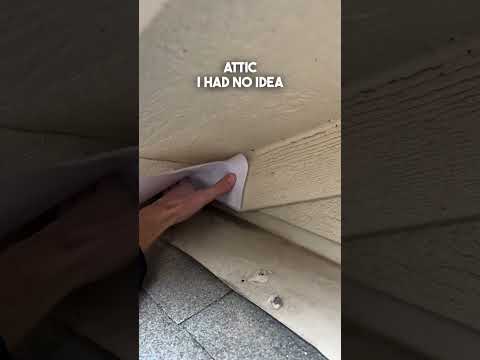
Outside, check for chewed holes under eaves, open chimneys, and gaps where the roof meets the wall.
If you see tracks in mud, soil, or dust by the foundation, those could be squirrel prints. They have four toes on the front feet and five on the back, usually in a bounding pattern.
Try sprinkling a little flour or sand near a suspected hole overnight to catch fresh prints.
If you keep seeing the same track patterns, you’ve probably found their usual route.
Recognize Squirrel Droppings and Odors
Squirrel droppings look like small, dark pellets—about half an inch long. You’ll find them near entry points, in attics, or along baseboards.
Droppings often pile up in clusters and might be mixed with bits of nest material. Wear gloves if you need to clean up, and don’t sweep without protection.
Strong smells can also tip you off. Squirrel urine and nesting stuff can create a musky odor that gets worse when it’s humid.
A dead squirrel inside the wall? That’s a whole new level of awful—think rotting, foul smell spreading through vents. If you notice persistent odors along with droppings or noise, don’t wait around. Try to find and remove the animal safely, or call a wildlife control pro if it’s too much to handle.
Safe Removal and Prevention Steps
If you hear chewing or scratching, act quickly. Go for humane methods first, close up any gaps after the squirrel leaves, and call a pro if you spot babies, big damage, or chewed wiring.
How to Get Squirrels Out of Your Walls
Start by figuring out when the squirrel’s active—usually dawn and dusk. Try putting a small bright light and a radio on low near the wall; squirrels like quiet, dark spots, so this might annoy them enough to leave.
If you find the outside hole they use, install a one-way door over it. That lets the squirrel out but not back in.
Don’t cut into your walls unless you’re ready to fix insulation and drywall afterward.
Think there’s a mom and babies? Don’t seal exits until a pro checks for pups. Watch the one-way door for at least 48 hours to make sure the squirrel’s gone and doesn’t sneak back through another gap.
Using Repellents and Squirrel Traps
Repellents sometimes help, but honestly, results are mixed. You can try commercial predator urine or spicy sprays around attic vents and entry points, but only as a temporary fix.
Skip mothballs and poisons—they’re unsafe and might even be illegal.
Live cage traps can work if you place them where the squirrel travels, like in the attic or near the exit. Bait them with unsalted peanuts or sunflower seeds.
Check traps every few hours, and only release squirrels several miles away if local laws allow. Use a covered carrier and wear gloves so you don’t get bitten or scratched.
Seal Entry Points and Prevent Squirrels
Inspect your roofline, soffits, vents, and chimney for any gaps bigger than an inch. Patch holes with 1/4–1/2 inch galvanized hardware cloth or sheet metal—wood or thin vinyl won’t cut it.
Replace damaged vent screens and put heavy-gauge mesh over attic and foundation vents.
Trim tree branches so they’re at least 6–8 feet from the roof. Squirrels are acrobats and love to jump onto houses.
If you have bird feeders, remove them or use baffles to make food harder to reach.
After the squirrel leaves and you’re sure there are no babies left, seal up openings for good and fix any insulation or wiring damage.
When to Call Professional Wildlife Removal
If you hear several animals rustling around, spot nests with babies, or notice chewed-up wires and wood, it’s probably time to reach out to a licensed wildlife removal company.
These pros know how to install one-way doors, set humane traps, and handle all the tricky legal stuff around relocating animals.
They’ll usually check your attic, set up exclusion devices, clean up any nasty insulation, and fix up entry holes.
Costs can swing a lot—getting rid of just one critter might set you back a few hundred bucks, but if you need repairs too, expect to pay more.
Pick a company with solid local permits and positive reviews. That way, you know the job gets done safely and by the book.


