
Thinking about keeping a chipmunk as a pet? You might wonder if it’s really worth it. You can keep chipmunks as pets, but they need special attention and can be tough to care for the right way. They’re not your average pet, and honestly, they need way more space, mental stimulation, and care than most folks expect.
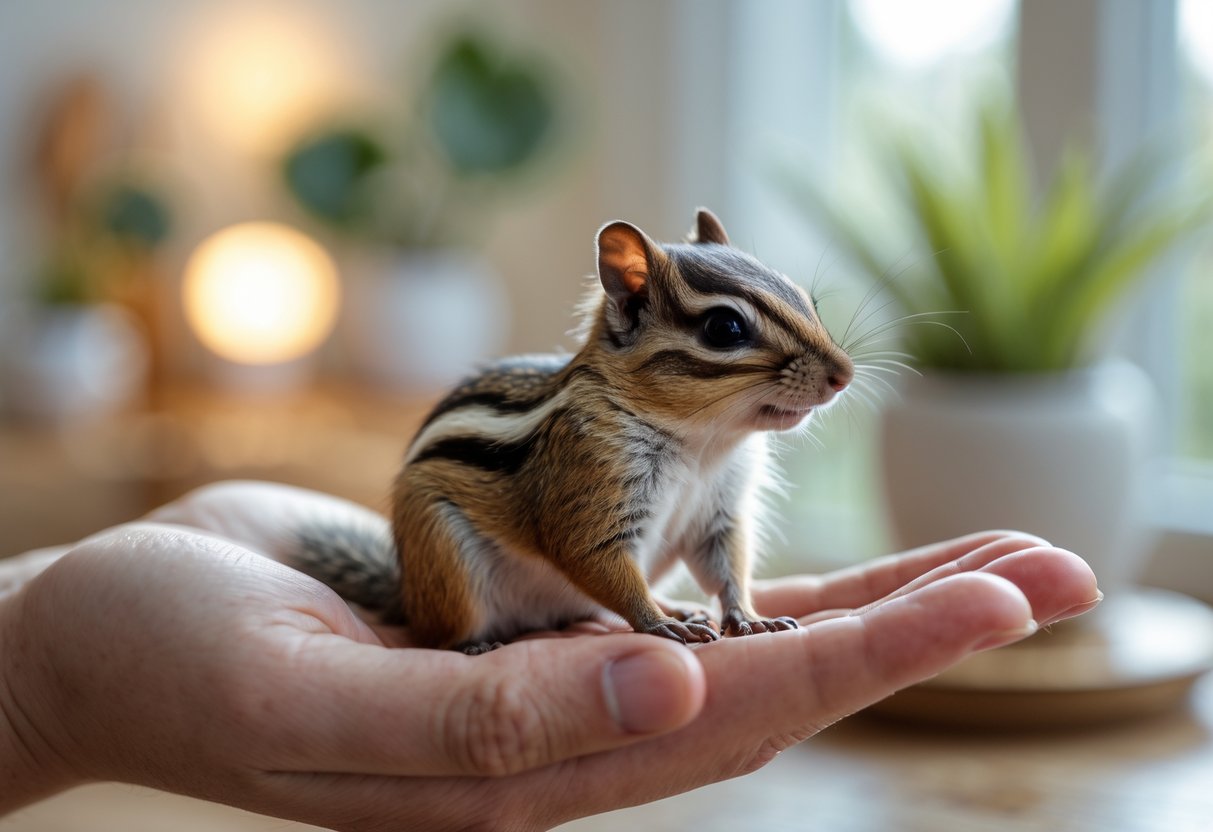
Chipmunks come straight from the wild, and they act like it. They move fast, get nervous easily, and most don’t enjoy being handled. You’ll have to set up a home where they can dig, climb, and hide—basically, let them act wild indoors.
If you’re up for that level of commitment, sure, you can keep a chipmunk. But honestly, it’s not the right choice for everyone.
Caring for chipmunks means you’ll need to learn about their diet, behaviors, and how they show stress. This guide breaks down what keeping a chipmunk really involves, so you can figure out if they’re a good fit for you.
For more in-depth tips, you can check out what the experts say on how to care for pet chipmunks.
Should Chipmunks Be Kept as Pets?

Chipmunks need a different kind of care, and owning one comes with some real challenges. Their behavior, social needs, and the laws around them all play a role. You really have to think about whether a chipmunk matches your lifestyle.
Wild vs. Captive Chipmunks
Chipmunks start out as wild animals. They’re always on the move, needing room to dig, climb, and forage.
In the wild, they usually live alone or in loose groups, depending on their species. If you keep one, you need to give it a big, safe space that feels as close to nature as possible.
Most captive chipmunks don’t like being handled much. They get stressed out easily and aren’t really into cuddling.
If you decide to bring one home, set up lots of hiding spots and toys. That way, they stay busy and feel safer.
Legality and Ethical Considerations
Many places ban owning chipmunks, especially Siberian chipmunks, since they’re considered invasive. If you already have one, you can keep it, but buying, selling, or breeding chipmunks isn’t allowed.
From an ethical standpoint, chipmunks can struggle in captivity if you don’t meet their needs. They require the right diet, enough space, and as little stress as possible.
If you’re going to keep one, you really need to commit to their care.
Temperament and Social Needs
Chipmunks tend to be shy and nervous. They don’t like a lot of handling and need you to interact gently.
Some chipmunks like having company, but males can get aggressive with each other. If you want more than one, make sure they get along.
They need places to hide when they get scared. Offering several hiding spots helps them feel secure.
Be patient and keep an eye on their behavior, so you can catch any signs of stress or sickness early.
Caring for Pet Chipmunks: Environment, Health, and Handling
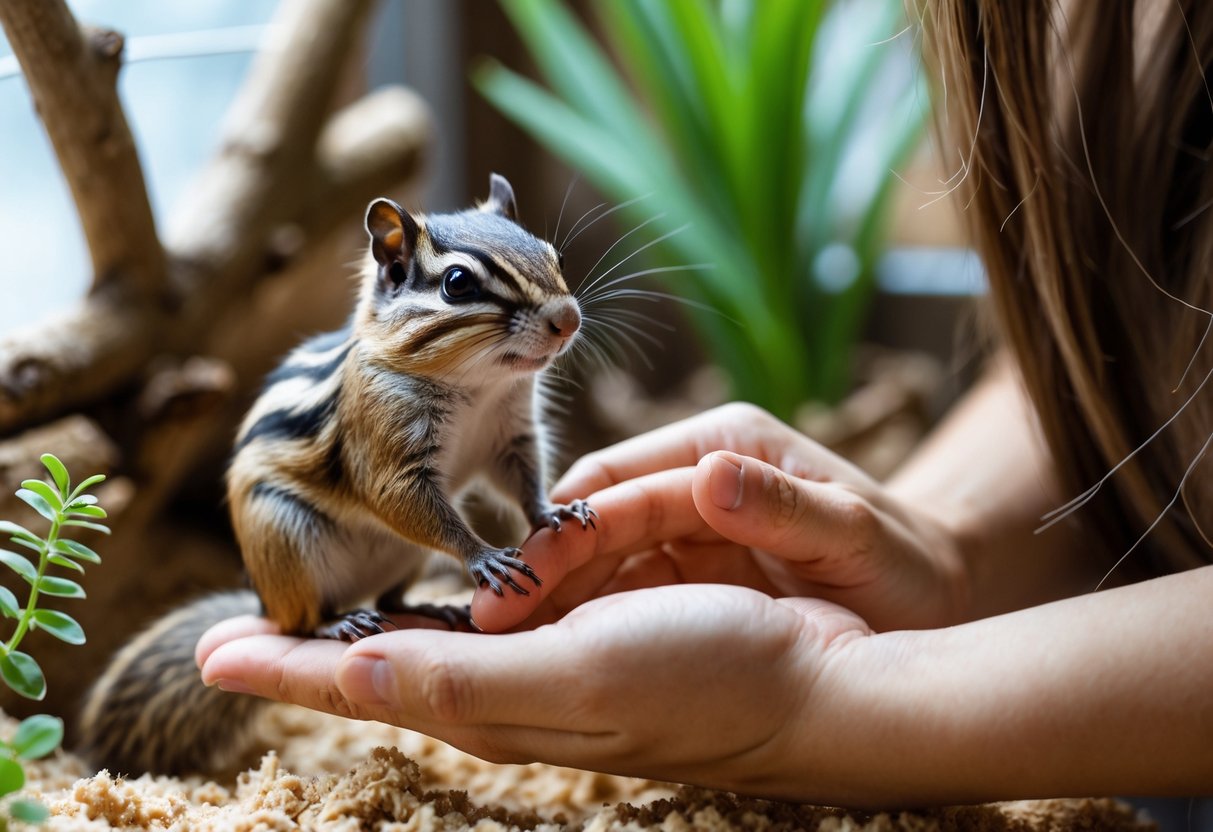
Your chipmunk needs a roomy, safe enclosure, gentle handling, and regular check-ins to stay healthy. Give them a quiet spot with hiding places, and keep an eye out for any signs they’re not feeling well.
Enclosure Size and Enrichment
Set up a large enclosure for your chipmunk—think small aviary size. They need a lot of floor space and height to climb.
Use solid flooring with soft bedding like dust-free wood shavings or shredded paper. Skip wire mesh floors to protect their feet.
Add branches, ropes, and lots of things to climb. Hiding spots matter too—try hollow logs or nest boxes filled with shredded paper or hay.
Chipmunks like to dig, so make the bedding deep enough for burrowing.
Give them toys and safe things to gnaw on, like cuttlefish bone, to help their teeth. Clean their space by spot-cleaning daily and doing a bigger clean every few months.
Handling and Health Monitoring
Chipmunks move fast and get stressed by rough handling. Always approach calmly and gently—patience pays off.
Don’t chase them; that just scares them more. If you need to catch your chipmunk, use a padded net or a closeable nest box.
Watch your chipmunk every day for changes in how they act or look. Healthy chipmunks stay active, alert, and their eyes and fur look bright.
If you notice lethargy, a dull coat, trouble eating, or hiding more than usual, those are warning signs.
Keep fresh food and water available at all times. Check their teeth once a week, since their teeth never stop growing.
If there’s a dental issue, let a vet handle it—don’t try to fix it yourself.
Common Health Problems
Chipmunks deal with a few common health issues, like respiratory infections, overgrown teeth, and stress-related behaviors. You might spot discharge from their nose, hear some noisy breathing, or notice wetness around their mouth.
Stress really takes a toll. Sometimes, they act aggressive, hide too much, or start repeating odd little habits. Try to keep your chipmunk’s space both interesting and safe if you want to help them relax.
Don’t give your chipmunk any medicine unless a vet says it’s okay—some meds can actually hurt them. If you notice your chipmunk losing weight or their droppings look different, it’s best to call your vet right away.
For a more in-depth look at creating a healthy, happy environment for your chipmunk, check out how to care for pet chipmunks.


