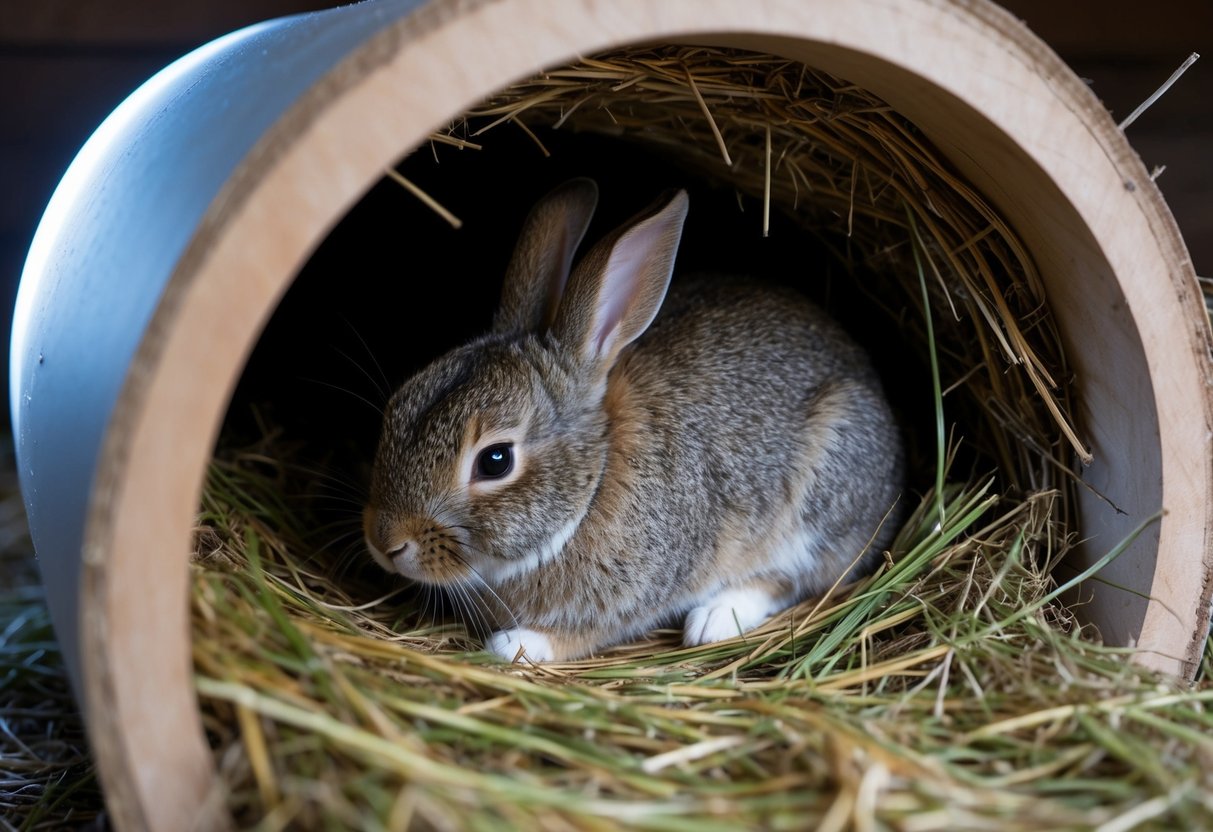
If you’re a rabbit owner, you may wonder about their nighttime eating habits. Rabbits should not go without hay, even for a single night. Hay is essential for their digestive health and overall well-being. Without it, your rabbit could face serious health problems.
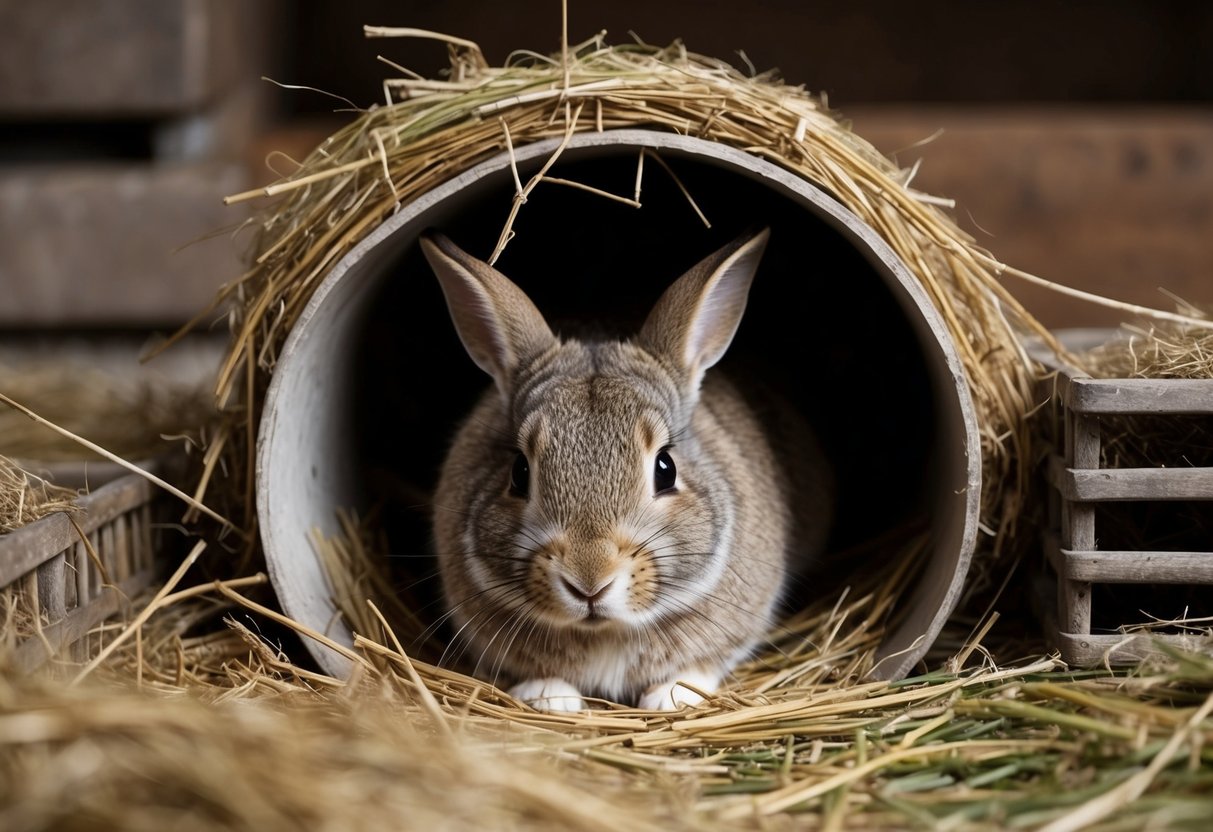
Hay is not just a snack for rabbits; it is a crucial part of their diet. It helps maintain their digestive system and prevents issues like GI stasis. By ensuring your bunny has constant access to hay, you are supporting their health for the long run.
Understanding the importance of hay can help you be a better rabbit owner. Keeping hay available at all times is one of the simplest ways to ensure your furry friend stays happy and healthy.
Understanding Rabbit Dietary Needs

Rabbits have unique dietary needs that are essential for their health. Understanding these needs helps ensure your rabbit thrives and stays happy.
Role of Hay in a Rabbit’s Diet
Hay is crucial for your rabbit’s diet. It provides the necessary fiber that supports their digestive system. A diet high in fiber prevents gastrointestinal stasis, a serious condition where the digestive system slows down or stops altogether.
You should offer unlimited access to hay every day. It helps maintain a healthy weight and prevents obesity. Hay also assists in dental health by naturally wearing down their continuously growing teeth.
Types of hay you can provide include timothy hay, orchard grass, and alon hay. Each type has its own benefits, but all are important for a balanced diet. Remember, a rabbit that does not receive enough hay can suffer from various health issues.
Hay vs. Other Food Types
While hay is the foundation of your rabbit’s diet, other food types play roles too. Pellets can provide additional nutrients, but they should make up only a small part of their diet.
Choose high-quality pellets that are high in fiber and low in protein to avoid health issues.
You can also offer a variety of vegetables like kale, romaine lettuce, and carrots. These add freshness, variety, and vitamins to their meals. Just remember to introduce new vegetables slowly to avoid stomach upset.
Fruits can be given as treats, but they should be limited due to sugar content. Options like apples or bananas are great if given in small amounts. Balancing hay, pellets, vegetables, and occasional fruits ensures your rabbit’s nutritional needs are met.
The Risks of Hay Deprivation
When rabbits go without hay, they can face serious health risks. Two main areas of concern are gastrointestinal health and dental health. Understanding these risks will help you keep your rabbit healthy and happy.
Gastrointestinal Health Concerns
Lack of hay can lead to gastrointestinal stasis (often called GI stasis). This is a condition where the digestive system slows down or stops. It’s often caused by stress or an inadequate diet.
When rabbits don’t eat enough hay, they miss out on essential fiber. This fiber is necessary for proper digestion. Without it, your rabbit may experience bloating, discomfort, or even pain. If GI stasis occurs, it can lead to severe health complications, which may require a visit to the veterinarian.
Signs to watch for include decreased appetite, lethargy, and abnormal droppings.
Impact on Dental Health
Rabbits’ teeth continuously grow throughout their lives. Chewing on hay helps wear down their teeth naturally. Without enough hay, their teeth can become overgrown. This can lead to painful dental problems and difficulty eating.
Overgrown teeth may cause sores in the mouth or result in infections. If not treated, your rabbit could suffer significantly and require dental intervention from a veterinarian.
Regular access to hay is vital for keeping their teeth healthy and avoiding these issues. Keep a steady supply of fresh hay to support your rabbit’s overall well-being.
Proper Hay Management and Alternatives
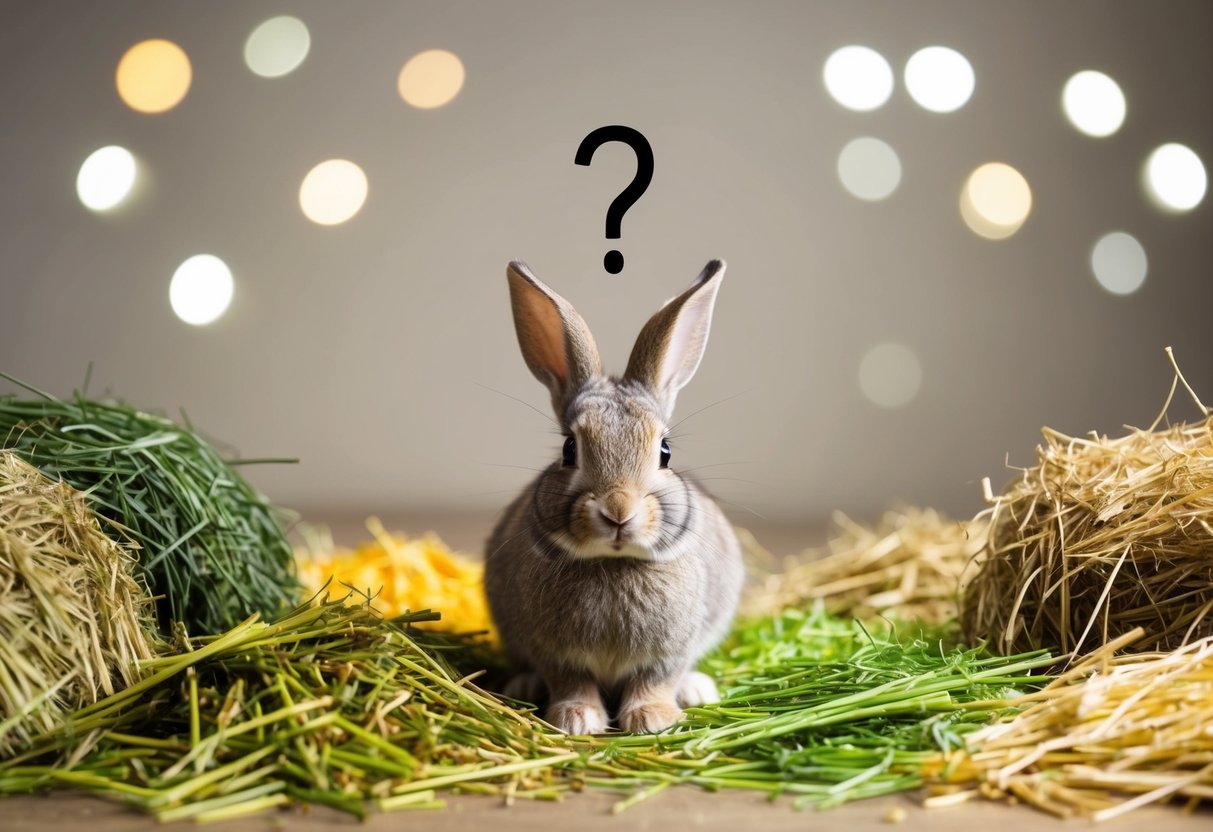
Managing your rabbit’s hay intake is crucial for their health. Offering the right types of hay and knowing how to feed them will keep your bunny happy and healthy. Alternatives can also provide variety and necessary nutrients.
Types of Hay and Their Benefits
The most common type of hay for rabbits is timothy hay. It is high in fiber, which is essential for your rabbit’s digestion.
Fresh hay should be green and free from mold or dust. Other types of hay include orchard grass and meadow hay. These hays offer different flavors and textures. Mixing different types can help keep your rabbit interested and encourage hay intake. Always choose high-quality hay for optimal nutrition.
Feeding Schedule and Quantities
Rabbits should have unlimited access to hay at all times. A good rule of thumb is to offer one cup of hay per 2 pounds of your rabbit’s body weight daily.
You might notice that your rabbit eats more in the morning and less in the evening, so adjust the amounts as needed. Check their hay regularly to ensure it’s fresh. If they begin to ignore a type, consider switching it up.
Keeping a consistent feeding schedule will help establish a routine, which rabbits appreciate.
Alternative Fibrous Foods
While hay is essential, fresh vegetables can enhance your rabbit’s diet. Leafy greens like romaine lettuce and parsley provide added nutrients and moisture. Remember to introduce new foods slowly to avoid stomach upset.
You can also consider other fibrous foods like oat hay or pelleted hay as occasional treats. These can complement your rabbit’s diet but should not replace their regular hay intake. Always monitor their response to any new food.


