
So, you’re probably picturing a tiny house cat sitting next to a massive, roaring lion and wondering—could those two ever actually make babies? No — a lion can’t successfully breed with a domestic cat. Their biology and genetics are just too different. That’s the straightforward answer, but let’s dig into why this idea is more fantasy than science.

Let’s talk about chromosomes, reproductive barriers, and the huge size difference that blocks any real mating. Hybridization does happen, but only among much more closely related felines. If you’re curious, stick around—the science here is surprisingly interesting.
Can a Lion Breed With a Cat? Scientific Facts
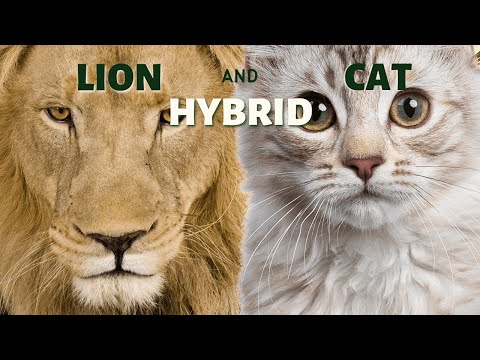
Let’s get into why a domestic cat and a lion can’t have offspring. Genetics, body size, and reproductive timing all create some pretty big roadblocks.
Genetic and Evolutionary Barriers
Lions (Panthera leo) and domestic cats (Felis catus) live on completely different branches of the Felidae family tree. They split from a common ancestor millions of years ago, so their DNA took two very separate paths.
Both animals have 38 chromosomes, but that’s not enough. The order and content of their genes have changed too much for things to line up. When chromosomes don’t match, embryos can’t develop normally. Even if fertilization somehow happened, gene regulation problems would stop growth before it really started.
Their bodies also send out different signals for things like placenta formation and organ development. These differences make interspecies breeding between distant relatives a nonstarter.
Reproductive Incompatibilities and Physical Differences
Let’s talk about size for a second. Adult lions can weigh several hundred pounds. Most house cats barely break 20. That size gap alone makes natural mating impossible—and honestly, dangerous.
Their reproductive cycles don’t sync up either. Lion estrus, hormone levels, and ovulation timing don’t match what you see in house cats. Sperm and egg proteins are species-specific, so mismatches usually keep fertilization from happening.
Gestation length and uterine size add even more problems. A house cat’s womb just can’t handle a hybrid embryo that’s developing with lion genes. Even if you tried something like artificial insemination, you’d run into immune rejection or developmental failure.
Why Hybrids Like Ligers Exist But Cat-Lion Hybrids Don’t
Lions and tigers can produce ligers or tigons because they’re both in the Panthera genus. Their genes and reproductive systems are still close enough to make it possible.
Domestic cats and lions aren’t that lucky. Felis and Panthera split so long ago that their key genes just don’t work together anymore. That makes cat-lion hybrids a genetic dead end.
There’s a practical side, too. People breed ligers in captivity by pairing large, compatible animals, sometimes with a lot of human help. No one can safely pair a lion with a house cat, and you wouldn’t get viable embryos even if you tried. Honestly, the ethical issues alone would stop most people from attempting it.
Feline Hybridization in the Animal Kingdom
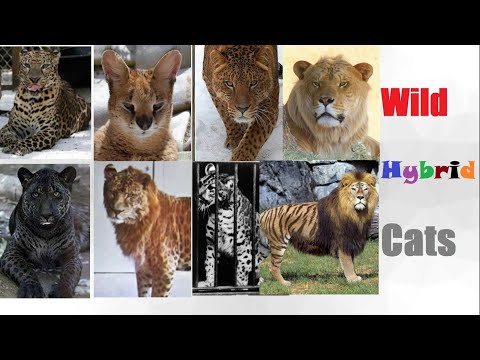
Let’s talk about how hybrids actually form among big cats and domestic breeds. The main factors are how closely related the parents are, whether their chromosomes match up, and—let’s be real—what’s ethical or healthy.
Big Cat Hybrids: Ligers, Tigons, and More
You’ll only see big-cat hybrids between Panthera species that are closely related. Ligers (male lion × female tiger) and tigons (male tiger × female lion) are the best-known examples.
Ligers often end up bigger than both parents because of how their growth genes interact. Tigons usually stay closer to their parents’ size. Both hybrids can suffer from joint issues, hormonal problems, and low fertility. Breeders usually create these animals in captivity, which brings up a lot of welfare concerns.
Other Panthera hybrids—like jaguar × leopard—do exist, but they’re rare and usually not very healthy or fertile. Don’t expect a house cat to make similar hybrids with big cats. Domestic cats are just too far removed genetically.
Domestic Cat Hybrids: Bengal, Savannah, and Others
You can find hybrid pet breeds that mix wild small cats with domestic cats. The Bengal cat comes from crossing an Asian leopard cat with a house cat, giving it those cool spots and a wild look. Savannah cats mix serval genes with domestic lines, so they’re tall and have big ears.
Breeders work over several generations to keep the wild patterns but create a cat that acts more like a pet. Early generations (F1–F3) tend to be more energetic and have stronger wild instincts. Later generations are usually calmer and easier to live with.
The Maine Coon? It’s not a hybrid. It’s just a large domestic breed made through selective breeding. Bengals and Savannahs need special care, but they’re still domestic cats—not wild animals in disguise.
Myths and Misconceptions About Cat-Lion Hybrids
People sometimes talk about a supposed “kitten-lion” or claim that a house cat could breed with a lion. Honestly, that just doesn’t line up with biology.
Domestic cats (genus Felis) and lions (genus Panthera) went their separate ways millions of years ago. They have big genetic and size differences that completely prevent them from producing viable offspring.
Chromosome counts don’t match up, and their bodies just aren’t built for crossbreeding. Even if someone tried advanced reproductive technology, it’d almost certainly fail and raise a bunch of ethical questions.
You’ll see stories online that mix up big-cat hybrids—like ligers or tigons—with these totally impossible pairings involving house cats. If you spot images claiming to show a cat-lion hybrid, take a close look.
A lot of those pictures are photoshopped or just show animals like early-generation Savannah cats. Sometimes, it’s just a pattern that looks wild, but it’s not what people claim.


