
Once you learn what sets seahorses apart, it’s tough not to get a little obsessed with them. They swim upright, grab onto things with their tails, and hide behind bony skin plates instead of scales. But let’s be honest—the wildest thing about seahorses? The males get pregnant and give birth. That rare role reversal changes everything about how they behave, court, and care for their young.
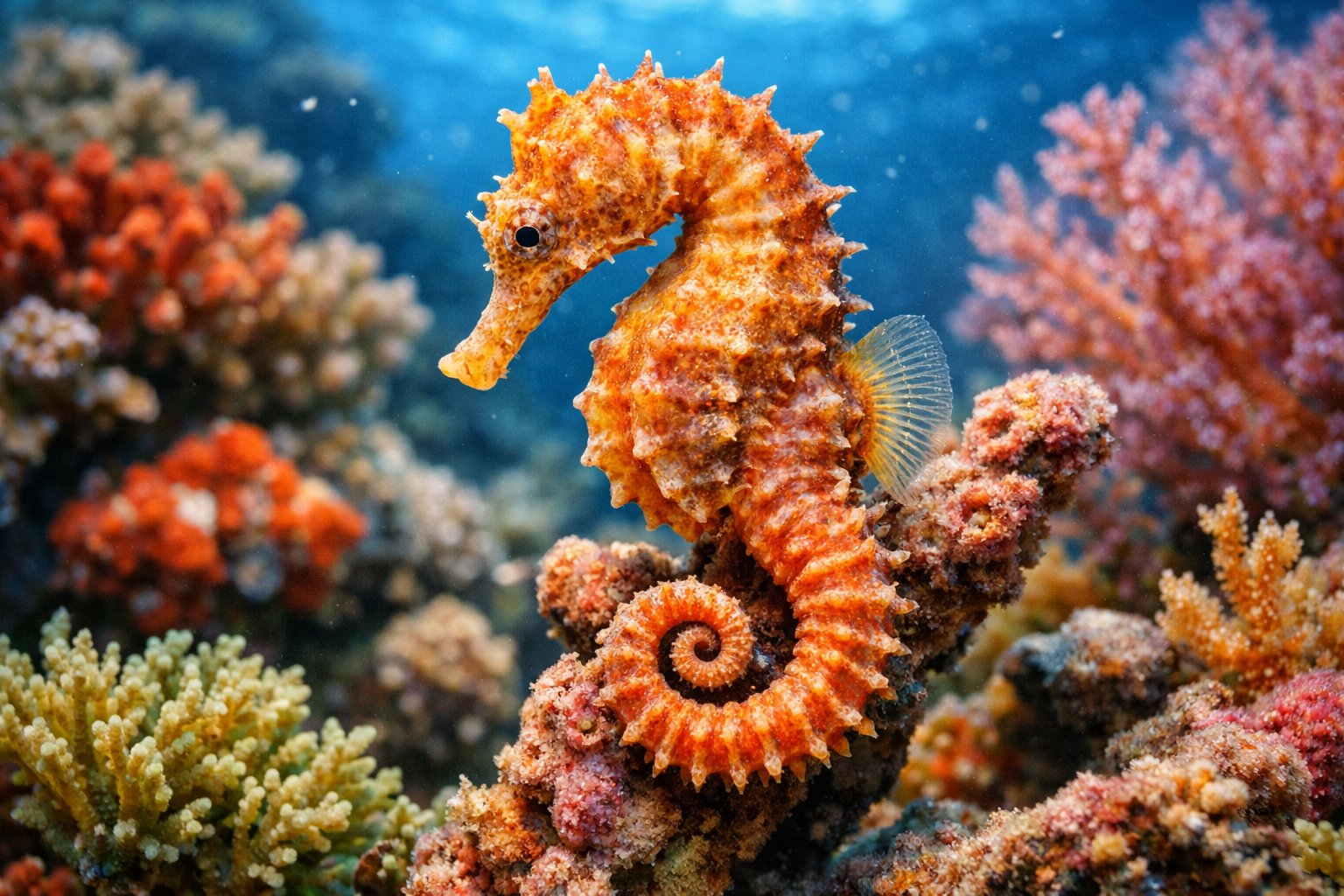
Their odd shape, slow-motion hunting style, and top-notch camouflage help them survive in seagrass beds, coral reefs, and tangled mangroves.
Plus, their mating dances and the male’s brood pouch create one of the weirdest parenting stories in nature.
These small, delicate creatures actually play a big role in coastal ecosystems, but they’re under threat from habitat loss and trade.
Extraordinary Features That Make Seahorses Unique

Seahorses really seem built for holding on, hiding out, and just hovering in place.
Their bodies and habits work together so they can grip plants, eat with precision, and blend in almost perfectly.
Upright Posture and Horse-Like Appearance
Seahorses (genus Hippocampus) swim upright, while most fish just cruise along horizontally.
A series of bony plates run along their bodies, forming a kind of armor tube that keeps them vertical and supports the spine.
You’ll notice their small, horse-like heads perched on long necks.
The head ends in a tube-shaped snout that works like a straw for sucking up tiny prey.
Their dorsal fin, sitting on their back, beats quickly to move them forward and lets them hover.
Tiny pectoral fins near the head help them steer and make fine adjustments.
A swim bladder inside their body lets them control buoyancy, so they can hang out at one depth without constant swimming.
Since seahorses swim slowly, their shape and fins help them save energy while holding their spot in the current or among plants.
Prehensile Tails and Gripping Habits
Their tails act almost like flexible hands.
Seahorses curl their prehensile tails around seagrass, coral, or algae to anchor themselves against waves and currents.
This grip means they don’t have to swim constantly and can just wait for food in one spot.
Rings of fused bony plates give the tail its strength and solid hold.
During courtship, they often use their tails to link with a mate or grab onto each other.
Juveniles and adults both use their tails to hitch rides on drifting plants, which helps them travel long distances without much effort.
Because their bodies are so rigid, the tail’s flexibility becomes super important for movement and stability.
They also use their tails to steady themselves while their dorsal fin does the heavy lifting, so feeding and anchoring go hand in hand.
Camouflage and Color Changing Abilities
Seahorses can shift their colors to match whatever’s around them—seagrass, sponges, or coral.
Pigment cells in their skin make this happen, and changes can be triggered by mood, light, or background.
Camouflage helps them avoid predators and sneak up on tiny crustaceans and plankton.
Some species even grow skin filaments that look just like the plants they’re hiding in.
Since their bony plates make their outline kind of obvious, color and texture tricks help break up their shape.
They sometimes change patterns during courtship to show they’re ready.
Their slow, careful movements make the camouflage even more effective.
By holding on with their tails and hovering with their dorsal fin, they don’t draw much attention, and their color and texture just blend in.
If you want more on why seahorses look and act so differently, the Natural History Museum has a great piece: Are seahorses the quirkiest fish?
Fascinating Seahorse Reproduction and Behavior

Seahorse breeding really flips the script: the male carries the eggs in a brood pouch, and pairs often put on some pretty elaborate courtship dances.
Partners bond through these rituals, the female transfers eggs with her ovipositor, and the male actually gives birth.
Courtship and Monogamous Pair Bonds
In a lot of seahorse species, you’ll spot courtship behaviors that create strong pair bonds for a whole breeding season.
Pairs often meet up every morning for a synchronized dance that keeps their connection solid.
They change color, swim side-by-side, and even wrap their tails together.
These rituals help partners recognize each other and get the timing right for egg transfer.
Some species stay monogamous for multiple broods during a season, meaning the same male and female mate over and over.
Monogamy lowers the odds of another male fertilizing the eggs and helps the pair coordinate repeated transfers into the male’s pouch.
Male Pregnancy and the Brood Pouch
The male’s brood pouch sits at the base of his tail.
You’ll see the female place eggs into this pouch, and the male fertilizes and carries them.
Tiny blood vessels in the pouch supply oxygen and help control salt levels.
The pouch protects the eggs from predators and disease.
Depending on the species, the male carries the eggs for about 10 days to six weeks.
When the babies are ready, the male contracts his body and releases fully formed miniature seahorses that swim off on their own.
How Do Seahorses Reproduce? The Role of the Ovipositor
The female uses her ovipositor—a narrow tube—to transfer eggs.
She lines up beneath the male and inserts the ovipositor into his pouch opening.
In one go, she can deposit hundreds or even thousands of eggs, depending on the species and her size.
Once the eggs are inside, the male releases sperm to fertilize them.
He seals the pouch and starts the pregnancy.
Over time, the chemistry inside the pouch changes to match seawater, and the male secretes nutrients and hormones that help the embryos develop.
Courtship Dance and Daily Rituals
You can spot the courtship dance by watching for head bobbing, sudden color changes, and the way they sometimes hold each other’s tails. These little rituals might last a few minutes, and you’ll often see them repeat the whole thing every morning before mating.
Rituals like these help the female release her eggs at just the right moment, matching up with the male’s readiness.
Some species throw in extras, like hovering just above the reef or darting around in quick chases. I find those moves fascinating—they seem to strengthen the pair’s bond and make the timing for egg transfer almost perfect.
Regular rituals like this also help keep stress down, which probably boosts the odds for a successful pregnancy.
Male seahorses actually give birth, and monogamous pairs are pretty common. The ovipositor and brood pouch play a huge role in how seahorses reproduce.
If you want more detail on male pregnancy and how the pouch works, check out the article on seahorse reproduction at Encyclopedia Britannica (https://www.britannica.com/animal/sea-horse).


