
Ever wondered if gorillas and chimpanzees—since they’re so closely related—could actually have babies together? They do share a bunch of traits and, honestly, sometimes look a lot alike. But when it comes to breeding, it’s just not that straightforward.

Gorillas and chimpanzees can’t breed because their DNA and chromosomes just don’t line up well enough to make a baby. Their genetic differences run too deep, so their reproductive cells can’t really join up to form offspring.
Even though they both belong to the great ape family, millions of years of separate evolution have made them totally incompatible for mating.
People have always been fascinated by the idea of ape hybrids—there are all sorts of stories and myths out there. If you’re curious about why these amazing animals can’t mix their genes, or what actually makes each of them unique, let’s dig into the science behind it.
Can a Gorilla Breed with a Chimpanzee?
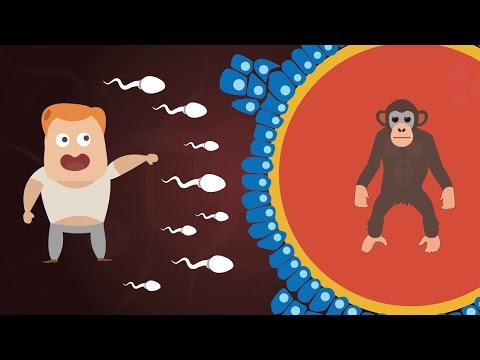
Gorillas and chimpanzees might look similar in some ways, but their biology and history block any chance of breeding together.
Their DNA, the way their chromosomes are set up, and even old stories people tell all point to one thing: no one’s ever found a real hybrid.
Genetic Compatibility and Chromosome Differences
You might guess that gorillas and chimps could have babies since both have 24 pairs of chromosomes. But here’s the catch—the arrangement of these chromosomes is actually quite different.
For fertilization to even start, sperm and egg chromosomes need to match up just right. Gorillas and chimps don’t have genetic material that lines up properly.
This mismatch keeps the embryo from developing.
They share a common ancestor, sure, but after millions of years apart, their DNA has drifted too far. Their reproductive cells just can’t combine to make offspring.
Hybridization Myths and Legends
People love to talk about ape hybrids, like the so-called Koolakamba. There’s always a story floating around about an ape with a chimp’s face and a gorilla’s size.
Scientists haven’t found any real evidence that these creatures exist. Most think these myths probably started when someone saw a gorilla or chimp that looked a bit unusual.
Apes can look pretty different from one another, so it’s easy to see how someone might get confused.
These myths show how tricky it is to tell species apart just by looking at them. But genetics and science really make it clear—crossbreeding just doesn’t happen.
Notable Cases and Claims of Hybrids
People have tossed around claims about hybrids, like the well-known chimpanzee Oliver. He looked a bit unusual, and some folks guessed he might be part gorilla.
But when researchers dug into it, they found Oliver was just a strange-looking chimp. So, that theory didn’t hold up.
Scientists and zoo staff have tried artificial insemination to create hybrids. They kept a close eye on gorillas and chimps, hoping for a result.
Still, nobody’s confirmed the existence of a hybrid. No matter what rumors say, the evidence just doesn’t back it up.
If you want to dig deeper, check out this discussion on gorilla and chimpanzee breeding.


