
Ever wonder if a gorilla and a chimpanzee could actually have babies together? I mean, they do look kind of similar, and they’re both great apes, so it’s a fair question. But once you start digging into the science, things get complicated fast.

The short answer: gorillas and chimpanzees can’t breed because their DNA and chromosomes don’t match up well enough to make offspring. Sure, they share a distant ancestor, but millions of years of separate evolution have made reproduction between them impossible.
Sometimes you’ll hear wild stories or see photos of strange apes that seem like a mix, but those are usually just myths or rare natural variations. Real hybrids? Nope. If you’re curious why these two amazing animals stay so separate, let’s dive into their differences and the science behind it.
Can a Gorilla Breed with a Chimpanzee?
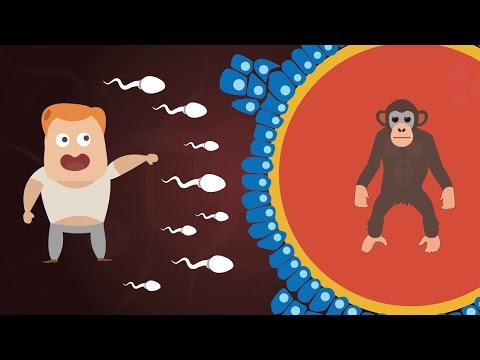
It’s natural to wonder if gorillas and chimpanzees could have babies together since they look kind of alike. But their genes, biology, and separate histories make it impossible.
Stories and odd-looking apes sometimes make people curious, but science really doesn’t leave much room for doubt here.
Genetic Compatibility and Chromosomes
Both gorillas and chimpanzees have 24 pairs of chromosomes. That sounds promising, right? But their genes don’t match up closely enough to allow offspring.
Chromosomes carry the instructions for life. If they can’t pair up correctly during reproduction, fertilization just doesn’t work.
Their DNA is too different, so sperm and egg cells can’t combine. Even if they tried to mate, no baby would develop.
Their genes act like a lock and key that simply don’t fit together.
Evolutionary and Biological Barriers
Gorillas and chimpanzees split from a common ancestor a long, long time ago. Since then, they’ve evolved on separate paths, adapting to different environments and lifestyles.
Their bodies and behaviors have changed a lot since then. They don’t see each other as potential mates, which is another barrier.
Their reproductive systems don’t match up, so breeding just doesn’t happen.
Reports and Legends of Koolakamba
Maybe you’ve heard stories about the Koolakamba—some folks say it looks like a mix between a gorilla and a chimpanzee. They describe it as having the body of a gorilla but a chimp’s face.
Most scientists don’t buy it. They say the Koolakamba is probably just a gorilla or chimpanzee with unusual traits.
This legend mostly comes from spotting apes with rare features and getting a bit carried away.
Notable Cases of Misidentified Apes
People have sometimes mistaken unusual apes for gorilla-chimp hybrids. Take Oliver, for example—a chimpanzee with a unique face and a stockier build than most chimps.
Scientists ran tests and confirmed Oliver was just an odd-looking chimpanzee, not a hybrid.
These cases show how easy it is to get confused by appearances. Sometimes apes just look different, but that doesn’t mean they’re hybrids.
Scientific and Ethical Perspectives

The idea of a gorilla and chimpanzee breeding raises a bunch of scientific and ethical questions. Science explains why it’s not possible, and ethics remind us to treat animals with respect.
Historical Attempts at Hybridization
In the past, people spread rumors and even tried to create hybrids between gorillas and chimpanzees. Some experiments, like those in the Soviet Union during the 1960s, involved artificial insemination with human or ape sperm.
None of these attempts worked.
Genetic differences caused the failure. Gorillas and chimpanzees have DNA and chromosome structures that just don’t match.
Even if they mated, fertilization and development simply wouldn’t happen.
No one has ever documented a real gorilla-chimpanzee hybrid. Science makes it clear: mating across these species isn’t possible.
Ethical Considerations in Primate Research
When you think about research involving primates, ethics really matter. Researchers have to make sure the animals don’t get harmed or stressed out.
Trying to breed different primate species just doesn’t fit with their natural behaviors. It often leads to suffering, so it’s something we should avoid.
Animal welfare laws and research guidelines protect great apes from these kinds of experiments. Scientists now avoid forced mating or invasive procedures out of respect for their well-being.
As a reader, you play a part by understanding why protecting these animals is so important. Ethical research focuses on conservation and observing natural behaviors without causing harm.
If you’re curious about historical hybrid attempts, here’s a detailed discussion about gorilla and chimpanzee breeding.


