
Ever wondered if a frog and a toad could mate? Honestly, you’re not the only one. They look pretty similar and hang out in the same places, but when it comes to romance, things aren’t so straightforward.
Frogs and toads might sometimes attempt to mate, but they almost never produce babies together because their genetics just don’t line up.
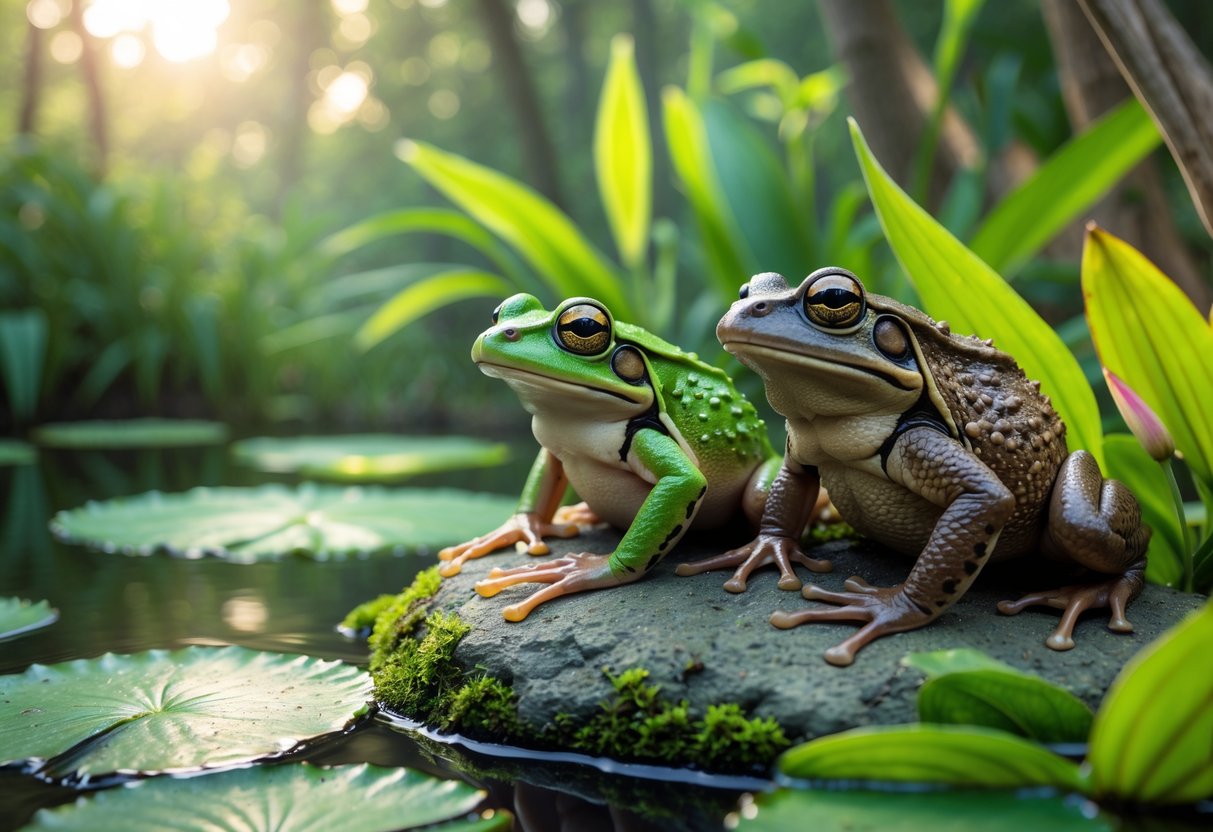
In rare situations, some species have managed to mate and even have offspring, but honestly, that’s not common. If you want to know why frogs and toads usually stick to their own, you’ll need to look at their families, their calls, and where they live.
Let’s dig into what sets their mating habits apart and why, despite their similarities, frogs and toads mostly keep to their own kind.
Can a Frog and Toad Mate?

Frogs and toads both belong to the order Anura, but a bunch of differences set them apart, especially when it comes to mating. Some odd cases pop up, but honestly, it’s unusual. Their biology and genetics usually keep them from making babies together.
Biological Differences Between Frogs and Toads
Frogs and toads look and act differently, especially in how they reproduce. Frogs, like the American bullfrog (Lithobates catesbeianus), have smooth, damp skin and long legs that help them leap far.
Toads, such as the American toad (Anaxyrus americanus) or the Southern toad (Anaxyrus terrestris), have rough, dry, bumpy skin and much shorter legs.
These differences show up in how they lay eggs. Frogs lay clusters of eggs in water, but toads lay their eggs in long, stringy lines.
Their mating calls sound different, too. That helps them find the right partner and avoid confusion.
If you watch closely, you’ll notice these differences make it tough for frogs and toads to mate successfully.
Genetic Compatibility and Hybridization
Frogs and toads don’t share the same family tree, so their genes don’t mix well. When they try to mate, fertilization might happen, but usually, the embryos don’t survive or the young can’t reproduce.
Hybridization—when two species breed—is super rare between frogs and toads for this reason. If it does happen, the offspring might look like a mix of both, but they don’t tend to last long or have babies of their own.
You might hear about a frog and toad mating, but almost always, genetics get in the way.
Cases of Mistaken Mating
Sometimes, a male frog or toad grabs the wrong partner by mistake. Scientists call this misdirected mating or misdirected amplexus.
A male toad might latch onto a frog, or the other way around, especially if they’re sharing a pond.
Usually, males go for movement or just whatever’s nearby, not always the right species. These attempts don’t lead to babies because the bodies and genes just aren’t compatible.
Honestly, you might even see a male frog or toad grabbing a fish, like a goldfish, if it’s big enough. Nature can be weird that way.
Known Examples Involving Specific Species
Every now and then, frogs and toads do pull off a successful mating. For example, researchers have seen the common frog (Rana temporaria) mate with a female toad (Bufo terrestris), and those eggs actually hatched into tadpoles.
There’s also a case where a male toad (Duttaphrynus melanostictus) mated with a female frog (Hylarana guentheri), and the babies showed traits from both sides.
But let’s be real—these events are extremely rare. They usually happen with species living close together or using the same breeding spots.
If you’re out by a pond during breeding season, you might see something odd, but it’s not the norm. If you’re curious about the science behind this, check out more on the reproductive compatibility of frogs and toads.
Mating Behavior and Reproduction in Frogs and Toads

Frogs and toads have their own ways of finding mates, laying eggs, and picking the right time and place to breed. Their behaviors come from their long evolutionary history in the Anura order, with each family bringing its own quirks.
Courtship and Mating Calls
When it’s time to find a mate, male frogs and toads get pretty noisy. Frogs usually belt out loud calls from the water’s edge to catch a female’s attention.
Each frog species has its own sound—croaks, trills, you name it—so females can pick out the right guy.
Toads, especially those in the Bufo or Anaxyrus families, call too, but their sounds are often shorter and less musical. Some toads mix in little body movements to show they’re ready.
This communication really matters. It stops frogs and toads from wasting time with the wrong species.
Amplexus and Fertilization
Once a female shows interest, the male climbs onto her back. This position is called amplexus, and it’s pretty important for fertilization.
In frogs, the male releases sperm over the eggs as the female lays them, so fertilization happens outside the body.
Toads do amplexus too, but their grip can be tighter and last longer since they lay eggs in long chains instead of clusters.
Both frogs and toads use external fertilization, meaning eggs and sperm meet in the water after they’re released.
Timing and Mating Season
The local weather really decides when frogs and toads get romantic. Frogs usually wait for warm temperatures and spring rains before starting their breeding season.
Toads often get started earlier in the spring, sometimes even when it’s still chilly, and they’ll use temporary ponds or puddles.
Different species have their own schedules, but most avoid breeding in the dead of winter or during dry spells.
Because their mating seasons don’t always overlap, frogs and toads living side by side rarely end up trying to mate at the same time.
Breeding Sites and Habitat Preferences
Frogs usually lay their eggs in permanent or semi-permanent water, like ponds, lakes, or those slow-moving streams you might see after a rain.
You’ll spot their eggs in clusters, all wrapped up in jelly that keeps them safe and moist.
Toads, especially the ones from the Bufonidae family, go for temporary water spots instead—think rain pools or even roadside ditches.
They lay their eggs in long, flexible strings, which often end up tangled around plants or bits of debris.
That split in strategy? It really helps them avoid competing with each other and gives their young a better shot at survival.


