
You’ve probably heard some wild stories or seen strange claims about humans and chimpanzees having babies together. It sounds like something out of a sci-fi flick, right? But honestly, the truth is way less dramatic. A chimpanzee and a human just can’t have a baby together—their genetic differences are just too big.

Sure, humans and chimps share a lot of DNA, but their chromosomes don’t line up the way they need to for a pregnancy to work. An embryo wouldn’t form or grow in either a chimpanzee’s body or a human’s body. Biology just doesn’t play along when it comes to mixing these two species.
If you’re curious about why this happens, and what science really says about those old myths and odd experiments, let’s dig in. You’ll see what makes human and chimpanzee DNA so incompatible, and why nature keeps the two apart.
Can a Chimpanzee and a Human Have a Baby Together?

Ever wondered if a human and a chimpanzee could actually have a baby? The answer lies in biology, genetics, and chromosomes. These things make it impossible for any pregnancy or offspring to happen between the two.
Scientific Perspectives on Human-Chimpanzee Hybridization
Scientists have looked at this question and always come to the same conclusion: human-chimpanzee hybrids just aren’t possible. Even though humans and chimps share about 95% of their DNA, that’s not enough for reproduction to work.
Some researchers have pointed to ancient mating events between early human and chimp ancestors. But there’s no real evidence that modern humans and chimps could ever create hybrid babies.
Ethical rules also stop anyone from even trying these kinds of experiments. Scientists usually focus on the big differences in reproductive systems and genetics that block interbreeding.
People have tried raising chimpanzees and humans together to see if their behaviors match up. But they’ve never found any evidence that breeding could work between them.
Genetic Barriers That Prevent Interbreeding
Key genetic barriers keep humans and chimps from having babies together. These include big differences in genes, how DNA is put together, and how embryos develop.
Human and chimp genes might look similar on the surface, but there are a lot of differences that affect how cells grow and work. These differences make it impossible for a chimpanzee’s womb to support a human embryo—or the other way around.
No matter how much scientists have studied this, nobody has made a successful human-chimp hybrid embryo. Genes control development in ways that are unique to each species.
Chromosomal Differences Between Humans and Chimpanzees
Chromosome numbers play a huge role in reproduction. Humans have 46 chromosomes, while chimpanzees have 48.
That mismatch stops the chromosomes from pairing up during cell division, so embryos can’t form. Human chromosome 2 actually comes from two ape chromosomes fused together, which is a pretty big structural difference.
Plus, a lot of genes are arranged in totally different ways between humans and chimps.
| Species | Number of Chromosomes | Key Difference |
|---|---|---|
| Humans | 46 | Chromosome 2 is a fusion of two |
| Chimpanzees | 48 | Separate chromosomes instead of fusion |
Because of these chromosomal differences, there’s just no way for a chimpanzee to carry a human embryo—or for any hybrid baby to develop.
Studies, Ethical Issues, and Misconceptions
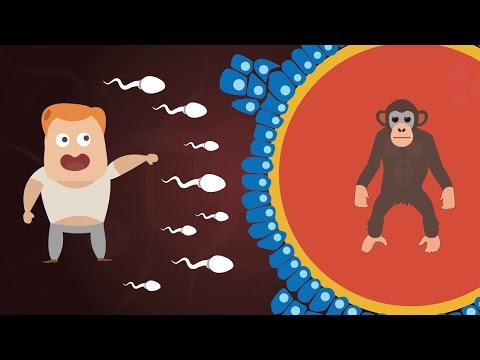
If you want to understand why chimpanzees and humans can’t have babies together, you’ve got to look at past research, ethical debates, and a bunch of common myths. There’s a lot of confusion out there.
Historical Attempts and Research
Back in the early 20th century, some scientists actually tried raising chimpanzees with human children to compare how they developed. The most famous case involved a chimp named Gua, who grew up alongside a human baby.
But nobody ever managed to create a hybrid between humans and chimps. Their genetic differences—especially the different chromosome numbers—make reproduction impossible.
You might have heard stories about a “humanzee,” a supposed human-chimp hybrid. But none of those claims have any real scientific proof. People asked a lot of questions, but no one ever produced a real hybrid.
Ethical Considerations and Debates
Trying to mix species raises some huge ethical questions. Chimpanzees can’t give consent, and experimenting on them can cause real harm and stress.
Ethics experts argue that we should respect species boundaries to protect animal welfare. Mixing humans and chimps isn’t just a biological problem—it could also cause suffering.
Animal rights groups keep pushing for better protection for chimps. You can support efforts that focus on treating animals humanely and keeping chimpanzees safe in the wild.
Common Myths and Misunderstandings
Some people believe humans and chimps are genetically close enough to have babies together. Sure, you share about 98-99% of your DNA with chimps, but that small percentage makes all the difference when it comes to reproduction.
There’s also the story of Oliver, a chimp that some folks claimed was a hybrid. Later, genetic tests showed he was just a regular chimp—no human DNA at all.
You might hear stories about people raising chimps as if they were human children. But honestly, that can’t change their natural biological boundaries.
If you’re curious about the details, check out more on why chimpanzees and humans can’t produce offspring together.


