
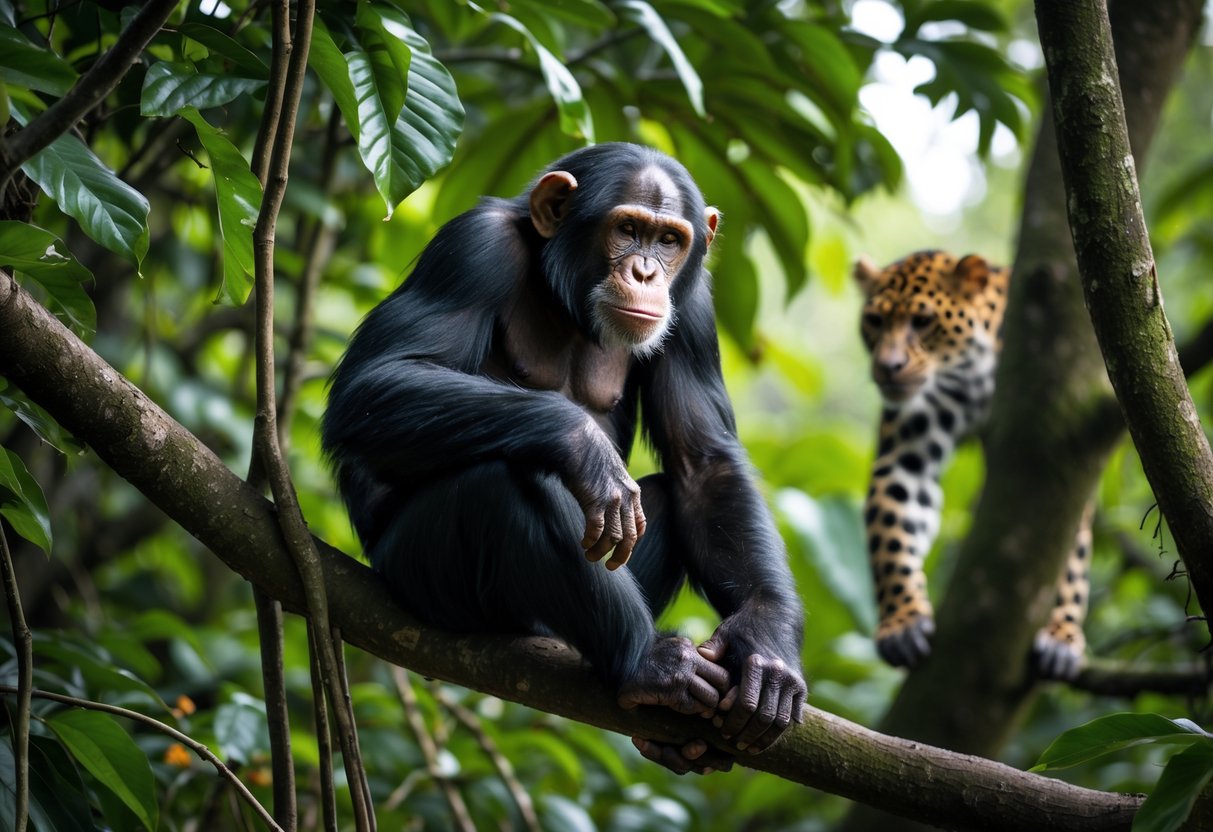
So, what animal can eat a chimpanzee? The main answer is leopards. These big cats hunt with skill and often go after young or isolated chimps.
Adult chimps are strong and can put up a fight, but leopards usually rely on surprise to catch them off guard.
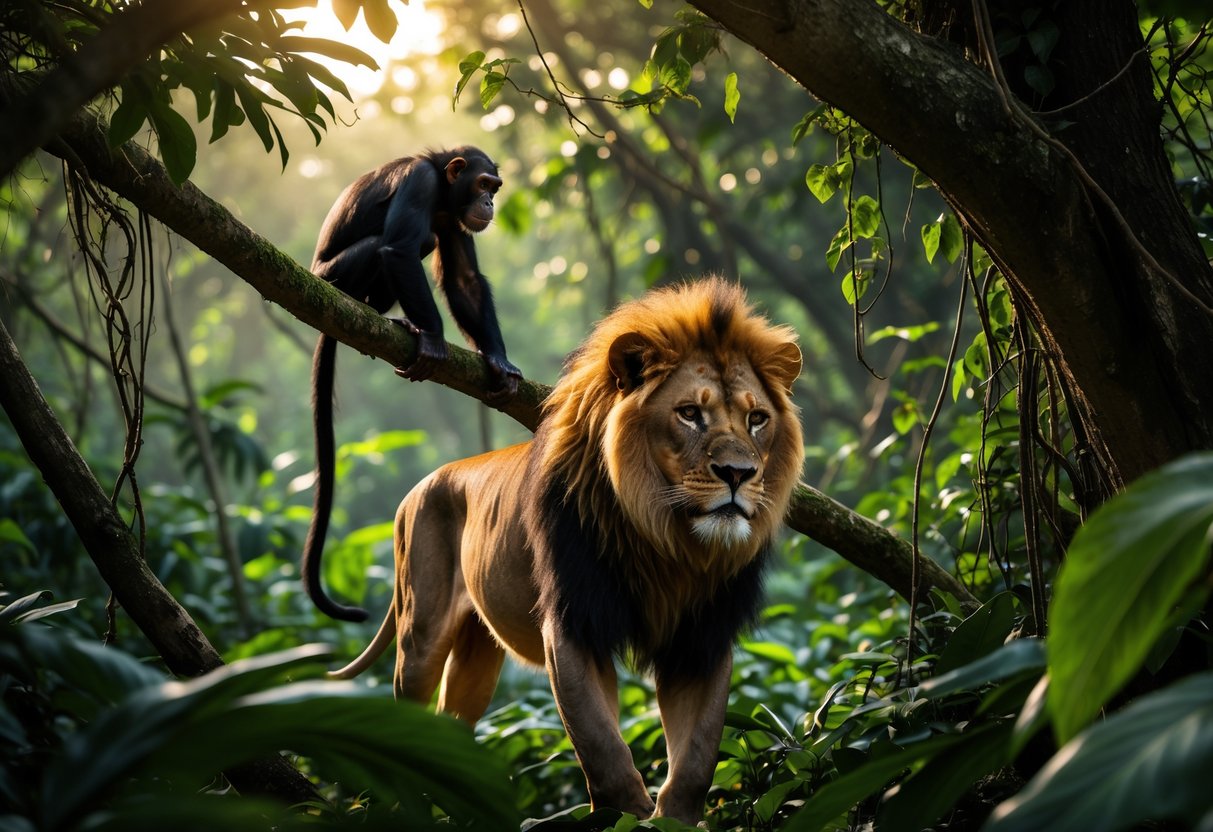
Other animals—like pythons, crocodiles, and a few large birds—sometimes hunt chimps, but that’s pretty rare. Honestly, humans are the biggest threat by a long shot, mostly because of hunting and destroying habitats.
If you think about it, understanding these dangers gives you a better idea of how chimps manage to survive, and why their safety really matters.
It’s kind of fascinating how chimps use social smarts and their environment to stay safe. We’re going to dive into which animals actually eat chimps and what that means for their everyday lives.
You’ll see the natural challenges these clever animals face and how they manage to stay ahead—most of the time, anyway. Want more details? Check out what animals eat chimpanzees.
Predators That Can Eat a Chimpanzee

Chimpanzees deal with a handful of predators that can really threaten their survival. These predators usually look for the easiest targets, like young or lone chimps.
But chimps aren’t just sitting ducks—they use smart strategies and stick together to keep each other safe.
Leopards as Primary Predators
Leopards pose the biggest threat to chimpanzees out in the wild. These cats hunt with stealth and rely on surprise.
They often hide in trees or thick bushes, waiting for the perfect moment to ambush a chimp.
Leopards usually pick off young or lone chimps, since adult chimps can be a handful. Chimps and leopards share a lot of the same habitat, so run-ins happen more than you might expect.
Leopards prefer to hunt at night when chimps aren’t as alert. You’ll find leopards thriving in African rainforests—right where lots of chimps live.
They really are the top natural predators chimps have to worry about. If you want more on leopards as chimp predators, check out What Animals Try to Eat Chimpanzees?.
Vulnerability of Young Chimpanzees
Young chimps have it rough when it comes to predators like leopards, lions, crocodiles, and some big birds of prey. They’re smaller and less experienced, so it’s easier for them to get separated and attacked.
Sometimes young chimps get in trouble while playing or wandering too far from the group. Crocodiles are another risk, especially near rivers—these reptiles wait underwater to snatch any chimp that comes close.
Lions and hyenas might also attack young or weak chimps if they get the chance. Humans, unfortunately, are a huge threat to chimps of all ages, thanks to hunting and shrinking forests.
For more on what threatens young chimps, take a look at Chimpanzee Predators: Leopards, Lions & Human Impact.
Defense Behaviors and Group Protection
Chimps use teamwork and clever tricks to stay safe. When they’re resting or eating, they stick together and keep watch for trouble.
Adult chimps often form a protective wall around the little ones if danger shows up. They’ll make loud noises and put on displays to scare off predators like leopards.
Their tree-climbing skills help them escape ground predators fast. Chimps also learn to be extra careful near risky spots, like crocodile-infested waters.
This kind of social defense makes a huge difference for chimps living in dangerous places. If you want to know more about how chimps protect themselves, check out Do chimpanzees have a predator?.
Chimpanzee Diet and Its Ecological Impact
Chimps eat all sorts of foods, and their choices affect both their health and the forests around them. Their menu includes plants, insects, and sometimes small animals.
This mix gives chimps the energy and nutrients they need, while also shaping the ecosystem they call home.
Plant-Based Foods and Figs
Most of what chimps eat comes from plants. You’ll see them munching on fruits, leaves, nuts, seeds, and flowers.
Figs are a big deal—they can make up to half of a chimp’s diet. Figs give chimps steady energy, especially when other fruits are hard to find.
Eating lots of different plants helps chimps get vitamins and minerals. They’re picky and use their smarts to find the ripest fruits.
Plants also give them fiber, which keeps their digestion running smoothly.
Role of Insects and Termites in Nutrition
Insects, especially termites, play a surprisingly important role for chimps. They use sticks as tools to fish termites out of mounds.
Termites and other bugs are packed with protein, which is great since wild plants don’t have much. Eating insects balances out their diet and helps them meet daily needs.
Collecting insects also shows off their problem-solving skills—they even modify tools to get at bugs in tricky spots.
Omnivorous Behavior and Hunting Monkeys
Chimps aren’t just plant-eaters—they’re true omnivores. Sometimes, they hunt small animals like red colobus monkeys.
Hunting is a group effort, and chimps work together to catch their prey. Meat gives them extra protein and nutrients they can’t always get from plants.
You might notice chimps sharing their catch, which actually helps strengthen their social bonds. This behavior really helps them get by when plant food is scarce.
Forest Regeneration and Geophagy
Chimpanzees really shape the health of their forests. They eat loads of fruit and swallow plenty of seeds, then carry those seeds all over the place.
As they move through the trees, they end up spreading seeds far and wide. That’s one of the big ways new plants and trees get their start.
Sometimes, you might catch chimpanzees eating specific soils or bits of clay. Why do they do that? Well, it actually helps them handle toxins from certain plants.
Plus, the clay gives them minerals—things like calcium and magnesium. This odd habit supports their digestion and helps them get the nutrients they need to keep going in the wild.


