
Yeah, chimpanzees do hunt other monkeys, and honestly, it’s one of the more fascinating things about them. You might not expect it, but these clever animals often go after monkeys like colobus monkeys for meat.
This hunting isn’t just a random thing—it’s actually pretty important for their diet. Meat gives them nutrients that plants just can’t offer.
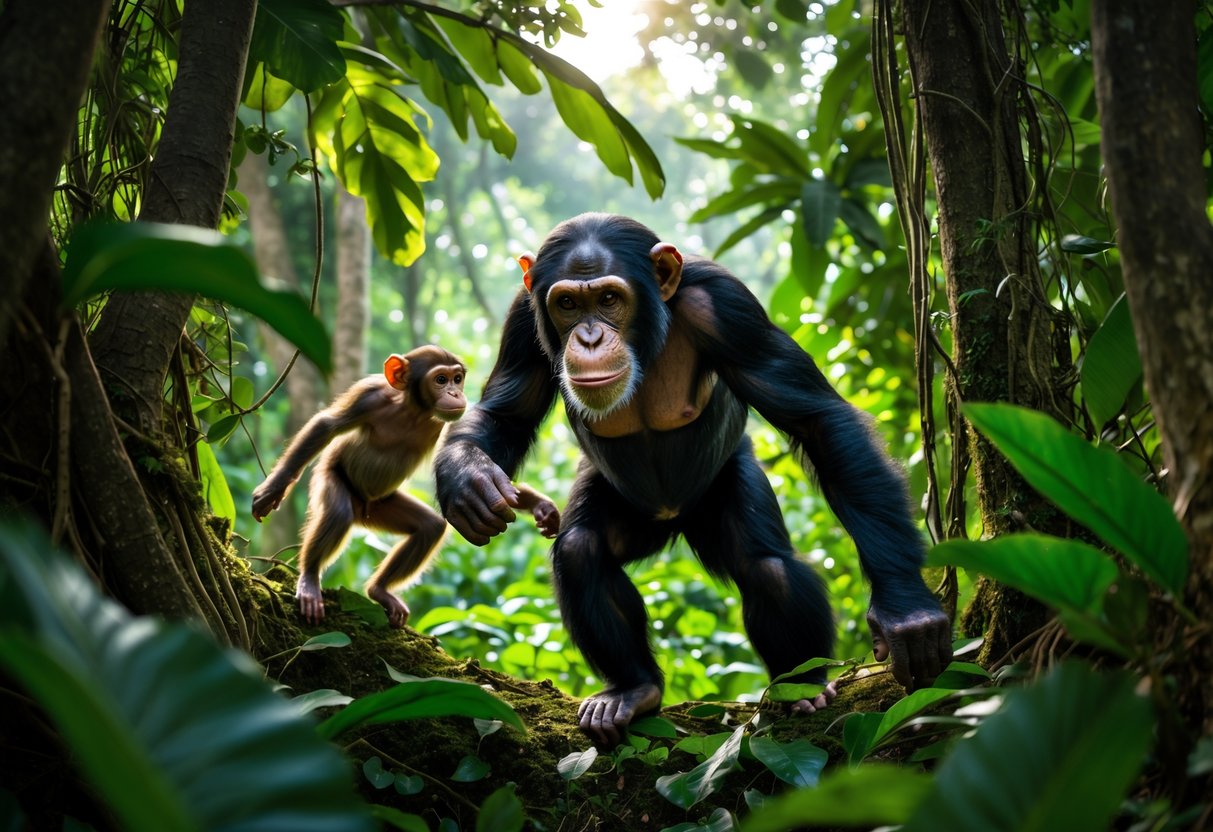
Chimpanzees use all sorts of smart strategies when they hunt. Sometimes a chimp will go solo, creeping quietly and waiting for the right moment.
Other times, they’ll team up, working together to boost their odds. Watching them use teamwork and even tools really makes you realize how adaptable and sharp they are.
When you look at why and how chimpanzees hunt, you start to see them as more than just peaceful forest animals. There’s a complex, skilled predator there—one that shares a few surprising habits with humans.
If you’re curious about their hunting tricks or what makes chimps so unique, just keep going.
Chimpanzee Hunting of Other Monkeys

Chimpanzees hunt other monkeys pretty often, especially those that stick together up in the trees. They’ve figured out different ways to catch their prey, and the reasons behind all this hunting can tell you a lot about their social lives.
Types of Monkeys Targeted by Chimpanzees
So, which monkeys do chimps usually go after? Red colobus monkeys top the list.
These monkeys hang out in groups high in the canopy, making them a regular target. Sometimes chimps hunt other monkeys too, but red colobus seems to be their favorite.
Most hunts involve groups of chimps. They use teamwork to catch those quick-moving monkeys.
The chimps might wait in silence or listen for the monkey troop before making a move. Working together really bumps up their chances.
After the hunt, they share the meat with others in the group. Sharing helps build friendships and keeps the group tight.
Even chimps that didn’t actually catch anything sometimes get a piece, especially if they helped in some other way.
Jane Goodall’s Contributions to Understanding Chimpanzee Predation
You’ve probably heard of Jane Goodall. Back in the 1960s, she was the first to spot chimps hunting and eating meat.
Her research showed the world that chimps aren’t just into plants—they hunt monkeys and sometimes other animals too.
Goodall noticed that hunting is usually a group event. Chimps plan, cooperate, and then share their catch.
She also found that male chimps do most of the hunting, while females join in less often. That bit of research really changed what people thought about chimps in the wild.
Why Do Chimpanzees Hunt Other Primates?
Why bother chasing speedy monkeys when fruit is everywhere, right? Well, meat gives chimps a rich source of protein and nutrients they just can’t get from plants.
Sharing meat builds social bonds and helps the group work better together. Successful hunters often gain respect, and sometimes that means more chances with mates.
Hunting isn’t just about food. It’s a way to form alliances and practice teamwork for other stuff, like defending their territory.
If you’re interested in the details, there are some great studies on chimpanzee hunting behavior you can check out.
Hunting Techniques and Group Dynamics

When chimps go after monkeys, they usually team up and everyone takes on a different job. If you look at how they cooperate and how roles shift, it’s honestly impressive how they manage to pull it off.
Cooperative Strategies During Monkey Hunts
Chimps don’t always go it alone. They rely on teamwork to up their odds of catching monkeys like red colobus.
Sometimes one chimp will start the hunt, and that gets the others excited to join in. Researchers call this the “impact hunter” thing—certain males lead the charge and get everyone moving.
During a hunt, chimps might split up and try to surround the prey. As the monkeys scramble, hunters jump on the chaos and grab their chance.
Chimps don’t really plan to help each other, but their actions—like distracting or tiring out the monkeys—end up helping the whole group. That’s what scientists call by-product mutualism.
You’ll even hear special “hunting barks” sometimes. Chimps use these sounds to call others over and get the hunt going.
Hunting Roles Within Chimpanzee Groups
During a hunt, chimps pick up different roles, but nothing’s set in stone. Some act as drivers, chasing monkeys toward the others.
A few hang back as blockers, waiting near possible escape paths to cut off fleeing monkeys. Then you’ve got chasers and ambushers who try to make the final catch.
These roles can flip around fast, depending on what’s happening. Each chimp is out for themselves, but everyone’s actions help the group succeed in the end.
It’s kind of like a team sport, even if each player wants the prize for themselves.
Some chimp groups use more obvious roles, while others just improvise and still pull off a cooperative hunt.
Variation in Hunting Frequency and Success
The number of hunts and how often chimpanzees succeed can swing wildly. It mostly depends on which individuals show up and who’s actually willing to hunt.
When “impact hunters” skip out, hunting just drops off. It’s kind of surprising how much one or two chimps can change the whole group’s motivation.
Party size matters, too. Larger groups usually hunt more often and catch monkeys more easily.
The presence of females can tip the scales, especially in smaller communities. Sometimes, just having a few more individuals makes a big difference.
Success rates shift depending on where and when you look. Some chimpanzee groups actively go looking for monkeys, while others just run into prey by accident.
If you watch closely, you’ll notice hunts ramp up when there’s more cooperation and experienced hunters take the lead. It’s not always predictable, but those patterns show up.
All of this really shows how chimpanzees juggle risk, effort, and reward every time they hunt.


