
When you picture great apes, gorillas and chimpanzees are usually the first to pop up. They’re both close relatives to humans, but honestly, their approaches to aggression couldn’t be more different.
Between the two, chimpanzees act way more aggressively, often turning to violence to settle problems or compete within their groups. Gorillas, on the flip side, mostly avoid actual fights and rely on their size and loud displays to keep things calm.
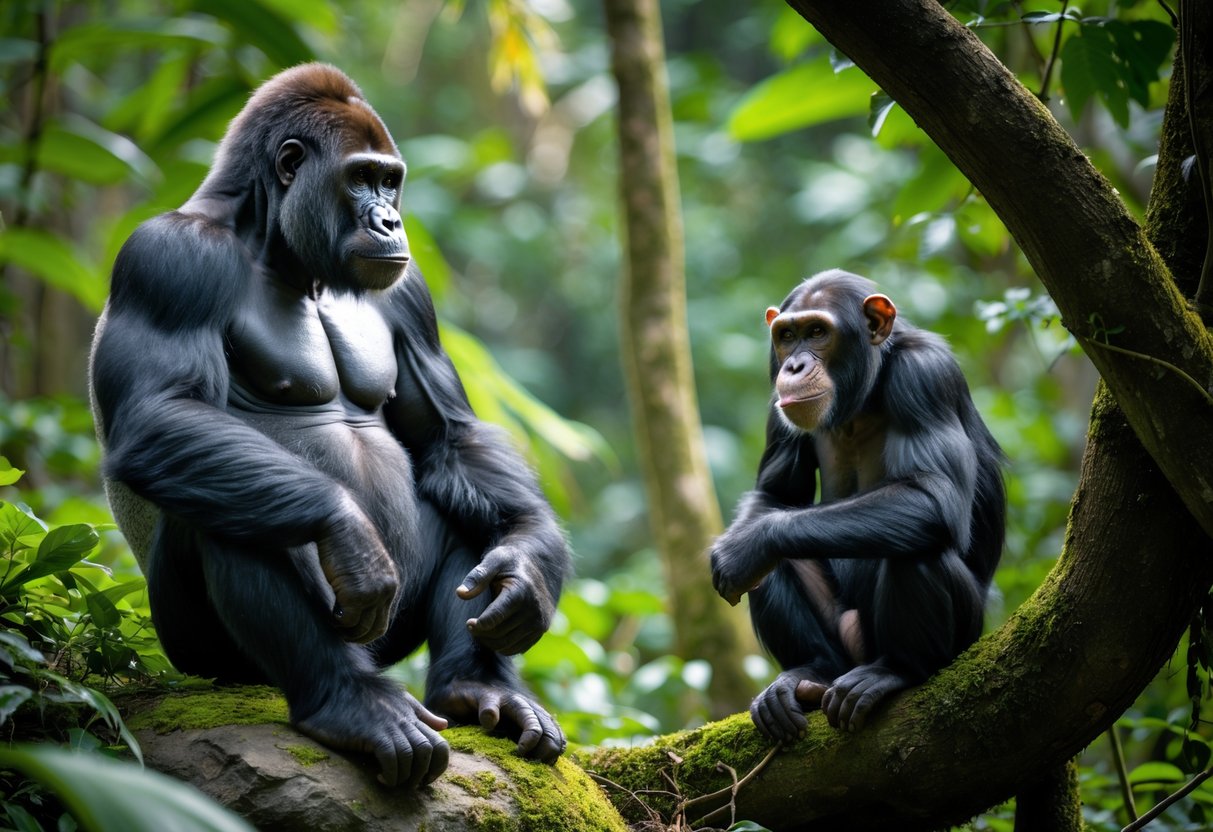
So, why does this difference exist? It mostly comes down to how they live and interact. Chimpanzees have complicated social lives full of rivalries, so aggression just plays a bigger part.
Gorillas are bigger and stronger, and their groups stay more stable, which cuts down on constant fighting. If you dig into these behaviors, you’ll get a better sense of how these amazing animals handle conflict.
Aggression Comparison: Gorillas vs Chimps

Gorillas and chimps show aggression in pretty different ways. Their actions really depend on group size, their social roles, and whatever happens to trigger a conflict.
If you pay attention to these differences, you’ll start to see why one species is often more aggressive in certain situations.
Typical Aggressive Behaviors in Chimpanzees
Chimps, especially the common chimpanzee (Pan troglodytes), use physical violence a lot in their groups. You might catch them biting, hitting, or even using sticks and stones during fights.
These aggressive moves help them sort out disputes over food or status. They also team up with others to gain power or defend against rivals.
Chimps move fast and attack with a lot of force. You can see this kind of behavior in places like Loango National Park, where groups compete for territory.
Besides physical attacks, chimps get loud. They use vocalizations and facial expressions to warn others off, which sometimes helps them avoid a full-on fight while still defending their spot in the group.
Aggression Patterns in Gorilla Groups
Gorillas tend to stay away from violence. If you ever watch mountain gorillas or silverback males, you’ll mostly see them beating their chests or making loud hoots.
These displays are meant to scare off threats, not kick off a fight. Gorillas generally avoid conflict unless they really have no choice.
The silverback leads the group and keeps order by intimidating others, not by fighting. Actual fights are rare and usually end quickly.
Gorillas prefer to show off their strength instead of using it. That fits with their plant-based diets and steady social groups.
They stay calmer, probably because they don’t need to fight over food as often as chimps do.
Common Triggers for Aggression: Territory, Food, and Social Hierarchy
Both species get aggressive over similar things, but their reactions are pretty different. Food is a big deal for chimps.
Since chimps eat fruit, insects, and even meat, competition is fierce. You’ll see them fighting pretty often to protect or grab food.
Territory disputes also set off aggression. Chimps defend their areas together, especially in groups.
Their social hierarchy makes fights for rank more common, as members try to move up or hold their spot. For gorillas, food isn’t as big of a trigger.
They stick to plants, which are usually everywhere, so there’s less to fight over. Gorillas mostly get aggressive if the silverback thinks the group or territory is in danger.
Social status matters for both, but chimps use aggression to climb the ranks. Gorillas keep the peace with strong leadership, not constant fighting.
Their group structures really shape how they act when things get tense.
You can read more about these differences at Are Chimps More Aggressive Than Gorillas?
Social Structure, Habitats, and Influences on Behavior

The social lives of gorillas and chimps feel worlds apart. Where they live and how their groups work really shapes how often they get aggressive.
When food or space gets tight, you’ll see these differences come out even more.
Social Group Dynamics of Gorillas and Chimpanzees
Gorillas stick together in small, stable groups called troops. Usually, one big silverback male leads, with a few females and their young tagging along.
The silverback keeps everyone safe and avoids fights by showing off, like beating his chest. Chimpanzees, though, live in bigger and more flexible groups.
Their social world is way more complicated, with shifting alliances and lots of challenges for dominance. This setup leads to more aggressive behavior, especially among males fighting for status or mates.
Bonobos, which are close to chimps, act less aggressive and sort things out through social bonding. If you ever go gorilla or chimp trekking, you’ll really see how these social setups affect their everyday lives.
Natural Habitats and Their Impact on Aggression
Gorillas wander through tropical forests and mountainous regions, like the Virunga Mountains. Mountain gorillas and eastern gorillas prefer dense forests.
They mostly eat plants, so there’s not much food competition, and that keeps aggression low. Chimpanzees cover more ground, living in everything from tropical forests to savannas.
Their diet’s a mix of plants, insects, and small animals. Since food is harder to come by and groups are bigger, chimps end up competing more, which sparks more fights.
Western and eastern lowland gorillas live in different forest areas, but all gorillas usually avoid conflict. Where these apes live really shapes how often you’ll see them get aggressive in the wild.
Effects of Habitat Loss and Human Interaction
Habitat loss hits both gorillas and chimpanzees pretty hard. They end up with less space and food, so things get tense fast.
Forests shrink, and suddenly everyone’s competing for the same resources. That competition sparks more aggressive run-ins, both within groups and between them.
Poachers go after gorillas, which shakes up family groups and causes chaos. You’ll see more aggression and instability after that. Chimpanzees deal with the same dangers, and their social lives get even more stressful.
If you’ve ever thought about gorilla trekking or chimpanzee trekking, keep in mind—these trips actually help conservation efforts. Protecting habitats lowers conflict and gives these amazing apes a better shot at a safe future.
You can check out more about how habitat shapes their behavior in this article on aggression differences between chimps and gorillas.


