
Coyotes have always seemed a bit mysterious, right? So, it makes sense to wonder if they’re actually scared of dogs.
In most cases, coyotes avoid dogs—especially the big ones—but they might act bolder around small dogs and could even see them as prey. How a coyote reacts really depends on your dog’s size and what your dog does in the moment.
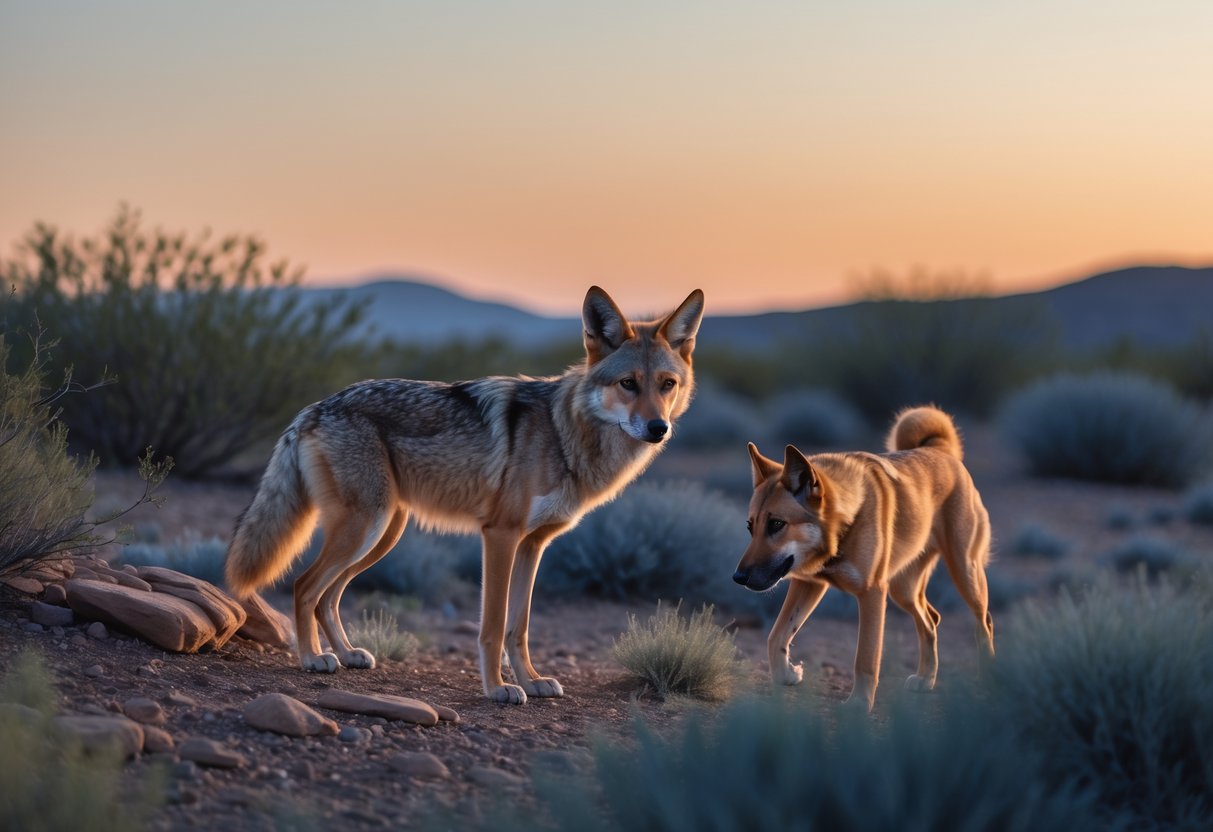
If you’ve got a small dog, you’ll want to be extra careful outside. Coyotes might not feel scared and could get bold.
Big dogs, on the other hand, usually scare coyotes off just by being there. Knowing these basics can help you keep your dog safer on walks or even in your own yard.
When you understand why coyotes act boldly or keep their distance, you’re better prepared for those surprise encounters. You’ll know what to look out for and how to protect your pup if you live where coyotes roam.
Coyote Behavior Around Dogs

Coyotes act differently depending on the season, the size of your dog, and their own confidence. They usually give big dogs a wide berth, but they might push their luck with smaller ones.
You should watch for changes in coyote behavior, especially at certain times of year when they’re feeling extra protective.
Are Coyotes Naturally Afraid of Dogs?
Coyotes tend to act cautious around dogs, especially if the dog is large. Most of the time, they’ll avoid a fight and just run off if they sense danger.
Your dog’s size makes a big difference. Small dogs don’t really intimidate coyotes, so sometimes coyotes treat them like prey.
Some coyotes get used to being around people and dogs. When that happens, they can lose their fear and act a bit too bold for comfort.
Most coyotes still prefer to steer clear of dogs to avoid getting hurt. You can help by keeping your dog close and under control when you’re out.
If you want more details, check out this coyote and dog encounter article.
Seasonal Changes in Coyote Aggression
Coyote behavior shifts with the seasons. In spring and summer, they’re raising pups, so they get more aggressive and protective.
If your dog wanders near a den or young coyotes, the risk of an attack jumps up. Coyotes might growl, bark, or even attack if they think their family’s in danger.
Outside of breeding season, most coyotes just want to avoid trouble. Still, it’s smart to stay alert when walking near woods during those riskier months.
You can read about seasonal coyote risks in this coyote behavior guide.
Size and Breed Influence on Coyote Encounters
Your dog’s size and breed really matter to a coyote. Small dogs under 20 pounds? Coyotes see them as easy targets.
Medium-sized dogs might get challenged or scared off by a coyote that’s feeling brave. Sometimes coyotes bluff with growls, but it’s still risky.
Large dogs—think over 50 pounds—usually intimidate coyotes just by being there. Breeds like German Shepherds or mastiffs, for example, tend to make coyotes think twice.
Keep your dog on a leash and stay alert, especially if you live somewhere with lots of coyotes. Here’s a detailed article on coyote-dog interactions if you want to know more.
How to Safely Manage Dog and Coyote Interactions

To keep your dog safe around coyotes, you need to watch for warning signs, follow safe walking habits, and know when to call in the pros. Staying alert and being ready makes a huge difference during any encounter.
Recognizing Signs of Coyote Aggression
Most coyotes avoid people, but if they feel threatened or want to protect food, they can get aggressive fast. Watch for growling, barking, staring, or crouching low.
Coyotes might raise their hackles or show their teeth. If one comes toward your dog, check for stiff body language or direct eye contact.
Those are big red flags to back away. If a coyote acts bold or starts circling your dog, you should be ready to step in.
Keep your eyes open at dawn and dusk, since coyotes are more active then. If you spot these behaviors, yelling firmly or making loud noises can help scare them off.
You can dig deeper on coyote threats with the Oregon Department of Fish and Wildlife for local info.
Leash Safety and Walking Precautions
Always use a short leash when you’re out in coyote country. That way, you keep your dog close and can protect them if needed.
Don’t let your dog run off trail or chase wildlife. Bring a whistle or small horn—loud noises can help if a coyote gets too close.
Stay alert, and try not to walk alone early in the morning or late at night when coyotes are most active. Wear bright clothes and reflective gear to boost your visibility.
Coyotes usually avoid well-lit and busy places, so that helps too. Carry some high-value treats or a favorite toy to distract your dog if they get nervous or way too interested.
When to Seek Help From Wildlife Agencies
If you notice a coyote acting aggressive over and over near your home or around the neighborhood, it’s time to reach out to local wildlife services. The Oregon Department of Fish and Wildlife can step in with advice, or even take action, to help lower risks in your area.
Let them know if you spot a coyote acting unusually bold, or if one gets way too close to people or pets. Wildlife agencies might ramp up their monitoring or suggest practical fixes, like putting up a fence or setting up some motion-activated lights.
Don’t try to deal with aggressive coyotes on your own. Wildlife experts actually have the right gear and training to handle these situations safely.
It’s also a good idea to share info with your community—maybe through local meetings or on social media—so everyone can stay a little safer.


